
Translated material
The Russian Foreign Ministry told where the Russian language is oppressed in the post -Soviet space
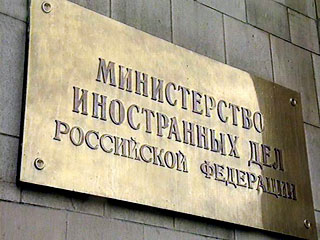
The position of the Russian language, in a significant part of the former Soviet republics, is “difficult”, they recognize the Russian Foreign Ministry. In addition to the Russian Federation, Russian as a state language is used only in Belarus, and as official - in Kyrgyzstan, said the director of the Department for working with compatriots abroad, Alexander Chepurin in an interview with Interfax agency. At the same time, Russian is oppressed in Ukraine, in the Baltic countries, in Tajikistan.
In Ukraine, "Russians are a state -forming people", and "the majority of the population in the family and generally uses Russian in everyday life," but the Russian still does not have official status, Chepurin said. “At the same time, a line is planned to narrow the scope of its application and to dismantle the education system in Russian,” the diplomat said. The country is reduced in the country by the number of educational institutions with training in Russian, unequal opportunities are created when youth admission to universities.
In the Baltic states, primarily in Latvia and Estonia, where the Russian -speaking ones make up a significant part of the population, the right to officially use their language in places of compact residence has not yet been realized, Chepurin said. "In connection with pressure into Russian, Russian -speaking education is heard in the vote about attempts to compulsory assimilation of the Russians," he emphasized.
There are problems in Central Asia. "More recently, on October 7, 2009, the law" On the State Language of Tajikistan "entered into force, in which, in fact, the role of the Russian language enshrined in the constitution of this country as a means of interethnic communication is not reflected," Chepurin recalled.
In general, in the post -Soviet space, the Russian -speaking population loses the opportunity not only to watch television in their native language, but even to read annotations to medicines, ”the diplomat complained. According to him, at the official level, national languages replace Russian even in places of the predominant residence of Russian -speaking. In a number of countries, it is planned to translate the office work of state institutions, including regional ones, into title language.
The Russian language was and remains one of the leading and most common world languages, the representative of the Foreign Ministry drew attention. "He is considered to be a native of about 130 million Russian citizens and 30 million people in the near and far abroad. Over 114 million speak the Russian language as the second or know it as a foreign. Thus, almost a third of a billion people in the planet are talking in Russian," he said. Chepurin called on Russians living abroad to actively fight for the right to use their native language.