
Translated material
Abandoned in hell
The New Times found the surviving participants in the storm of Grozny
15 years ago, on December 11, 1994, President Yeltsin signed Decree 2169 “On measures to ensure the legality, law and order and public security in the territory of the Chechen Republic”. So the war began, which, in fact, continues to this day
Inadvertently abandoned the phrase “Take as much sovereignty as you can swallow”, coupled with exhausted gold and foreign exchange reserves, and hence the inability to buy the loyalty of regions and national republics, turned into many thousands of victims. Mina was laid literally in the early days of the new Russia: in November 1991, when Chechnya announced its independence, and Moscow introduced a state of emergency there. As a result, in March 1992, by order of the President of the Republic, General Johar Dudaev, the Chechen Armed Forces seized the garrisons of the federal troops, and huge reserves of weapons were in their hands. But war could have been avoided if the interests of people had not come together - both in Moscow and Grozny - for whom the war is that the mother is native, as well as a means of uncontrolled personal enrichment. A picture from a helicopter familiar to many journalists: an oil pipe walking through the whole Chechnya, and tens of meters from it on both sides - fields plowed with bombs and burned villages. One of The New Times in the mid-90s consistently bypassed all the highest instances of the country-the Kremlin, the Security Council, the Government, looking for an answer to the same question: “What are the national interests of Russia in the North Caucasus, for which all these victims?” The answer was found only in the Ministry of Fuel and Energy: “The Shelf Dagestan - there are our strategic oil reserves. Chechnya will leave, Dagestan will leave. ” The shelf was preserved. Bye. They paid countless human lives, crippled fate, cities, turned by air raids into ghosts. Ultimately - paid to the future. Economic reforms stopped in the same March 1992, the financial collapse of 1998 was predetermined by multi-billion dollar expenses for the war. And “wet in the toilet”, the destruction of democratic institutions, de facto cancellation of elections, propaganda on TV channels-this is also an inevitable consequence of carpet bombing. Thought - "iron" alien land. It turned out - his own.
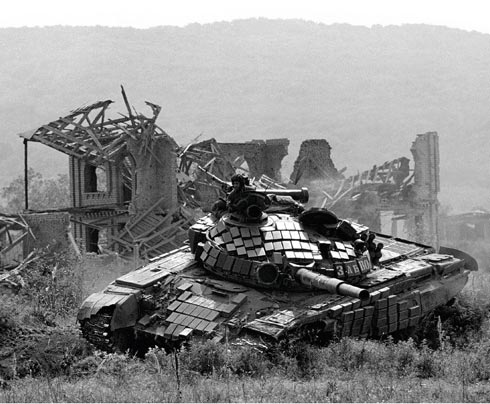
Abandoned in hell. On December 26, 1994, the Security Council of the Russian Federation decided to capture Grozny. Five days later, the famous New Year's assault began, which ended in complete failure. The New Times found a miracle of the surviving participants of those events that they said what they experienced then, in January 1995, and what they think about the war now, after 15 years
Defense Minister Pavel Grachev promised to take the rebellious Dudaevsky Grozny in 48 hours. At this time, there were about 3 thousand well -armed people in the city, of which many were officers of the Soviet Army, who passed hot spots. Our command sent 19-year-old guys to “figure out” with them: parts of the 131st separate Maykop motorized rifle brigade, two battalions of the 81st motorized rifle Petrakavsky regiment plus several groups of 20-30 people from the formidable military units-a total of about 800-handrails. Later, a few more hastily formed brigades will send them to the help (in fact, already export the wounded and killed). The exact number of victims of that massacre has not yet been established: out of 1,500 people who entered the Grozny, a third died, more than 200 soldiers are still considered missing. Most of those who managed to survive in Grozny try not to talk about the war again. For various reasons. Mikhail Grechushnikov from that very battalion of the 81st motorized rifle regiment, almost completely defeated during the New Year's assault, at first also “went into refusal”. “Once upon a time, everything is already written about it. And in general, the topic is not good. ” And then he suddenly called the editor himself. Under the fly. “Sorry to be a little drunk. I still can’t talk about this. When I returned home from Grozny, in general I stuttered a month and a half ... ”
He lives in a small Volga town of Rtishchevo. Actually, therefore, he got into the 81st regiment-he is deployed relatively close, near Samara. Michael was transferred to Chechnya in December 1994. “Actually, according to the law, they did not have the right to take me to a hot point,” he says. - When I took the oath, I had a second child born on the same day. But then everyone was to spit on it. It was necessary to patch a hole in the military budget ... "
Passed and coming
Michael remembers the events of the New Year's assault almost in a mentally. At 4 a.m. on December 31, part of the Northern Group of Troops (131st separate Maykop motorized rifle brigade and two battalions of the 81st motorized rifle Petrakuvsky regiment, reinforced by tanks) received an order to enter Grozny and occupy two strategic buildings-the Presidential Palace and the railway station did not work for that time for more than a month. About 800 people and 100 units of equipment with two columns moved to the city center. The commander of the 81st regiment reported to Pavel Grachev that "there will be enough people to complete the task." True, people did not explain to people a plan of action, or how to coordinate them, they were not given either large -scale maps of the city, nor a normal connection (already during the battle the militants listened to all negotiations between our units and repeatedly got into them). Nevertheless, the first column reached the railway station without a single shot - in appearance the city was absolutely “clean”. In fact, the Chechens, who took war positions in advance, waited. “As soon as the first Russian tank reached the Center for Grozny,” says Mikhail, “the militants climbed out of the corners, and began to yel from all sides. Nobody could raise his head. " Later, one of the officers of the Maykop brigade, Captain Yuri Chmiryov, will recall: “In the first minutes of the battle, they began to shoot us from grenade launchers almost point -blank. Losses were immediately calculated by dozens. We, the army officers, who fulfilled more than one combat mission, were lost to say what to say about ordinary fighters. The ordinary Ignatov shell torn his head, so the others sat in the snow and for some time under fire and sat. No one was able to move from horror and blood ... " 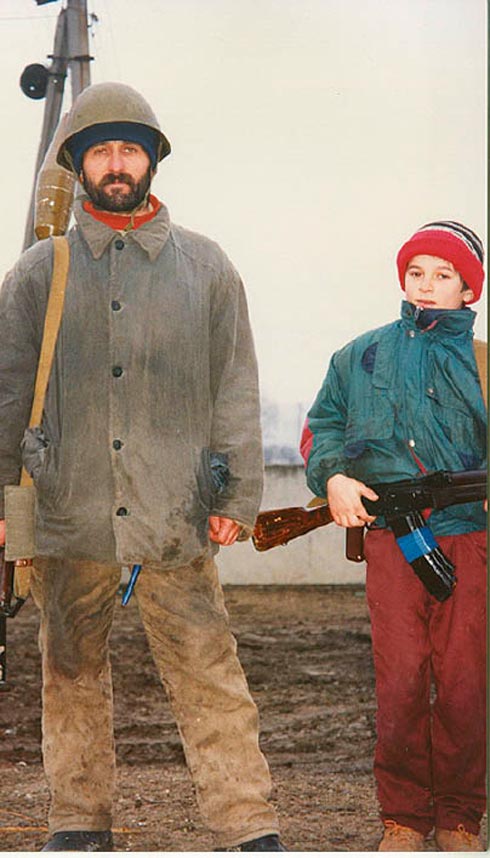
The operation to capture Grozny was so “well” thought out (in particular, even the most banal intelligence did not precede it) that Russian soldiers, to the sincere surprise of the Chechens, themselves went into the enemy’s lair - inside the two rings of the city’s defense - and fell into a dense environment. There was not a single house in the station in the station, not stuffed with militants. They were located in the basements and on the upper floors, each intersection on top was controlled by several snipers, which gave the Chechens a huge advantage. “I still have no explanation of how all this could be allowed,” says Mikhail Grechushnikov. - Do not be a military strategist of seven spans in the forehead to know: tanks above the third floor cannot shoot purely theoretically, and at home in the center of Grozny are quite high. Accordingly, none of ours could answer with fire to the attacks “from above”. And the level of technology, to put it mildly, did not correspond to the task. Then one warrant officer said to me: “All the cars that entered on December 31 in Grozny have long been written off ...” Participation in the assault on aviation was not planned at all.
Entering Grozny did not even have cartridges for machine guns. In turn, the Chechens of ammunition had so many that they did not save on grenade launcher shells - they shot them not only in technology, but also at individuals. 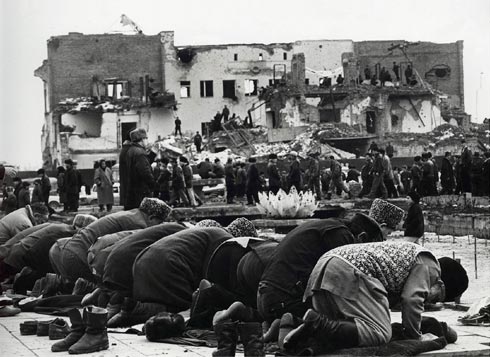
December 1, 1995, rally in Grozny
By the morning of January 1, the losses of the Russian army became catastrophic. The city was littered with corpses. The survivors hid in the buildings of a city hospital, the station and two small extensions adjacent to it. Continuously asked for help from the headquarters. In the evening, the help was really sent, but none of the paratroopers could get to the center - the Chechens completely cut off those who were surrounded from the rest of the world. When it turned out that each of the fighters had a maximum of two stores of cartridges, it was decided to leave Grozny themselves, in small groups of 3-5 people, under cover of night. In the morning of January 3, only 13 fighters remained from Maykoptsev, they lost 189 killed and missing. The parts of the battalions of the 81st regiment were “lucky” a little more-56 soldiers left the encirclement ...
Chechen syndrome
Aleksey Korolev (the surname has changed. - The New Times) on his chest was tattered by Scorpio - this is a sign of one of the GRU special forces. He sits in the kitchen of a simple Moscow “kopecks” on Avtozavodskaya Street (in addition to him, his mother, wife and two children live in a small apartment) and boasts a cassette with a record of the plot from the program “Time” of the mid-90s: the Minister of Defense enters one of the chambers of the Rostov hospital and personally thanks Lech for the manifested courage. He was always on the forefront: in addition to the assault of Grozny, he took part in one of the most difficult battles of the Chechen war, when in August 1999 Basayev’s detachment attacked Dagestan (the beginning of the second campaign.-The New Times). “Our reconnaissance was then surrounded, we fought back for three days, but in the end the Chechens, having lost about 40 people in battle, decided to retreat. The heat was terrible, there was no water at all. On the third day we already drank our own urine ... "
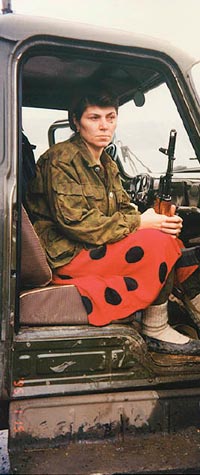 |
| February 1995: at the entrance to Grozny |
During the two campaigns, Alexei was wounded twice and returned twice to Chechnya - "take revenge for dead friends." “When you see how a loved one dies in your arms, there can no longer be a“ peaceful ”life for you. Until you take revenge, you will not calm down. And you can take revenge endlessly. "
We took revenge on the stories of Grushnik, scary. For example, once, having calculated and caught in the mountains a hired sniper from Ukraine, who killed the two colleagues of Alexei, he torn her body with two tanks with the other soldiers, linked the woman’s legs to one of them, and his hands to the second. “In war, everyone becomes animals. As you do with you, so you, ”Lech sums up.
“People are atrocious, of course,” Grechushkin echoes him. “Unless the booze saved.” According to him, in Grozny pictures of military life were so contrasted with memories of peaceful that they had to completely turn off his head with alcohol. Alcohol (namely, local cognac "Bashlam") was taken in the warehouses of an abandoned factory on the outskirts of the city. “Taken” literally, ”Mikhail continues,“ by storm. We drove on the BMP, stuffed a full car with bottles and drove with this good back to checkpoint, to Mayakovsky Street. It was impossible not to thump - otherwise it was possible to touch the mind from what was happening around. You know, I was not so long in Grozny - until the end of March 1995. But for all this time, we were never even provided with food, we went home and almost got into our homes. It is good that there were many Russians in Grozny. One grandmother baked pancakes for us all the time ... ”Mikhail still tells how once the commander of one of the units shot his own fighter for falling asleep at the post. “Then they made this guy some linden certificate-they say, he died under circumstances. How to live with it? " The peaceful life of the surviving in the Grozny hell is hell in itself. Even Afghan veterans admit: “Chechen syndrome” is worse than “Afghan”. Alexei Korolev already managed to treat drug addiction and sit in prison for a street robbery-drunk a booze of some Caucasian, took him a mobile phone ... “I dream of a war every day, I can’t get rid of it,” he admits. Mikhail has everything “better”: having returned from the war, he first went to Moscow, traded on Cherkizon. True, at first at the sight of the Chechens he was also “closed”, but now it has passed. Now, in the market in his native Rtishchev, he is going to open his duffel point. “Normally I live. There seems to be enough money. And the past life does not want to remember at all. What was, it was. Well, yes, we fought, as it turned out later, for oil. But still you can’t change anything ... " 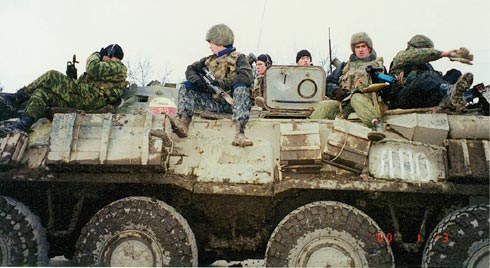
January 1995: Assinovskaya - Nazran highway 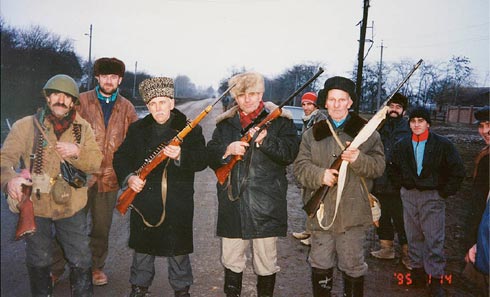
First Chechen: how it began
December 1
The Decree of the President of the Russian Federation “On some measures to strengthen the law and order in the North Caucasus”, who was ordered to all persons who illegally owned weapons, voluntarily hand over the law enforcement bodies by December 15.
December 10
The government ordered the Ministry of Internal Affairs and the Ministry of Defense to close the air and ground boundaries of Chechnya.
December 11th
President Boris Yeltsin signed Decree No. 2169 “On measures to ensure the legality, law and order and public security in the territory of the Chechen Republic”. At 5.00 the offensive of the Russian troops began. The troops were promoted by three columns from three directions: Mozdok (from the north through the areas of Chechnya, controlled by the anti -Dudaevsky opposition), Vladikavkaz (from the west from North Ossetia through Ingushetia) and Kizlyarsky (from the east, from the territory of Dagestan). In Ingushetia, while trying to stop the column of Russian troops, five Ingush were killed, more than ten wounded, the gas pipeline was damaged and the power transmission line of the Nazran-Gazi-Yurt was destroyed. 47 Russian troops were captured.
The appeal of Boris Yeltsin is widespread, in which the input of the troops is called a guarantee of peace negotiations.
December 12th
The column of Russian troops in the afternoon entered the territory of Chechnya.
In Vladikavkaz, negotiations of representatives of Russia, President Dudaev, Provisional Council began.
Presidential spokesman Vyacheslav Kostikov said that there would be no storming of Grozny.
According to the National News Service, a column of Russian armored vehicles was fired at the village of Dolinsky from the Dolinsky village. 70 Russian troops were killed, 15 tanks were damaged.
December 13th
In the morning, the troops resumed the offensive on Grozny, the battles with the use of aviation, long -range guns and bras were ensued. The Plenipotentiary Representative of the President of Chechnya Nikolai Egorov and the director of the Federal Counterintelligence Service Sergey Stepashin flew to Znamenskoye to investigate the circumstances of the shelling by military personnel of the residents of the Naderechny district, as a result of which two people were killed and 14 were injured.
In Dagestan, 38 out of 59 Russian military commander-in-arms were liberated.
The federal authorities said that the losses from the Russian troops over three days amounted to nine people killed and 14 wounded. By evening, the troops completely blocked Grozny.
December 14th
According to official figures, 11 Russian troops were killed, more than 20 were injured.
The Russian helicopter is shot down, two pilots were killed.
Negotiations in Vladikavkaz with representatives of Johar Dudaev are temporarily suspended.
Russian aviation inflicted a missile blow to the suburbs of Grozny.
The confederation of the peoples of the Caucasus announced the mobilization of volunteers to help Dudaev.
The Chechen formations struck from the Gradi plants on Russian troops on Asinovsky (South-West), Tolstoy-Yurt (North) and Pervomaisky (north-west) directions.
December 15
At 00.00, the period allotted by the federal authorities for the delivery of weapons in Chechnya expired.
The State Duma refused to continue the discussion of the Chechen crisis.
Johar Dudaev rejected the invitation of the Tartu authorities to arrive in Estonia and said that he did not need a shelter. A meeting of the government began in Grozny, at which Moscow proposals are discussed. It was decided to continue negotiations. Boris Yeltsin extended the term allotted by illegal formations for the delivery of weapons by 48 hours.
December 16th
Victor Chernomyrdin announced his readiness to meet with Dudaev after Grozny put up his weapons.
Johar Dudaev instructed his troops to move a kilometer from the contact line with federal troops.
In Grozny, the appeal of representatives of the federal authorities to journalists is called a call to leave the city at 24 hours.
Nikolai Egorov, Minister of Defense Pavel Grachev, Minister of Internal Affairs, Viktor Erin and director of the Federal counterintelligence service Sergey Stepashin, return to Moscow to Moscow.
Prime Minister Viktor Chernomyrdin held a closed meeting of members of the Security Council. Boris Yeltsin did not participate in him.
December 17
Dudaev sent a telegram with an invitation to Mozdok to negotiations with the envoy to Chechnya Nikolai Egorov.
December 18
Dudaev rejected the conditions of the start of negotiations.
Aviation disabled the television tower in Grozny.
December 19
At the meeting in the White House, it was decided to “activate actions to eliminate and disarm illegal armed groups”.
On the approaches to Grozny, the positional battles of the federal troops with the formations of Dudaev continued.
December 20
Prime Minister Viktor Chernomyrdin held a meeting of the operational headquarters of the government.
During the day, Grozny was subjected to rocket and bombing of Russian aviation.
The Russian government decided to temporarily close the borders with Georgia and Azerbaijan (this does not apply to persons following a constant place of residence). According to the press center of the government, a Russian medical helicopter is shot down. Three people died.
December 21
At a meeting of the government’s operational headquarters, a sharp activation of the actions of Dudaev’s formation was noted.
In the suburban residence, Boris Yeltsin met with Viktor Erin and Pavel Grachev. The President instructed to use the Russian Constitution “in full” to restore order in Chechnya.
Boris Yeltsin in an appeal to the Chechen people said that there would be no deportation of the Chechens.
Пресс-служба правительства России опровергла слухи об окружении российской танковой колонны.
В Моздок отправлен мотострелковый полк из Приволжского военного округа.
December 22
На заседании оперативного штаба правительства отмечено, что в Грозном «усилиями боевиков имитировалась бомбежка жилых кварталов». По сообщению депутата Сергея Ковалева, Грозный подвергся массированному авианалету.
Виктор Ерин провел заседание Военного совета внутренних войск.
Президент Татарстана Минтимер Шаймиев обратился к Борису Ельцину с предложением поручить урегулирование кризиса Совету глав республик.
December 24th
В 5 утра начался обстрел Грозного.
December 26
На Совете безопасности решено штурмовать Грозный.
Ночь с 31 декабря на 1 января
Начало штурма Грозного.
January 1
4.00 утра. Первый и второй батальоны 131-й отдельной Майкопской бригады двинулись на Грозный. Не встретив сопротивления, вышли в район железнодорожного вокзала, где соединились с подразделениями 81-го мотострелкового полка. Заняв вокзал, командир 131-й бригады полковник Иван Савин разместил технику на прилегающей улице как резерв. После того как были подбиты первый и последний танки, колонна оказалась взаперти. В конце дня остатки подразделений попытались прорваться из окружения. Личный состав бригады потерял технику, командиров, рассеялся по городу и выходил из окружения самостоятельно, по одному. Всего бригада потеряла 189 человек убитыми, пленными и пропавшими без вести, 20 танков Т-72 из 26, 102 БМП из 120, все 6 ЗРПК «Тунгуска» зенитного дивизиона.
January 3
Началось новое наступление. Штурм продолжался до 6 марта, когда федеральные войска заняли Черноречье — последний район Грозного, контролировавшийся боевиками.
Дальше были стертые с лица земли Самашки, битва за Бамут, Асиновскую, за села в высокогорьях. 21 апреля 1996 года был убит президент Ичкерии Джохар Дудаев. Спустя четыре месяца, в середине августа того же года боевики в ходе операции «Джихад» заняли Грозный, выбив из города федеральные войска. 31 августа в Дагестане Аслан Масхадов и Александр Лебедь подписали Хасавюртовские соглашения, положившие конец первой войне в Чечне. Но мира республике это не принесло. Спустя три года, 30 сентября 1999 года, началась вторая война в Чечне.
Официальное число потерь в первой войне в Чечне, по версии Минобороны РФ, 3006 человек. Приводились и другие цифры: 4103 погибших, 1231 — пленных/пропавших без вести/дезертиров, 19 794 раненых. По данным Комитета солдатских матерей, та война унесла жизни 14 тыс. военнослужащих. МВД в той кампании потеряло 1965 своих сотрудников (по другим данным — 1872 человека). По данным Госкомстата, с 2004 по 2006 год в Чечне погибло от 30 до 40 тыс. мирных жителей. Аслан Масхадов заявлял о 120 тыс. погибших. Военные потери Ичкерии, по данным российских военных, 17 391 человек. И еще десятки тысяч искалеченных судеб как с той, так и с другой стороны...