
Translated material
Types for departure
Russians promise free entry into the Schengen space
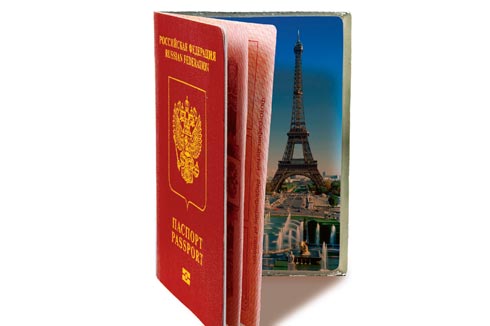
Will the boundaries collapse? Italian Foreign Minister Franco Frattini promised Russian citizens “Very good news in 2010”, namely: free entry into the Schengen space. Whether the Italian said for the whole of Europe and whether it is possible to believe the promised - found the New Times
Negotiations on the visa -free regime Moscow and Brussels have been conducting for a long time. Unlike Frattini, Brussels officials, including the head of the representative office of the European Commission in Moscow, Fernando Valensuel, talk about the abolition of visas as a short term. But Frattini is not a science fiction writer. He is the berry of "procedural diplomacy." His scenario: at one of the nearest EU summits, Rome makes a proposal to cancel the visa regime for Russian citizens, having previously secured the support of the heads of the leading EU states. Further business for the regulations: the Lisbon Treaty ensures the decision of decisions within the European Union with a qualified majority of votes. No unexpected surprises - in the form of a veto of an individual Eastern European country, as it happened before - now cannot be. So, the freedom of movement of Russian citizens who now occupy the third place after Americans and Japanese in terms of funds spent in the European sphere of tourism and services will be provided. But Frattini, intentionally or by chance, lowered one important detail in his script: visas or their absence - this is not tourism. This is a policy.
Marriage in Italian
Why did Italy suddenly acted as a defender of the interests of Russian travelers? It is clear that Berlusconi is a friend of Putin, and the Eni energy circle is the “friend” of Gazprom, and all of them will soon be tied with a common “southern stream”, which will surely overtake the “north”. But there is a more prosaic reason: Italy knows better than many other EU countries how Russians can spend money. Last year, in anticipation of the docking flight to Moscow at Zurich Airport, the author met the cook of Cesare. He was a native of the beautiful Italian island of Sardinia, where the Abramovich yacht sometimes moor. The cook was going to work in Russia, where the most expensive restaurants are Italian. 50 colleagues-land of Cesare already in Moscow, where they work for a salary that they never dreamed of in their homeland. The most respected inhabitant of Sardinia - no, not Berlusconi with his villa Chemnosa, but the Russian oligarch Usmanov. He struck the imagination of the cook Cesare, bought two villas at once: "One for himself, the other - especially for guests." And imagine, Usmanov is not alone. Since the beginning of the 2000s, Italian Sardinia has become a substrate of new Russian wealth, just like in the early 90s of a flea market in Rimini and Trieste-a hymn of Russian enterprise: then a local mafiosi, nicknamed Pope Castelucci, who helped with a “gray” customs clearance, became a bosom friend from Russia. Russians and Italians quickly understood and fell in love with each other. In a word, the desire of the Italian political elite to pave the visa -free path to the Russians to the European Union is understandable primarily from an economic point of view. It seems that they are also ready in Paris and Berlin. “Germany is for the abolition of visas and the successful completion of negotiations on this dossier,” the Nighthart Hefer Vissing press secretary of the German Embassy in Moscow expressed directly to The New Times. And the adviser to the President of France, Nicolas Sarkozy, on Russian politics, Jean-David Levitt in an interview noted that open boundaries are an optimal way to integrate Russia into a system of European values.
Nevertheless, there are many obstacles on the way to the visa -free regime, including the mandatory registration of foreigners in Russia, restrictions on their movements within the country, which have not changed little since Soviet times, finally forbidden zones around the perimeter of Russian borders. Yes, and whether the EU will ignore the data of the UN Supreme Commissariat for refugee cases, according to which in 2008 Russia took third place in the world in the number of petitions submitted by its citizens about political fiction, losing only to Iraq and Somali. “For Poland, for example, the free entry of Russians means two prospects: the first is the expansion of border trade, which the Poles are pleased, the second is a sharp increase in the number of refugees from the problematic Russian regions, as well as a number of Central Asian countries, which the Poles are unlikely to be delighted,” the Polish expert Olaf Ositsa shares with The New Times. In addition, Moscow and Brussels did not regulate to the end the mechanism of reanemics-the return of refugee-inferiorities to their homeland. But the main obstacle is still different.
“We ran through” - here
The abolition of visas can only occur on a mutual parity basis. Russian politicians, for example, the Foreign Minister Sergei Lavrov, assure that Russia is ready for a visa -free regime with the EU “Though now”. But real life overturns peppy political declarations. Indeed, is it possible to move to a visa -free regime, at the same time tightening the already existing visa regime? Or advocate for free exchange of ideas and people in the wake of spying?
At the end of March last year, our authorities refused to extend Russian visas several British employees of the TNK-BP oil company. A few days before, the FSB arrested on suspicion of the “industrial espionage” of the TNK-BP employee Ilya Zaslavsky and his brother Alexander, the head of the club of graduates at the British Council, who turned to the Kremlin with a request to revise the decision to close British cultural centers in Russia. Both scandals were provoked by our special services, which in their own way responded to a sharp deterioration in relations between Moscow and London because of the Litvinenko case. “Both the attack on the British Council and the visa pressure looked like a direct intervention of special services in foreign policy - we were all shocked,” said The New Times, on conditions of anonymity, working in Moscow, a diplomat of one of the European countries.
Visas in exchange for loyalty
However, long before these events, the Russian Duma in the amendments adopted to the law on entry and departure from the Russian Federation sent a clear signal to all foreign citizens: if you want to enter Russia, do not criticize it. And even better - praise. In fact, to the dissenting foreigners, publicly announcing their views, a prohibitive barrier was set.
The Russian ruling layer has long acquired passports with an unlimited Schengen visa, having adapted an agreement on simplifying the visa regime between Russia and the EU for certain categories of citizens, signed in 2006 in Sochi. Meanwhile, a response condition is a simplified entry for “certain categories” of Europeans, in particular journalists - in many ways remained unfulfilled, assures the diplomatic source of The New Times. Russia remains a closed country. And as far as the case is, the good intentions of Minister Frattini are not destined to come true.
Brief chronicle of failures
2007, November
The OSCE decides not to send its observers to the parliamentary elections in Russia in protest against the “constant failures” of Moscow to provide entry visas to the organization’s experts.2007, December 16
The New Times correspondent Natalia Moral refuses to enter Russia.2008, February
The visa was denied the head of the Human Rice International Human Rights Rice Uchch Kennet Rot and his deputy Rachel Denber. They wanted to submit a report on the infringement of public organizations by the Russian authorities.2009, August
The Russian visa refused the President of the Independent Association of Georgian Journalists Zviad Pochuhua. He was going to submit a report on journalists who died and injured in Georgia during the war in South Ossetia.2009, October
The Russian authorities refuse to enter two representatives of the organization “Reporters without Borders” from France. They went to Moscow to show a film dedicated to the third anniversary of the murder of Novaya Gazeta journalist Anna Politkovskaya.