Translated material
Under the sign of "Pork flu"
The events of the year according to The New Times

Ordered to survive! The whole outgoing year passed under the sign of the Pig influent. The epidemic began in Mexico and, despite strict quarantine measures, quickly spread around the world. Since this flu has a different genetic code than the usual seasonal, experts were afraid that it could be more contagious and deadly. Huge funds were spent on preventive measures and vaccination of the population. However, so far neither mortality from the new flu, nor the speed of its distribution exceed the average. Can flu pandemia cause serious damage to human civilization - the New Times sorted out
Where did the flu come from? The molecular biologist from Oxford Sir Charles Stewart Harris in 1982 put forward a hypothesis that the flu epidemics in people began about 4,500 years ago in South China, when the Chinese have domesticated ducks and a duck virus got the opportunity to “try” a person. Where did all the viruses come from at all? The most common point of view is this: viruses are not from an ancient pre -cake life, they came later from DNA and RNA fragments in the cells of those types of living creatures on which they later parasitized. This is indicated by the fact that genomes of different viruses have more similarities with the genomes of their victims than among themselves.
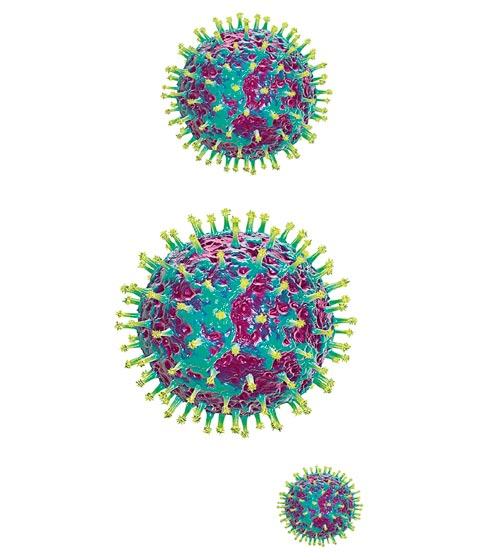
The construction of the undead biologists do not consider viruses living creatures: unlike bacteria, they have neither metabolism nor the ability to breed independently, without a “biochemical factory” of the victim. The influenza virus genome does not consist of DNA (the main carrier of the genetic code), but from RNA - a molecule used by the cells of living creatures, for example, for the premise of “messages” from DNA. Outside the cell, the influenza virus looks like a design of eight pieces of RNA, each of which is wrapped in a protein shell, and all together they are surrounded by a membrane, which the virus simply “steals”, cutting off part of the victim’s cell membrane. The virus adds “spikes” of hemuglutin (h) and neuraminidase (N) proteins to the membrane, with which the virus penetrates the cell. Preparations effective against influenza, Ozeltamivir (Tamiflu) and Zanamivir (Relenza) neutralize these “spikes”. The options for the influenza virus are called according to the versions of the “spikes” (H1N1, H5N1, H2N8, etc.).
How do new flu variants appear? Firstly, in the genome of the virus, random changes arise all the time due to errors when copying the virus in the victim's cage. Secondly, sometimes two viruses of different subtypes (for example, H1N1 and H2N8) come into the cage of the victims, and their individual RNA fragments are mixed-there is a hybrid (for example, H1N8 or H2N1) with completely new properties. Such a peculiar “sex” of influenza viruses most often occurs in the insides of birds, which have the widest “bouquet” of options, although the same can happen in pigs and in horses.
The most substantial judgment on the source of the new “pork” virus H1N1 was expressed by the American virologist Ruben Donis. In an interview with Science, he stated that the virus certainly comes from pigs and looks like subtypes that are found in pigs in the Middle West of the United States. Although the last 10 years the virus was undoubtedly purely pig, the sequences of nucleotides that are characteristic of bird and human influenza viruses have been found in it.
The Spanish nightmare of the most famous Pandemia influenza in the history of the Spanishness of 1918, which, according to various estimates, killed from 20 to 100 million people. In 2005, a group of American scientists under the leadership of the virologist Jeffrey Taudenberger was able not only to determine the sequence of the Spanish genome, but also to synthesize the artificial virus using the frozen tissues of the victims of the pandemic. The "resurrected" virus turned out to be more fatal than the researchers expected. It also turned out that he came to a person not from pigs, as was considered before, but directly from the birds. At the initial stage, the Spanish was not particularly fatal or contagious, but after the virus “settled down” in the human population, he acquired mutations, which caused a wave that claimed tens of millions of lives.
The necessary defense of the “bird flu” in 1997 began with the death of a three -year -old boy from Hong Kong, who until then found an unknown subtype H5N1, which also came from birds. Like the Spanish, the new flu led to a very serious illness, but it was much more dangerous - the Spanish killed 5% of the patients, and the “bird flu” - 50%. True, the latter was extremely rarely transmitted from man to man. Nevertheless, if the “bird flu” had been given the opportunity to twist in the human population for several months, then he could mutate and become as contagious as the “Spanish”. Fortunately, this was not allowed by the Hong Kong government, which decided to destroy all chickens in Hong Kong - more than a million.
However, sometimes the reaction of frightened politicians is excessive. And today's panic regarding the “pig flu” can be a repetition of the history of the “pork flu” of the 70s, which began with death in February 1976 of a soldier from New Jersey-he discovered an unprecedented flu with a subtype H1 from the time of the “Spanish”. Two months later, President Ford announced the need to vaccinate all Americans. This flu never caused epidemics, but in 500 out of 40 million vaccinated, GIIIEN -BARRA syndrome appeared, which caused 25 people in many paralysis.
The end of humanity? Can one of the following flu pandemics or other virus destroy humanity? Frank Ryan, British physician and author of the book “Virus X: In anticipation of the next pavement” (1998), he answers this question more affirmatively. He draws attention to the fact that viruses often coexist peacefully with certain species of animals and attack competitors or enemies of the latter. Ryan calls such a relationship “aggressive symbiosis” and gives an example of herpes virus B by the squirrel monkey. He does not cause any harm to the monkey, but it is worth invading another species into its range, as the entire aliens population is completely destroyed by the virus. Ryan recalls that humanity has already received AIDS virus from monkeys and can get others from other animals living in the jungle. The scientist suggests not to forget that most species of mammals lived for no more than a million years, and viruses could be the cause of their extinction in the past.
The deputy director of the International Institute of Wackets in Seoul Mikhail Favorov adheres to another point of view: “If the theoretical possibility of death from the virus (any) existed, humanity would have died out many times. The most terrible epidemic - the plague - in the Middle Ages killed more than 30% of the population. And what? The plague ended, stable people remained. There were several disputed pandemes, and where is the smallpox now? And we are all here. "