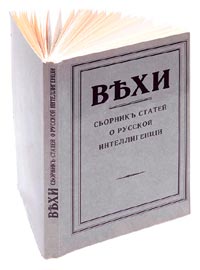
"Milestones" on the long journey. 100 years ago, the famous collection of articles on the Russian intelligentsia was light. The New Times was convinced that a century later the educated class was tormented by the same questions, Mikhail Gershenzon, who started the collection of “milestones”, did not show the other participants in the publication of each other's publication for fundamental considerations. Nikolai Berdyaev, Sergey Bulgakov, Alexander Izogoev, Bogdan Kistyakovsky, Peter Struve, Semyon Frank played blindly. After reading the collection published in March 1909, Peter Struve erupted in an angry article in “Russian Thought” about the material of Mikhail Gershenzon. But all these were trifles compared to the storm that the Milestones raised in the Russian educated class and the political class. According to the scandalous effect, by saturation by ideas that have fallen into the nerve of time, the “milestones” are not comparable to nothing. The intelligentsia was offended. The socialists were indignant. Russian liberals did not share the political pathos of the collection: the leader of the constitutional democrats Pavel Milyukov even made a series of lectures, in which he debunk the ideas “milestones”, including polemicizing with Cadet Struve.
Betrayal? In the Milestones, these still relatively young people (the oldest, Kistyakovsky, was 40 years old, the youngest, Franc, 32 years old) comprehended the ideological and spiritual results of the 1905 revolution. “Seven writers united in criticism of the dominant intellectual, materialistic or positively justified political radicalism,” wrote Semyon Frank many years later. “The elementary and rudeness of the ideas of the 1905 revolution ... pushed the figures of the cultural Renaissance and caused a spiritual reaction,” Nikolai Berdyaev noted in the “origins and meaning of Russian communism”. - <In the collection of “Milestones”, materialism, positivism, utilitarianism of the revolutionary intelligentsia, its indifference to the highest values of spiritual life were sharply criticized ... According to the old Russian tradition of the intelligentsia, the struggle for spirit was perceived as a reaction, almost like treason. ” Later, in “Self -knowledge”, Berdyaev also clarified the political essence of the disagreements of the “Vekhovites” with the revolutionary intelligentsia: “... I can’t agree to the abolition of freedoms in the name of freedom, which is committed in all revolutions.”
“Milestones” had a pronounced antisocialist, anti -anathetic, anti -revolutionary orientation. It was partly criticism from liberal positions. The article by Bogdan Kistyakovsky “in defense of the law” analyzed the anti -legal consciousness of the Russian intelligentsia. But, for example, the article by Peter Struve “Intelligentsia and Revolution” contained a hidden “hit” on the cadets, drowned in the general reproaches of the intelligentsia in radicalism: “In that struggle with the historical Russian statehood and the“ bourgeois ”social system, which after October 17
** The highest manifesto on October 17, 1905, who granted the population civil freedom and expanded electoral rights. Following him in February-March 1906, elections were held in the First State Duma, during which the cadets achieved the greatest success. It was conducted with even greater passion in much more revolutionary forms than until October 17, the intelligentsia introduced a huge fanaticism of hatred, the murderous straightness of the conclusions and constructions, and neither Grana - a religious idea. ”
A reproach with a hint of excessive anti -governmental activity of the cadets was perhaps not too convincing. But the background of discrepancies only later, in the book “The Sources and meaning of Russian Communism,” already explained Berdyaev: “On the surface of Russian life, liberalism seemed to begin to play a rather large role, and the government should have been considered with it. But the largest paradox in the fate of Russia and the Russian revolution is that liberal ideas, ideas of law, like the ideas of social reformism, turned out to be utopian in Russia. Bolshevism turned out to be the least utopian and most realistic ... Communism turned out to be the inevitable fate of Russia. ”
The eternal story “The Great Bess -Class Russian Intelligentsia” - this is how Vladimir Vladimirovich Nabokov spoke about this layer, whose father Vladimir Dmitrievich was a brilliant figure of the cadet party and finished his life, obscuring Pavel Milyukov from the terrorist bullet.
“Vekhovites” otherwise looked at the phenomenon of the intelligentsia, which really began to break up after the manifesto on October 17. This was remarkably wrote about this much later than these events George Fedotov in the article “The Tragedy of the Intelligentsia”: “... the intelligentsia was divorced by its luck. After October 17, 1905, the gloomy stronghold of the autocracy was no longer in front of her. The old regime cracked, but with it the integral idea of liberation. Why fight: for the responsible ministry? For universal suffrage? " It is very similar to the history of the death of the Party of the ATP these days: having joined the State Duma in 1999 with the slogan “Kiriyenko - to the Duma, Putin - to the presidency,” the party found himself with a broken trough of realized ideas. Half of the then governments were made up of liberals, and therefore the ATP could not position themselves as a tough opposition. This bifurcation later destroyed the party, almost like 100 years before - cadets.
However, the flaws of the political strategy “Vekhovites” saw this not in this, but in excessive radicalism of all - both socialist and liberal - intellectual forces. They stated the crisis of the pre -revolutionary intelligentsia, but, of course, they could not predict what George Fedotov then saw: “Over the eight years, which were leaking between 1906 and 1914, the intelligentsia melted almost without a trace ... The youth has subsided, the recruiting power of its ideas is negligible.”
And here, too, a historical paradox is seen. The “reformatting” of the intelligentsia contributed to the development of capitalist relations and the class of the bourgeoisie. This was seen by Peter Struve, who wrote in the Milestones: “... In the process of economic development, the intelligentsia“ Oburjuan ”, i.e. By virtue of the process of social adaptation, he will reconcile with the state and organically-stichio will draw into the existing public way, spreading to various classes of society. ”
Then this did not happen. Another scenario was implemented, predicted by Berdyaev and the same Struve: "... in Russia, the crisis of socialism in an ideological sense should hit with greater force than in other countries."
Hit. Lessons are not learned. The intelligentsia is tormented by all the same damned questions: to cooperate with the authorities or not to cooperate? Radicalize or not rock the boat? And there is still no answer to the question: is the “recruiting power of her ideas” remains?
Sergey Bulgakov, from the article "Heroism and asceticism" “The intelligentsia ... is inevitably divided and sprayed into the fractions of the fractions of the fractions of the fraud ... Intelligentsia and mutual excesses ... the known features of our party intelligentsia ...”
Mikhail Gershenzon, from the article "Creative Self -Consciousness" “A bunch of revolutionaries went from home to the house and knocked on every door:“ Everything is outside! It's a shame to sit at home! " - And all consciousnesses poured into the square ... They are pushing in the square for half a century, voting and crossing. At home - dirt, poverty, mess, but the owner is not up to it. He is in public, he saves the people. "
Bogdan Kistyakovsky, from the article "In Defense of Law" "... the Russian intelligentsia never respected the rights, never saw in him values."
Peter Struve, from the article "Intelligentsia and Revolution" “The intelligentsia found only vague instincts in the masses, which spoke distant voices merging into some kind of rumble ... The intelligentsia attached its short book formulas to this goula. When the rumble was subsided, the formulas hung in the air. ”
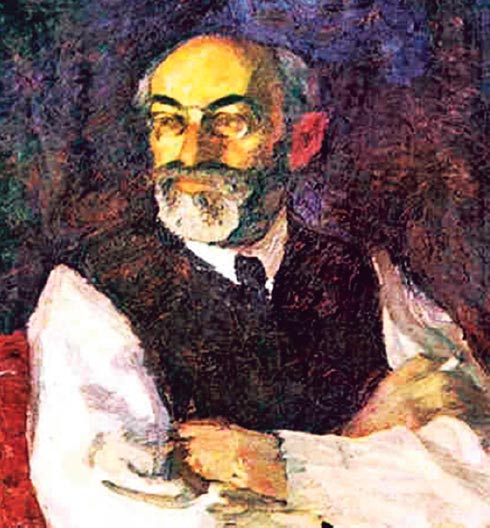
Mikhail Gershenzon, initiator and editor -in -chief "VHO"