
Translated material
Warmer, even warmer
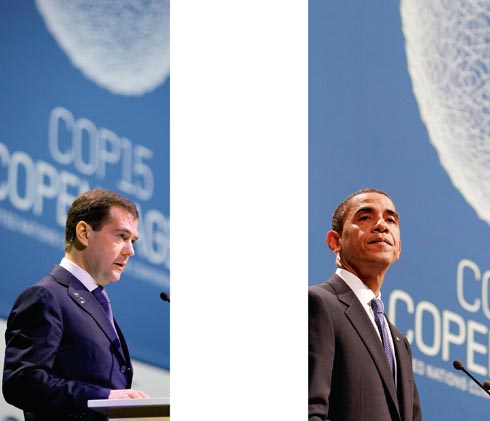
At the end of the year, the presidents of Russia and the United States again met face to face - in Copenhagen. The capital of the happy Denmark survived in December 11 days, which should have shocked the world of widely advertised readiness of countries and peoples to sacrifice private interests and benefits for the sake of the general future, but did not shock. At the conference on combating climate amendments with the participation of 193 countries, it was not possible to adopt a new legally binding agreement on the restriction of greenhouse emissions. Hot disputes in Copenhagen materialized in the “cold” final declaration - as always, with endless possibilities for interpretation. The leaders of the European Union, who was going to the forefront of the fight against CO2, desperately to find a compromise with China, India and Brazil, who did not want to give their industrial boom to a slaughter of alien doctrinet. The United States in this process is so far unsuccessfully trying to play the role of the "arbitration judge." Most developing countries remained indifferent to the call “to accept a new agreement, even if it is imperfect,” with which Barack Obama came up on the last day of the conference. But even a smaller response caused the assurances of Dmitry Medvedev in the readiness of Russia “to ensure that there are no analogues to a decrease” of harmful emissions: the Russian delegation in Copenhagen was too passive.
Industrial activity of a person should not lead to an increase in the average temperature on Earth by more than two degrees by 2050 - everyone agrees with this. The problem is that for ecologists these two degrees are almost a tragedy. For bureaucrats - still statistics. In Copenhagen, bureaucrats defeated ecologists. And all hope that this victory is temporary.