Translated material
Risen from hell
Stalin remains the current politician
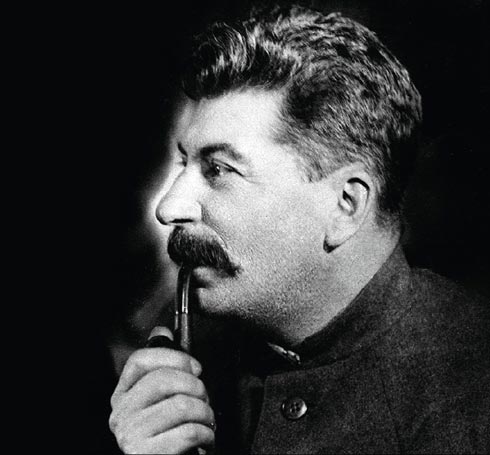
Risen from hell. Comrade Stalin meets his 130th anniversary in the circle of Russian politicians-he clearly returned to the modern political process and discourse. How could this happen - the New Times sorted out
We chop the forest, and the Stalinist chips,
As before, they fly in all directions.Yuz Aleshkovsky
The manuscript of Leo Trotsky “Stalin” was damaged and sprayed with blood. He was immersed in work on the book and did not finish it precisely because Stalin's agent Ramon Merkader struck Trotsky with an ice ax on the head. Typically, the country, which has already passed through the XX Congress, in 1960 awarded Mercader by the star of the Hero of the Soviet Union.
* * The New Times wrote about this in No. 39 of November 2, 2009. In an incomplete preface, Trotsky wrote that Stalin received power not thanks to his personal qualities - a party car exalted him to the pedestal. Denying the mythological Stalinist talents - intellectual, writers, oratory, he did not suspect that the main myths - that Stalin “forged victory” in the war and had fantastic “managerial” abilities, ahead.
By the way, the American publication "Stalin" in English saw the light in 1941. On the rear cover, Stalin is called "the most powerful dictator in the world."
* Trotsky Leon, Stalin. An Appraisal of the Man and His Influence, Harper & Brothers, 1941. 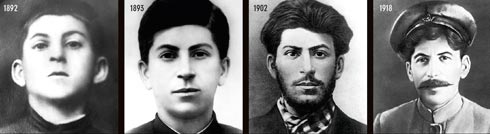
* “Izvestia of the Central Committee of the CPSU”, 1990, No. 11. The same year of birth is also indicated in the certificate of the complete course of the Gori Theological School issued in the name of Joseph Dzhugashvili, and in the documents of the St. Petersburg provincial gendarme administration. The official, still used date of birth of the leader appeared in the 20s. Why did Stalin need to hide his true birthday, historians cannot understand.
Even more rumors are connected with who was actually his father. Even before the war, a note appeared in the Polish newspaper Zhych Warsaw, in which (however, without links to sources) it was argued that the real father of Stalin was none other than Nikolai Przhevalsky: the allegedly famous Russian traveler was in the house where Ekaterina Dzhugashvili was in the servants ... Some guests of St. Petersburg are still surprised when, walking in the square, when walking in the square. The Admiralty, completely unexpectedly, are embarrassed by Stalin with a camel. Malicowed in bronze, Przhevalsky really looks like a “great leader”, more precisely, to his ceremonial portraits with a powerful mustache and hair, high forehead and officer gasing. The real Stalin, low stature, dry, pockmarked, looked more like his "metric" father. According to the memoirs of the neighbors, the shoemaker Beso Dzhugashvili drank a lot and was noticed in the assault. In other words, Joseph grew up in a typical dysfunctional family.
It is not clear what, nevertheless, forced him to constantly hide the truth about himself-the skills of a professional revolutionary underground or children's complexes and a tendency to paranoia. It was as if fate itself all the time forced him to put the vulture “secretly” on new and new facts of his own biography, giving rise to riddles, some of which are not solved so far. It is enough to recall the dubious circumstances of the death of his second wife of Nadezhda Alliluyeva, and his own death - about the conspiracy of the party elite against the elderly “master”, which prepared the next wave of mass repressions, in recent years only the lazy did not write. His status, as it would be now said, was actually not quite legitimate. Since 1922, he served as Secretary General of the Central Committee of the All -Union Communist Party of Bolsheviks (b) and only shortly before the war, in 1941, stood at the head of the government. All this time, the post of chairman of the All -Russian Central Executive Committee, and then the Presidium of the Supreme Council, that is, the nominal "president" of the country until 1946 was occupied by his associate and protege M.I. Kalinin, and after that a colorless nominee N.M. Shvernik. In the conditions of a monopoly on the power belonging to the only party remaining in the country, the head of the apparatus of this party, relying on the repressive youch personally controlled by him, could no longer think about trifles such as legitimacy.
“He was a simple shoemaker Mikich and what heights managed to achieve,” one of the heroes of the famous “Hanuma” sang in the production of the Tovstonogovsky BDT. For many of the then spectators, the Allusion with recent history was obvious. However, fans of the leader today love to give another quote that has already become a common place - about the plow and the atomic bomb. Liberation words to the bloody dictator, which “but modernized the country”, is usually attributed to Winston Churchill. Churchill himself, by the way, even in the Fulton speech called "Marshal Stalin" "a comrade of wartime." As for a well-known quote, it does not belong to Churchill at all, but, most likely, Isaac Deuter-a British marxist historian, the author of one of the first biographical studies about Stalin.
* Deutscher Isaac, Stalin: A Political Biography, Oxford University Press, 1966. In Russian, its characteristic in one of the articles looks something like this: “Nevertheless, over the past three decades, the face of Russia began to change. The essence of the truly historical achievements of Stalin is that he accepted Russia with Sohu, but leaves with nuclear reactors. ” The Doycher was not an adherent of the Stalinist USSR - even before the war, he was expelled from the Communist Party for sympathy for Trotsky's ideas. He considered Stalinism a natural generation of Russian reality and the Russian revolution, not being a fan of either one or the other. It would be worth finally translating into Russian his works about Stalin in order to convey to the readers of our Fatherland, how much the words replicated everywhere are expelled from the general context of the historian's thoughts.
Divide sessions are the entire post -war history of the USSR, and then Russia is the history of the decolinization and restoralization. The story of attempts to get rid of monuments to the leader and his return to the pedestal. Exposition sessions are Khrushchev’s thaw and Gorbachev perestroika. Freezing after 1968 and the slush of Putin years is a creeping rehabilitation of the luminaries of all sciences.
History lessons are not transmitted from the DNA of the fathers and mother’s milk - each generation is forced to learn them again. What do today's young people who were born after 1990 know about Stalin? He is for them the same historical character as Ivan Kalita or Nikolai the Great. And if the memory of the war, and in the form distorted to the picture from school reference, is still somehow broadcast, then the anti-Stalinist vaccination is not done by anyone-neither a school, nor a university, nor that is the saddest family: mass knowledge of Stalin and Stalinism is not backed up by an emotion associated with the memory of the arrest of a great-grandfather or the family members of the enemy of the people.
Meanwhile, the “greatest geopolitical catastrophe”, which the current leader of the nation was mourned, was prepared by the disclosure of historical truth about Stalinism. After the XX Congress, the regime resisted only because negative emotions in relation to Stalin perfectly fell on the desire of the young generation to build a new, more correct socialism. The “sixties” were precisely the “generation of the XX Congress”, wherever they work - in cinema, literature or in the Central Committee. Then it was still possible to protect socialism by the name of good Lenin in contrast to the bad Stalin, and the removal of the body of Dzhugashvili from the mausoleum only secured the desired effect. But already in May 1965, at the mention of Brezhnev named after Stalin in the anniversary (20 years of victory), applause was heard. The minutes of the meetings of the Gorbachevsky Politburo are full of replicas, which with exposures, publicity overdid it: so the foundations of the state can be destroyed. The “Children of Arbat” by Anatoly Rybakov with difficulty and at the fear and risk of the editor of “Friendship of Peoples” Sergei Baruzdin were published only in 1987. And regarding the “Gulag Archipelago” Alexander Solzhenitsyn, the editor of the New World, Sergei Zalygin, in 1988 received instructions from the main ideologist of the Central Committee Vadim Medvedev: in the main Soviet literary and art journal, we will not publish “somewhere in the Baltic states”. Indeed, the chapters that the reader did not find in the "New World" appeared in the Riga "Daugava".
In principle, the bosses were right: Stalin's final exposure also meant the undermining of the socialist system: Stalinism was one of his bastards, which did not allow even “socialism with a human face”.
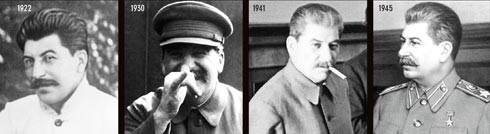
Paradoxes of Vera Stalin's history is mythological. He ruled the country with the help of mythology, so much so that almost the whole country sobbed at its funeral. And those who understood what was happening (or obliged to understand by virtue of position or education), doubts in themselves, as Sintsov in the “living and dead” Konstantin Simonov. Simonov himself, one of those who was seduced and “recruited” by Stalin, at the end of his life found moral forces and honesty to admit: “The contradictions (in the assessment of Stalin.-The New Times), somewhere, muffled, crushed in themselves, as a result of somewhere, somewhere stubbornly overdate of oneself, somewhere, somewhere the desires to do not touch. That which you do not want to touch even in thoughts ... of course, they learned a lot only after the XX Congress, this is true. But not all. There was something that could and should have thought about before the XX Congress, and there were enough grounds for this. The determination was not enough much more than the grounds. ”
In the diaries of Lydia Chukovskaya there is a mention of the meeting of 23 women (already in 1995!), Once in the war and in the camps: “... all, almost without exception, sought to return - after liberation from the camp - to the party. (They went to the front in the 16-17 years by the Komsomol members.) Everyone was shocked by the XX Congress, because everyone "believed in Stalin" (this is after they experienced!). " The eagerness of faith is the same mystery as the prohibitive cruelty of the time: why, for what are the rivers of blood and mountains of human suffering? With personal cruelty, Stalin infected his environment, and those - the whole country. The open processes of the 30s seemed even to Goebbels crazy, as evidenced by records in his diaries. And about how the whole people were hardened - in the second volume of the Solzhenitsynsky “Gulag Archipelago”, in the chapter “Fessed Volya”. "Already smeared in the bloodstream - after all, then you only cruelly." These simple at first glance the words of Alexander Solzhenitsyn explain a lot: the country was tied with circular guarantee, covered with one blood.
Stalin was not a major person: cynical, immensely suspicious, unsystematicly taken, and not educated. Disordinate and unfortunate in private life.
* About this the best books are not written in us, but in the West. See, for example: Montefiore Simon S. Stalin. The Court of the Red Tsar, New York, Vintage Books, 2003. The cowardly - as evidenced by his famous toasts at receptions in the spring and summer of 1945, including the toast for the Russian people, who won the war not thanks to, but contrary to Stalin, which, in fact, admitted. On June 25, 1945, at the Kremlin reception in honor of the participants in the Victory Parade, Stalin said another toast: “For people who are considered“ screws ”of the great state mechanism, but without which we are all marshals and commanders of the fronts, roughly speaking, we are not worth anything.” Then he unscrewed his heads to these “screws”, and the survivors reproduced the usual mythology:
The leader raised a glass. He sipped the wine.
Father's eyes enlightened.
He wiped his mustache. No fault
His face did not gloom.
The gym was in a glee ...
And the tormented Russian people
With tenderness, tears licked with enthusiasm,
All sins let him go forward.
This is from the secretly spreading poem by the captain of the assault aircraft Alexander Zinoviev, who then became a famous philosopher.
* In 1976, the famous book of Alexander Zinoviev “gaping heights”, which in the USSR entered the list of prohibited and for which they gave a deadline, was published abroad. The current Prostalinsky mythology is subordinated to the same logic, which repeats the old folk wisdom, which is stated something like this: “There is no Stalin on you!”
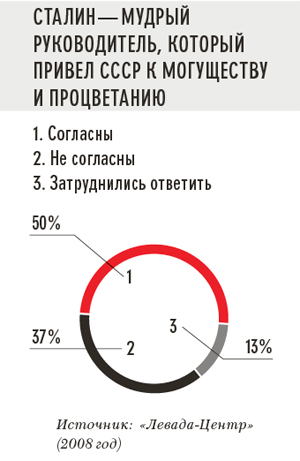
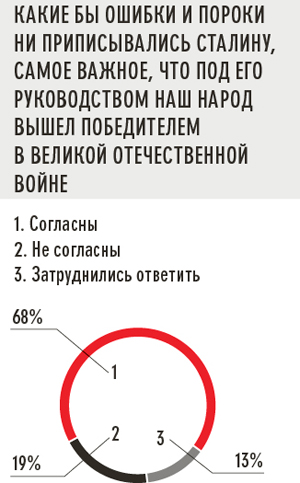
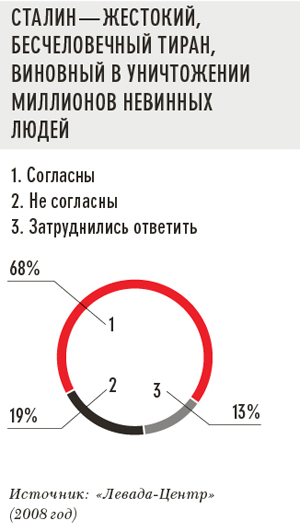
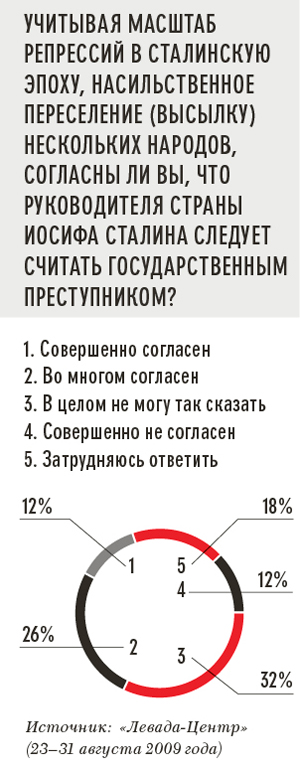
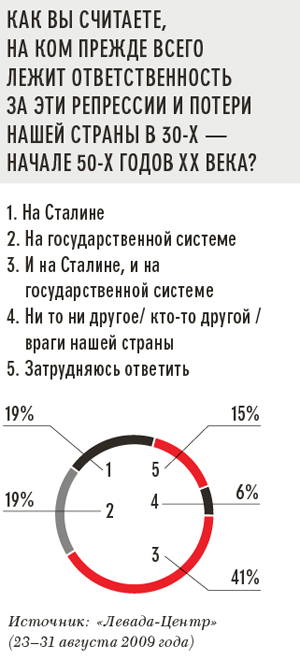
We fought with ourselves why Stalin returned to our present? His sayings are carved at the metro stations, and the acts are bashfully-lyceally justified in school textbooks. He appears in sociological surveys along with current politicians.
He is a metaphor for order and falsely understood “effectiveness”. He is a symbol of the greatness of the country, and the greatness of the lost. They lived badly, but everyone was afraid of us - this is the current logic of the sovereigns. Its methods are the only way to modernize. This path turned out to be deadly and cost the country of freedom and millions of human lives. And while the few victories in the minds of the Russians will be associated with the Stalin era, while our society will rush in the false choice between victory under the leadership of the Great Leader and Freedom, Stalinism still has a chance: to rebel from hell, throw the country into its last and decisive battle-with itself.
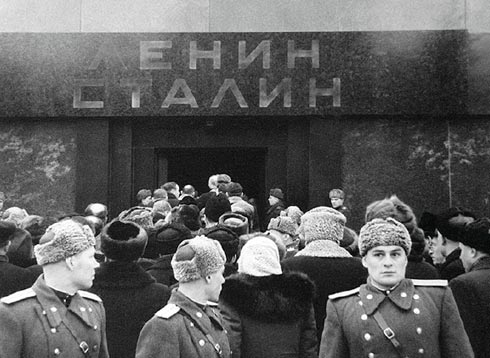
From 1953 to 1961, the Mausoleum was the place of Stalin's last repose. After the XXII Congress of the CPSU, he was reburied by the Kremlin wall