
Translated material
February 20-27
On February 21, 1934, in the capital of Nicaragua - Managua, soldiers of the National Guard under the command of Anastasio Somos killed the former leader of the rebels Augusto Sandino. The rebel movement, led by Sandino for several years, fought against the regime that supported the United States. He managed to achieve the withdrawal of American troops posted in the country and sign a protocol on the dissolution of the National Guard. The attack was committed after Sandino left the Presidential Palace, where he negotiated with President Huan Sakasa on the demobilization of his army. Soon, the power in the country seized Somos. Subsequently, in honor of the deceased national hero, the Left Front of the National Liberation of Nicaragua was called "Sandinist." 45 years after the death of Sandino, he overthrew the dictatorship of the Somos family.
On February 22, 1831, critic Petr Pletnev drew Pushkin’s attention to a new phenomenon in Russian literature: “You need to introduce you to a young writer who promises something very good. You may have noticed a passage from a historical novel in Northern colors, with the signature of OOOO, also in the Literary Newspaper -“ Thoughts on Telephics ”, Article:“ Woman ”and the Head of Little Russia The story was written by Gogol-Yanovsky.
On February 23, 1685, a German composer and organist Georg Friedrich Gandel was born.
On February 24, 1932, in Berlin, the premiere of the film director Leni Rifenstal "Blue Light" was held. The film, which was based on a mystical-romantic legend about Italian dolomites, received the same year a gold medal at the Venice Film Festival. Success attracted the attention of Adolf Hitler to the talented and beautiful Rifenstal. The Nazi leader invited her to make films for his party, then torn to power. Rifenshtal did not refuse and two years later she removed the propaganda tape of the Triumph of the Volya - about the congress of the National Socialists in Nuremberg.
On February 25, 1601, in the London Tower, on charges of conspiracy against Queen Elizabeth I, Count Robert Essex was executed. He was 35 years old, and for a long time he was the favorite of the aging queen. He skillfully played the role of a modest, invariably faithful to his patroness, and devoted poetry to her. Essex was smart, educated, handsome, moreover, he became famous in the military field. He participated in hostilities against Holland, Portugal, fought in the French army of Henry IV and distinguished himself in Spain during the capture of Cadiz. But the Royal Favorite failed to suppress the uprising in Ireland. His relations with Elizabeth were overshadowed by both the intrigues of court envious people, and the careless and even the frankly daring behavior of the Essex itself. In the end, the count turned out to be a participant in the conspiracy against the queen, was exposed and sentenced to death. He became the last person executed in the Tower. The executioner only from the third blow was able to separate the Essex's head from the body.
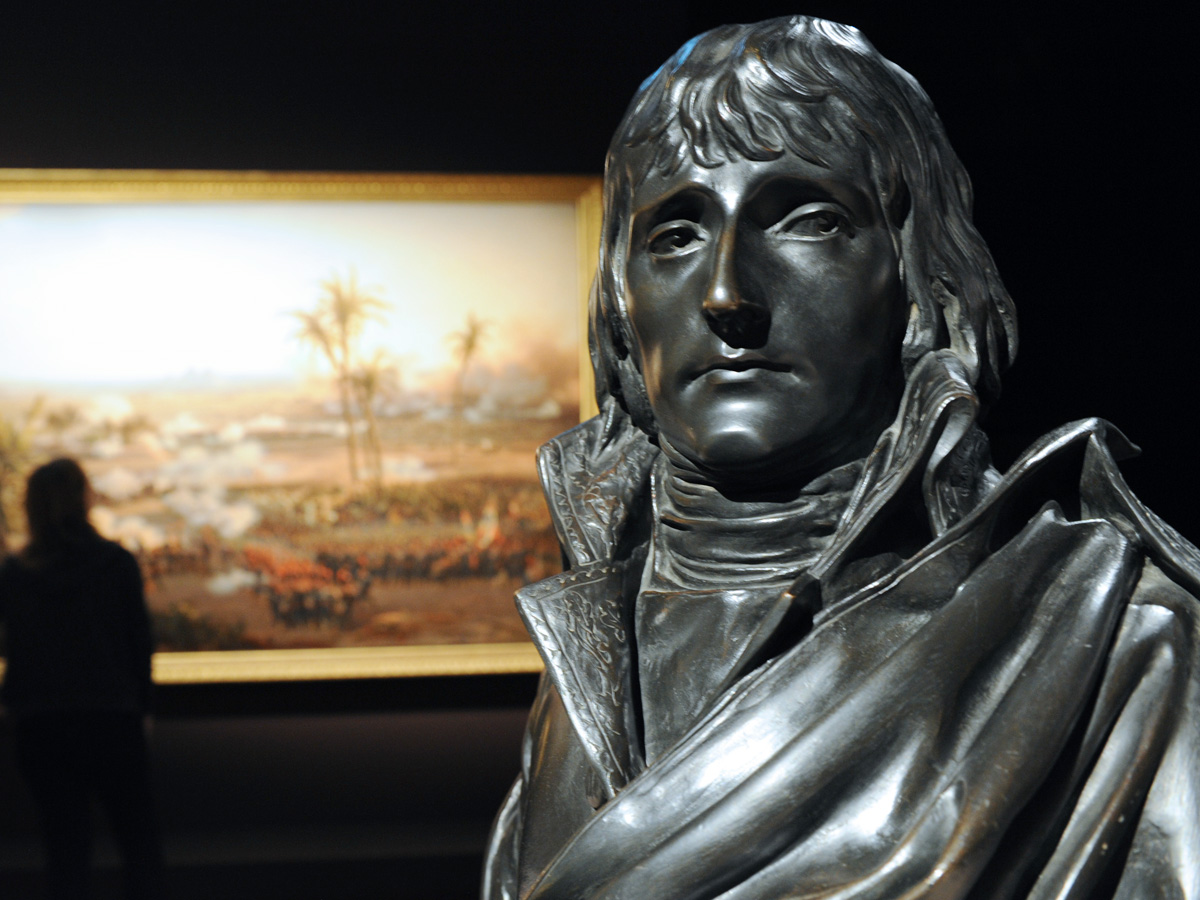
On February 26, 1815, Napoleon Bonaparte with a detachment of a thousand people fled from the island of Elba. Sent from France after defeating in the war with the coalition of European powers, he spent a little over a year in exile. Having learned about the discontent in the country, the Burbon’s reign who received power from the hands of strangers, Napoleon decided to regain the crown. He landed on the southern coast of France and moved to Paris. King Louis XVIII sent the army units to capture the fugitive, but they joined Napoleon. Marshal to her, who promised the king to "deliver Napoleon to Paris in the Iron Cage," also went over to the side of the emperor. On this occasion, the Parisian jokers hung a poster on the Vandom Column: "Louis, my brother! Do not send me more soldiers, I have enough of them." Napoleon entered Paris, an enthusiastic crowd in her arms brought to the Tuilery palace. Later, his return from the Elba began to be called the "flight of the eagle." His famous "hundred days" began, which ended, however, defeat at Waterloo.
On February 27, 1919, the first radio broadcast in Russia took place between Moscow and Nizhny Novgorod. This was an experimental program of the Nizhny Novgorod radio laboratory under the leadership of the radio engineer Mikhail Bonch-Bruevich. For transmission, vacuum generator lamps were used. By the way, the first Russian vacuum lamp three years before was also created by Bonch -Bruevich - a artisanal way, in an amateur laboratory. The need to create a professional radio engineering laboratory in Russia was proved by the teacher Bonch-Bruevich, the famous physicist Professor Lebedinsky. The idea was approved by Lenin, which made it possible to organize the Nizhny Novgorod laboratory, where talented engineers Vladimir Leshchinsky, Peter Ostryakov, Valentin Vologdin worked as soon as possible.