
Translated material
New "Titanic" is not worth waiting
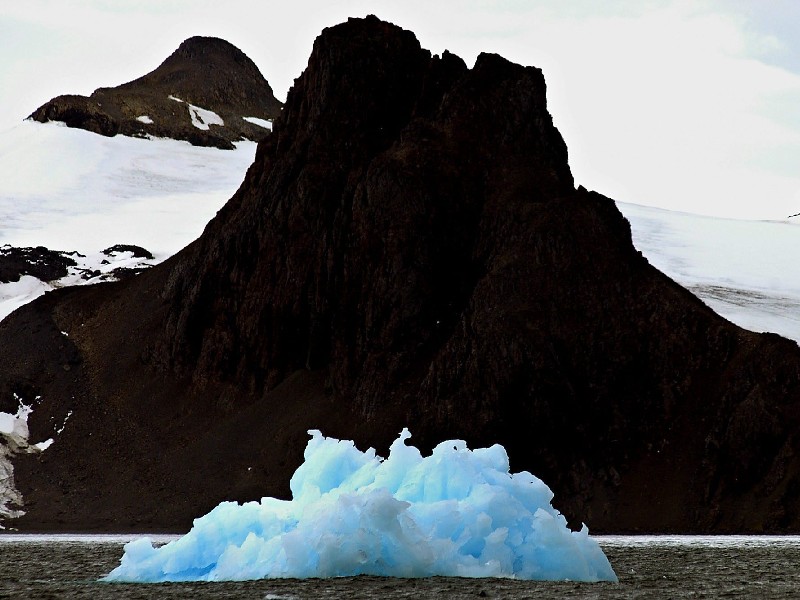
A group of Australian and French scientists engaged in joint research of the climate of the Antarctic and its waters reported that the iceberg of unprecedented sizes had broken off the Merz glacier in the east of Antarctic. A block of ice with an area of more than 2.5 thousand square kilometers and an average thickness of 400 meters immediately attracted the attention of the media around the world, giving rise to a wave of rumors about the hazard impending Australia .
Dr. Neil Young , an employee of the Australian Branch of the Research Center of the Antarctic Climate and ecosystems, said that, an ice floe, which now drifts 100 kilometers south of Australia, has a record size:
- It is very rare to observe such icebergs. Yes, they appear from time to time, and I would say that there is nothing unusual in this, but it's still a rarity.
With the help of space filming from a satellite and GPS-beaces located in the ocean, scientists have observed for many years the behavior of the eastern section of the Antarctica ice shield. The faults that appeared on it in the 1990s have long acquired critical sizes. A random frontal collision of the shield with another large iceberg called B-9B (it drifts in the waters of Antarctica for 23 years), which occurred in early February, entailed the final separation of the new iceberg giant.
The future behavior of the encountered ice floats seriously worries scientists. It can affect the processes of circulation of oceanic currents and the formation of fresh waters in the southern hemisphere, lead to a decrease in oxygen content in the oceans, and cause a number of cold winters in the north of the Atlantic. The negative impact on the life of marine mammals and colonies of royal penguins - the only birds that can reproduce offspring in conditions of harsh Arctic winter - is also possible.
Perhaps some localized changes will occur near the place of these events, but even there they will not be some kind of extraordinary, and we will not feel it in any way

However, Russian experts, on the contrary, are sure that there is nothing to worry about, and the emergence of a new iceberg giant will not affect the world ecosystem critically. So believes Valery Lukin , head of the Russian Antarctic expedition, deputy director of the Arctic and Antarctic Research Institute. Doctor of Geographical Sciences, Deputy Director of the Institute of Oceanology named after P.P. Shirshov of the Russian Academy of Sciences in the Physical direction of Peter Zavyalov :
- Such events occur quite often and always occurred. In any case, larger icebergs were already abandoned in 2002 and 2007. It is known that this happened from time to time before. This is a natural process, it may be somehow associated with warming, with global climate changes in the sense that the more intensive destruction of the Antarctica glacial shield is noted, but there will be no catastrophic consequences. Perhaps some localized changes will occur near the place of these events, but even there they will not be some kind of extraordinary, but we will not feel it.
As for the danger that the new iceberg giant presents for world shipping, it, according to Dr. Zavyalov, is minimal:
- So far, in the area where this is happening, there are almost no ships. There can only be some scientific vessels. But in general, this area - Antarctic waters - is far from the most intense navigable lines. It is necessary to monitor where this iceberg, or its fragments, will drift in the future, if it is fragmented. Typically, most of these icebergs live in Antarctic waters. Sometimes they can focus somewhere in the direction of more shipping paths. And then theoretically they pose a danger to shipping, but now, in comparison with the times of the Titanic, there are radars on any ship, there are satellite observations, so it is quite difficult to imagine an unexpected collision.
The emergence of a new iceberg provided scientists with a unique opportunity to observe in real time in further changes in the region’s ecosystem.