
Translated material
Films to the wind
Will another reform solve the problems of Russian cinema?
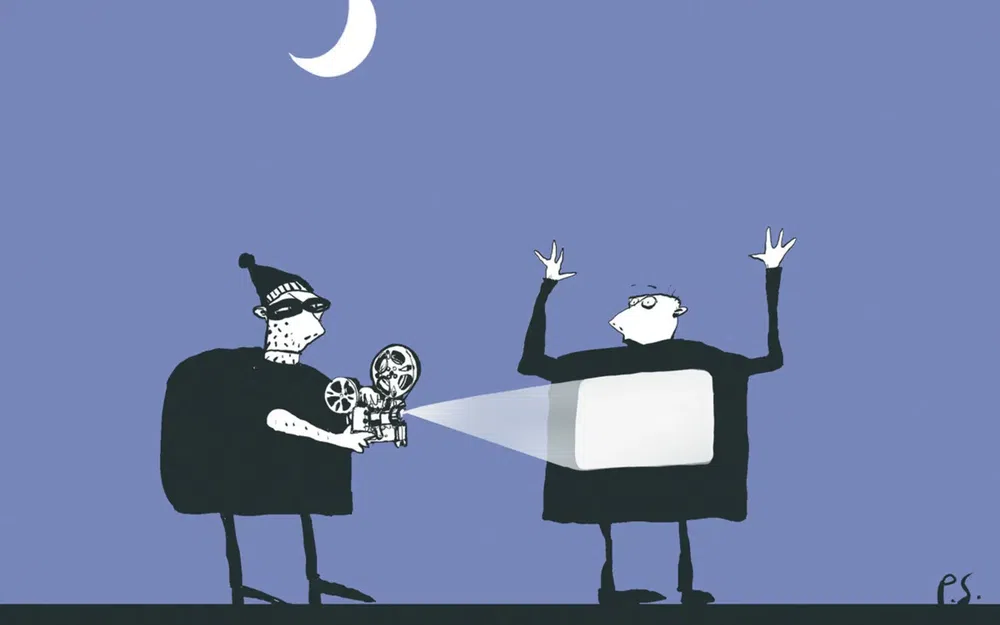
The reorganization of Russian cinema is in a hurry and secretly. On March 19, Sergei Tolstikov, head of the Federal Fund for Social and Economic Support of Russian Cinematography, will announce exactly who will receive for what merits ...
The reorganization of Russian cinema is in a hurry and secretly. On March 19, Sergei Tolstikov, the head of the Federal Fund for Social and Economic Support of Russian Cinematography, will announce who exactly and for what merits will receive money for film production.
Let me remind you: with a new financing scheme, the funds allocated to the cinema will be distributed in the form of subsidies through the fund, but no one hit, but “leaders of film production”. Yes, there’s nothing to do - on the films of the "Great style", "Assembly of the strategic tasks of the state." In simple words, we will remove the commercial patriotic. The Ministry of Culture is still left the opportunity on a competitive basis to finance art projects, debuts, non-game and other “other cinema”.
The ignorant will sigh: "Well, again about the money." The awareness rate: “Cinema is expensive, in rare cases, invaluable joy. The state “orders” him, now he is “dancing”.
While the film community is spinning in a mill of speculation and rumors. Information “from above” about decisions regarding literally everyone: both filmmakers and spectators - practically does not receive. First, holding his breath, they were waiting for meetings of the newly -minted fund scheduled for March 7. They moved to the 12th ... Now we are waiting for the 19th. Apparently, a serious war is going on for "leadership". But time is flowing, and in anticipation of changes, new projects with the participation of state financing have been practically not launched for the second year.
This means that next year the share of Russian cinema is already shamefully low at the box office, it will fall even more. We must understand ...
Give a reform!
To discuss the topic of reform is irrelevant. Firstly, after signing the decrees, the chairman of the government cannot be canceled. Secondly, the need for the transformations of relations between the state and cinema is really ripe.
The ideologists of the reform is not reasonably argue: the old financing system is hopelessly outdated, saturated with corruption (how can we not recall the Lenin’s “how can we reorganize Rabkrin”: “Our state apparatus <...> is mostly an old man of the old <...>, it is only slightly smooth from above”). The system of relations between the state and cinema is ineffective. Russian films can hardly break into cinemas. Almost no one is interested in promoting the picture to the viewer: neither the Ministry of Culture, which gives money, is not a producer who receives it for production. And what do you want: half the revenue from tickets will take the cinema, 50% of the remaining amount will take the distributor, there will be no money left for advertising. That is why the best of the new Russian films fall into the box office (such is the fate of Minnesota, and “Volchka”, and “Crazy Help”). It turns out, “Films are in the wind”? The state as a general producer financed them, and make sure that they, relatives, go to their viewer and pleased him - the state had no opportunity or desire.
The initiators of the change say: out of 100 films, only a third is released. According to the Ministry of Culture, more than two-thirds of the total number of finished paintings plus cable television, DVD rental were released on large screens. Cases of unclaimed cinema are single.
"Reformers" claim that the changes will not be reflected on the "other cinema". The Ministry of Culture declares an inevitable reduction in production, which will affect both copyright and non -game cinema, debut, animation, festival activities. Officials from the government believe that the Ministry of Culture itself slows down the start process, exciting public opinion, putting sticks in the wheels of reform. In the Ministry of Culture, claims are not made to reform, but to its methods.
The “rebooting” shifters longed for the enlargement of studios that would work at once on several projects for three years. In this mode, the studio uninterruptedly develops a package of several paintings, independently planning its budget.
The existing system of contests of future projects is blamed for keleiness and "kickbacks". In addition, the Ministry of Culture, as an executive body, does not have the right to engage in a “refund”, for this, a film fund, which will issue return subsidies, is needed. The fund from now on is our main businessman-producer. Conductor. Controller. Three in one.
So, the new subsidy system is aimed at the formation of the industrial industry. Hooray!
Pro and counter
The reform carried out without a versatile examination has hot supporters. First of all, among the top managers from television and cinema, who expect to take power into their own hands, enter the elite list of "Maighors" and their "close circle".
Critics of reform (which are today the majority among ordinary filmmakers) ask many questions ... into the air. Only last week, Sergei Tolstikov met with producers who explained that the fund would not support the author and debut cinema, he was more interested in commercial cinema. This means that now in cinematography everything will be doubled: two controls and financing (Ministry of Culture and the film fund), two types of support, two cinematography. And about the talent that the money should follow, only Putin says about the competitiveness of our cinema.
In the Board of Trustees of the Fund there are only two (!) Cinema. Mikhalkov and his faithful associate, VGIK Rector Vladimir Malyshev, the rest are officials. The government explains: “And with whom else to deal, Mikhalkov is a legitimate chairman of the UK. During the past year, almost no one left the Union. ” The degree of influences of the charismatic Mikhalkov on senior officials in this council, who are vaguely versed in film production, is clear. Among them are the head of the Foundation Mr. Tolstikov, delegated from Transmashholding CJSC to lead the movie. Sergey Tolstikov is a person from the side, a disinterested person. He is designed to miss the money and control it.
The most foggy and controversial issue is “leaders of film production”, the criteria for their choice. For example, one of the main applicants is called the RVS studio - (Russian World Studios, AFK System). But even the “reformers” themselves could not call me a single worthy film created in the walls of this technically advanced studio.
Why not the “reconstructors” not bless Lenfilm, a studio with traditions, which is dying today not from a shortage of ideas - from the lack of money. The Maksimovs, who, together with Ernst, millions in advertising of the films “Cinema Channel Cinema Directorate”, are also not averse to making films for the civil account. They are the first in the list of "recipients". The three leaders automatically include the TRITE Mikhalkov, the main engine of the reform. Among the criteria for selection of “leaders”, the fees of films, their total number, TV ratings, prizes at festivals, and experience of the studio in the market will be taken into account. Why then not to encourage the Koktebel studio, on which they work and achieve the highest cinematic awards of Khlebnikov, Popogreb, Sigarev, Khomeriki?
In fact, we do not have meaggers. There is not a single studio, with the exception, maybe only the CPSh whose films would correspond to all the named criteria. It remains to choose “your own among strangers”? In addition, in any country, the "meaggers" were not appointed from above. We are the first. Therefore, on the sidelines, this deck of the Aces today is not -era not laziness.
Without declaring war
The reform began suddenly, to the surprise of not only ordinary filmmakers, but also the leaders of the Ministry of Culture. Then the shares in the distribution of funds between the fund and the Ministry of Culture were agreed by all parties. But on December 31, according to our information, the “letter is different” on the table of Putin, not the one that was prepared by Minister Avdeev. In a new letter, the ratio of funds between the fund and the Ministry of Culture was changed in favor of the fund. The initiators of the suddenly “corrected calculations”, apparently, deliberately acted secretly, bypassing the film department of the Ministry of Culture, which are reproached for negligence and protectionism. The main battle between the Ministry of Culture and officials of the government apparatus goes for the amounts for the so -called transition projects. According to our information, they have accumulated 611. There are incomplete projects from almost 2000. Both films and money require an account. The Ministry of Culture reports. Now they check how many completed films are handed over to the archive of white pillars. The Ministry of Culture is in no hurry to start a new production: it is not known how much more to give the producers of incomplete work on debts.
Among the rumors around the reform are the most incredible. For example, that the reform is only the beginning of the liquidation of the Department of Cinematography of the Ministry of Culture, the place of which the fund will take in the future. Reprooping the officials of the Ministry of Culture of unscrupulousness, the organizers of the reform for some reason believe that the "Major" companies that will take about 20% of the production of the film will work honestly, without kickbacks.
In the near future
So, 2.86 billion rubles of the film fund will be shared between the “leaders”. The government expects at least a partial return of invested funds from them. But, according to expert estimates, the "meaggers" in this financial scheme will be released about 15-20 paintings per year. The figure is modest. Konstantin Ernst believes that no more than 10 paintings per year should be made in the country. We fold, get less than 30 films. Consequently, we return to the Stalin era of the Malocortini. At the same time, everyone knows: three or four worthy happen in 10 launched films in the best. The industry for life support needs about 80-90 films: blockbusters, mainstream, copyright and debut - interacting flows that cannot be artificially “locked”. However, with the existing deficiency of ideas, “leaders” will not do without talented young directors and producers, whom Ernst calls “babies” and who have recently earn awards on international shows. Gai-Germanic and Voloshin are already working on the first. But, most likely, the "meajor" will also take the right to the film. It turns out that the reform will harm the "independent" producers and directors.
“Reformers” hope that the owners of the “Maigzhors” studios are ambitious people, they will try to prove the success of “Reform”. But he was entrusted with a difficult task: to build a “large style” movie that meets the “strategic tasks” of ideology, successful at international festivals and even loved by the domestic viewer. According to Yuri Arabov, the “big style” movie will adapt to the style and interests of television.
The main and very convincing argument of the reformers is the need to create a mechanism for returning the funds spent on film production. With 2100 cinema halls, the absence of cinemas in small cities, the program is non -viable. He who will be responsible for the consequences of hasty reform is unknown.
The tops want the bottoms cannot
Countering reform from the film community did not immediately begin. At first, they sat on the “kitchens” of their studios, trying to figure it out: maybe from a new financial pie, baked by the state, and we will get a piece? Then they stirred. Producers came to the noisy protest meeting. Russian animators in an open letter called the transformations "death sentence of Russian animation." The letter of leading Russian directors (among the signatures, according to our information, Smirnov, Abdrashitov, German, Sokurov, Ryazanov ...), but the Ryazanov: horizontal ties among the filmmakers were torn apart. Therefore, they are so easy to manipulate.
So, from January 1, 2010, a new countdown of the time has gone for cinema. Times, Shuman wrote, do not stand still, they are always directed somewhere. Forward or backward. This amazing reform, designed to stimulate, advance our cinema forward, can fully turn on the back speed. After all, the current reconstruction is glorious by an unpredictable result. In medicine, after "rebooting", insurance companies devour clinics. In education, tests destroy living knowledge. In sports, numerous reforms yourself know how ended. How not to recall Krutitsky’s significant work in Ostrovsky’s play “On any sage ...” - “A treatise on the dangers of reforms in general”.
Reform is needed. Moreover, it is necessary. But it should be carried out without an emergency, thoughtfully, systematically. After the analysis of the substantive, political, financial condition of the cinema, the study of the audience expectations (why did the “best film” -1 and2 raised $ 40 million at the box office?). Given European experience, when such funds exist mainly for percentage deductions from cinema and DVD rental. With a thought -out approach to piece author's products. With understandable criteria of competitions of future projects. With a worked out repertoire policy. With the investment not only in production, but also the promotion of paintings on the screens. Not only game, but documentary and animated. You say the viewer is not ready? So take care of his education, not corruption. In Germany, halls are being built throughout the country for national and author's cinema.
Correctly in his program work “How we reorganize Rabkrin” wrote Ilyich: “They can say that no conscientiousness, no party authority will replace what is the main one in this case, namely: knowledge of the case.”