
Translated material
Three outcomes of the same experience
Phages, bacteria and lamarkism
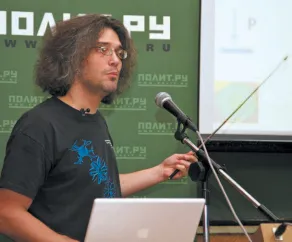
“In essence, I will tell you about the same experiment,” said Doctor of Biological Sciences at the beginning of his public lecture at the Polytechnic Museum on March 25, 2010, the head of the Laboratory of the Institute of Molecular Genetics of the Russian Academy of Sciences, professor of the University of Ratgers Konstantin Severinov. “Over the past 70 years, it has been put at least three times, all three times received different results, and all the results were correct.”
Speech on the acquired signs
Since the science suggested that the species could change, it had to answer the question: how does the amazing adaptability of living organisms arise to the conditions of their life?
According to the author of the first whole evolutionary theory, the famous French zoologist Jean Batista Lamarka, it is all about the original ability of living organisms to change their features in accordance with the requirements of the environment. Everyone knows that in a person who regularly lifts severity, muscles increase; The pine, shaded by neighboring trees, begins to reach up, and the chameleon and octopus change the color of its integument in accordance with the surrounding background. It remains only to assume that these changes are transmitted to offspring, accumulating among the generations.
However, Lamarck himself believed that the inheritance of individual achievements only modifies the action of the main driving force of evolution - the desire for progress. However, by irony, the word “lamarkism” began to be called precisely the idea of the inheritance of adaptive changes acquired throughout life.
Half a century later, Charles Darwin proposed a different solution to the problem of adaptability. The material for evolution is random and non -focused hereditary changes. Those of them, which contribute to the survival and reproduction of their owners, over time apply to the population and become the original line for the next step. The environment does not dictate to the body which direction to change - it only favors the bearers of some changes more than the owners of others.
At first, almost all evolutionary biologists recognized the action in the nature of both mechanisms. Darwin himself did not deny the possibilities of inheritance of adaptive changes - indicating only that some adaptations cannot be explained in this way. However, soon August Weisman came up with the statement that the signs acquired throughout life were not inherited at all. It was possible to refute it (and this one wanted this) in only one way - proving the reality of this phenomenon.
Its searches are inferior only to the search for philosophical stone and the eternal engine. More than once or two enthusiasts reported the discovery of indisputable evidence, but each time skeptics found either methodological vices (or even direct falsification) in the experiment itself, or alternative explanations of its results. The inheritance of acquired signs gradually turned from “undoubted” into “very probable”, then into “possible”, “alleged by some authors” and, finally, in “not discovered, despite the persistent search”. In microbiology, the dispute of the Darwin and Lamarkovskaya models dragged on until the 1940s and ended with the famous experience-the first of those that Professor Severinov spoke about.
According to dispersion
Microbiological experiments are good in that the timing of evolution here is measured for days, and the entire evolutionary population along with the environment is placed in one test tube or Petri's cup. And one of the factors of the environment, to adapt to which bacteria had to, were the viruses parasitizing on them - phages. Infection of phages led to mass death of bacteria, but if there were quite a lot of them, there was a cage among them, immune (resistant) to the phage. She and her descendants grew calmly and multiplied on a nutrient medium with the phage, forming on the surface a colony visible to the naked eye.
In 1943, Max Delbryuk and Salvatore Luria decided to check how resistance arises - by lamark or by Darwin. In the first case, adaptive changes in the bacteria genome should cause the effect of the phage -and means that they can occur only in its presence. And if you propagate a bacterial strain in many test tubes, and then from each sowing on Wednesday with the phage, then the number of colonies of stable bacteria in each cup of Petri will be the value of one order.
If evolution is walking along Darwin, then mutations that give bacteria stability arise regardless of the presence of the phage. In one test tube, the desired mutation occurred ten generations ago, in the other five, and in the third - just now. Then, in sowing from the first test tube of stable cells, there will be more than a thousand, from the second-32, and from the third-one single. Strict calculations show: when adapting the lamark, dispersion (a measure of deviation from the average) of the number of stable cells should be equal to their average number, when adaptation by Darwin, it is multiple to exceed the average.
Delbryuk and Luria set their experience on Escherichia coli bacteria (E. coli) and T1 phages. It was later repeated many times with different phages, as well as antibiotics and other damaging agents. The results were unambiguous: the dispersion has always been repeatedly exceeded the average. Bacteria adapted along Darwin.
A few years later, the spouses of Joshua and Esther Lederberg showed the same as they say, "on the fingers." They sowed many bacteria on an ordinary nutrient medium, and then a special velvet pillow transferred the imprint of all colonies to Wednesday with the phage. If something grew there (and sooner or later this happened), then it was possible to determine exactly what colony stable bacteria took from. And every time it turned out that the original colony was also resistant to the phage - which has never encountered in life!
The question was closed for many decades. But, as it turned out, not forever.
Hunger will teach
If Delbryuk and Luria poisoned the intestinal stick with deadly faces, then the professor of Harvard medical school John Kernes struck her hunger. For the experiments, a mutant strain of Lac-, in which the gene of lactase enzyme, which split milk sugar-lactose, was damaged. Many bacteria of this strain was sown on an environment, the only nutrient in which was precisely lactose.
In each cup of Petri there were several cells that had a reverse mutation and the gene restored its activity. They successfully grew and propagated, giving the beginning of the colonies visible to the naked eye. But the bulk of the dried bacteria did not die either: they passed through two or three divisions, and then ceased to multiply and limited the life processes to the limit.
If only a few colonies grew in each cup a day after sowing, then the next day a few more were added to them, then the number of colonies that could split lactose, grew directly in proportion to the time from the moment of sowing to the selective environment. What exactly corresponded to the Lamarkovo model - the long -term action of the factor, which must be adapted, caused adequate changes in the genome.
The article by Kernes and his employees, published in 1988 in the authoritative journal Nature, made a lot of noise. A long -term large -scale study was required to understand the mechanism of the detected phenomenon.
It turned out that the lactase gene used by Kernes was disabled to the end: the mutant enzyme could still split milk sugar, but its activity was about 2% of the normal. With such a meager diet, of course, there was no question of any division. But the bacteria used company know-how-amplification. A few copies are removed from the gene, whose protein is sharply lacking, which are immediately built into the genome. And, say, 6 copies of the mutant gene are already as many as 12% of normal enzymatic activity, it is enough to multiply slowly. Meanwhile, even before the experiments of Kernes, biologists knew that under adverse conditions the frequency of mutations in bacterial cells increases sharply: under stress in the cell, alternative DNA polymerase works, making much more errors than “regular”. And sooner or later, among these mistakes, there is a saving - a reverse mutation that restores the normal activity of the enzyme.
Thus, this case ultimately recovered to the Darwin model: the environment factors did not determine the direction of mutations, but only increased their frequency and selected successful options.
And yet they are inherited!
Philip Croat and Rodolf Barranga were employees of Danisco, a food ingredient manufacturer and cultural culture. In the latter, the microbe of Streptococcus Thermophilics was widely used, which ferments lactose to lactic acid. The weak point of this microbe was the sensitivity to phages: accidental infection could lead to mass death of streptococci throughout the enterprise. However, Streptococcus also regularly had strains resistant to phages. The task of Croat and Barranga was to find out the mechanism of this stability.
By the time of the beginning of their work, it was already known that Streptococcus (unlike the E. coli) has a key role in protection from phages is played by the so -called CRISPR/CAS system. Its core is the CRISPR locus -a section of the genome, where short (2347 pairs) chains of the same sequences of nucleotides alternate correctly with areas, almost as short (21-72 pairs), but uniquely called spacers.
The number of spacers and the repetitions of them in different cells is different and can reach several hundred, but usually there are less than 50. Near the CRISPR locus there is an extensive CAS area that combines a number of ordinary structural genes encoding various proteins-nucleases, polymerase, nucleotide-tied proteins, etc.
Having infected streptococci by the phage T1 and highlighting stable cells, Croat and Barranga compared their CRISPR locus with a similar locus of the original strain. It turned out that in the surviving streptococci, this locus grew by one or more pairs of “repeat - spacer”. Moreover, the “text” of the new spacer every time exactly coincided with any of the DNA sections ... of the very face, the stability to which was acquired. To verify the inclictions of this coincidence, scientists by the methods of genetic engineering inserted an artificial spacer from the DNA of the FAGA into the CRISPR locus CRISPR. The cell changed in this way turned out to be resistant to the phage, which has never encountered.
Further studies allowed to reconstruct the mechanism of "bacterial immunity." With the invasion of the faculty, those cells that manage to cut a piece from the DNA of the aggressor are obtained and insert it into their CRISPR, complementing with a standard repeat. A counted RNA from all over the locus is cut into short pieces: two halves of repetition on the sides and a spacer between them. Since the new spacer is a copy of some section of the Faga DNA, RNA, which is a matter of RNA, is firmly and selectively associated with this site. And on this mark, CAS-Belka identifies and destroy the entire viral DNA. (By the way, the initial “taking the sample” of an alien DNA, its integration into the CRISPR locus, the cut of RNA from this locus on functional fragments, etc. They also make CAS-beches, only others.) And from now on this phage will never be able to infect the cells of this strain-at least until the area of its genome that the bacteria has introduced into its own "Antivirus library."
It turns out that the recording in the genome that provides adaptation to the new environmental factor (phage) makes this factor itself. And in the future, this adaptation is inherited by all the descendants of the bacteria acquired it. As Lamarck postulated.
At the same time, the CRISPR/CAS system is not such an exotic: almost all archeas have it (the most ancient nuclear organisms, which are now allocated into a special kingdom of living beings) and about 40% of the studied bacteria. True, the Escherichia stick does not have it - which allowed Delbryuk and Luria to prove the Darwin mechanism of adaptation of bacteria.
Professor Severinov concludes from this that there are no general principles that are universal for all cases in biology and that the further contrast of Darwin and Lamarka models is meaningless. Nevertheless, he agrees that this mechanism can provide one single type of adaptation-the neutralization of a damaging agent, and certainly a biological nature. In order for the information from the environment to be directly entered into the genome, it is necessary that it already be recorded in the language of the genome.
Thus, the Lamarkovo inheritance of immunity in bacteria is an exception that confirms the rule: the selection of random changes is the only way to create new genetic information.
Boris Zhukov
Video recording and decryption of the lecture by K. Severinov
See on the site "Polit.ru" www.polit.ru/lectures/
Discuss in the LiveJournal Community Trv_Science_ru .