
Translated material
Power is divided in Britain - conservatives began negotiations with liberal democrats
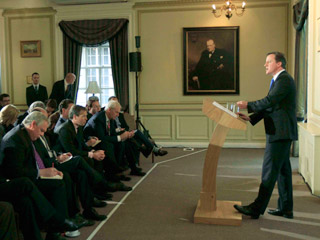
The British conservatives, who received the largest number of votes in the parliamentary elections, but who did not have the opportunity to independently form the government, began negotiations on the coalition with liberal democrats, the Air Force reports.
Tori lacks 20 seats to form a cabinet of ministers themselves. Cooperation with libdems, which showed the third result and received 57 seats, can help David Cameron take the prime minister.
David Cameron said that he was ready to make the liberal democrats to Nick Kologa "open and comprehensive offer." “I want us to work together on big problems that require an urgent solution - a debt crisis, our deep social problems and a destroyed political system,” Cameron said.
The leader of the Labor and the current Prime Minister Gordon Brown also does not exclude the possibility of coalition with the liberal democrats and has already announced the common views of the two parties.
In the new parliament, conservatives will be able to take 306 seats, that is, until the vast majority they lack exactly 20 votes. The representative office of the Laborists will be reduced by 91st place and will amount to 258 deputy mandates. Liberal democrats will receive 57 seats.
Until the majority is formed in parliament, the country will continue to rule Gordon Brown. Theoretically, Brown can continue to rule the country, achieving support in the parliament of each particular law.
The coalition of Tori and Libdemov will definitely create in parliament the majority necessary to change the government.
Conservatives can rely on the fact that representatives of other parties who went to parliament (in total, they received 28 seats) will go to cooperate with them).
The most likely ally of Tori can be considered, for example, the North Irish Democratic Unionist Party, which received eight seats. However, this support is not enough to gain 326 votes.
The possible cooperation of the Labor with Libdemes will not give them the necessary majority. However, Brown will remain in power. Laborists theoretically can count on the support of three deputies of the Social Democrats, and possibly for the first time in the parliament of the representative of the "Green".
The key issue for liberal democrats is the reform of the electoral system. If the places in the British parliament were distributed in proportion to the votes in the whole country, at the current level of support for libdems could count at least 140-150 seats.
But since the country has a majority system in which deputy mandates receive election winners in the districts, the parliamentary places in the parliament go to those parties who are more efficiently organizing work in the field.
The leader of the country, the leader of the Labor Labor Gordon Brown on Friday, who continues to remain, said that the British people should decide in a referendum what the country's electoral system should be.