
Translated material
Tara is weak
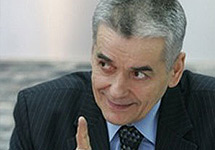
Rospotrebnadzor suspended the sale of five nesting coffee items packaged in a stagram glass banks, Interfax reports, citing a statement by the head of the Federal Service for Supervision of Consumer Protection of Gennady Onishchenko. He noted that the relevant order was given to all territorial departments of the department.
Earlier, Nestle herself announced the review of five types of coffee. On Thursday, a message appeared on the company’s website that says that some glass banks in which the soluble Nescafe coffee is packaged under the brands Alta Rica, Cap Colombie, Estet, Kenjara and Espresso, can be subject to cracking during transportation. Because of this, they may contain small glass particles.
Nestle asked its Russian partners to stop sales of these products. At the same time, it was noted that the review does not apply to other varieties of Nescafe coffee. All other products meet quality standards and are safe for consumption.
The types of coffee mentioned in the statement will appear on the market when Nestle changes the packaging format. At the same time, the company promised to compensate to customers the cost of already purchased products at the rate of 350 rubles per bank.
The ban on the sale of coffee was not the first restriction imposed by Rospotrebnadzor on Nestle. So, in April, the department forbade the company to sell four types of children's power in Russia in Russia, the production of the American company Gerber Products, which is part of the Nestle group. The reason for the ban on Onishchenko then called the fact that the bird in Gerber Products products was treated with chlorine. In Russia, the use of chlorinated meat for the production of food is prohibited from January 1 of the current year.
For the first time, the prohibitions on the import of finished food products are used by Rospotrebnadzor. So, in March 2006, against the backdrop of an exacerbation of Russian-Georgian relations, Gennady Onishchenko, also sent to the FCS, withdrew sanitary conclusions to Georgian and Moldavian wine, and in April also banned the turnover of these products in Russia. In May 2006, Onishchenko, according to the same scheme, banned the import and turnover of Borjomi mineral water in Russia (later he was added to it and “run”).
The prohibitions from Moldavian wine in 2008-2010 were gradually lifted after the change of power in Moldova, prohibitions on the import of Georgia goods were preserved.