
Translated material
Parallel world: there is contact
In recent years, a lot of popular science literature began to appear in bookstores, which, of course, cannot but rejoice. But despite the growing assortment, the theme of the presented works remains quite narrow. Most of the books are devoted to physics (not least thanks to the reprint of the books of Stephen Hawking), astronomy is in second place, in the third - molecular biology and genetics. Readers love books about quantum physics, the theory of relativity and astronomy for the fact that these objects are terribly mysterious and at the same time deal with the basis of the foundations of our world, and genetics attracts that from it a stone's throw to medicine, which in the near future, promises us the most incredible prospects like new organs and longevity.
Other disciplines cannot boast of all these advantages and therefore have less value in the reader's eyes. Nevertheless, occasionally on the shelves, popular science books appear not only about Einstein, Genom and Quasars. Even less often, these books are not translated, but written by Russian authors. One of these books, which tells about the undeservedly “pushed” area of science, was the work of Vladimir Anatolyevich Tsimbal “Plants” published in 2010. Parallel world. "
The author of the book tried to describe the world of plants unprepared reader - creatures that are so much different from people and other animals that it may well be perceived as aliens. Plants are always in one place, they do not make any sounds, they have no organs familiar to us, and although now no one doubts that grass and trees are living, many people have the feeling that they are somehow differently.
In the preface, the author writes that in his book he just intends to introduce the reader closer to the features of these amazing creatures and describe how unusual, unlike animals they have to solve inevitable problems - how to breathe, move, eat and multiply. In addition, Vladimir Tsimbal was going to briefly talk about the origin of plants and their evolution.
The author coped with the goals set before itself - but partially coped. He really managed to mention all the main features of the plants on 144 pages, however, each of these features is given very little attention - for example, to describe the organs of plant feelings (the existence of which most readers probably find out for the first time) only five and a half pages are allocated.
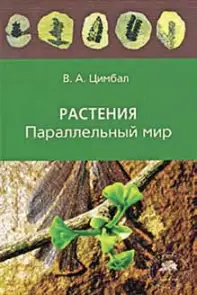
At the same time, in contrast with the laconicity of the story about the physiology of plants, Vladimir Tsimbal, with the presentation of various points of view, discusses their origin and evolution with the Paleozoic according to the Cenozoic era. The author is trying to answer the question of who was the ancestor of different plant groups, quotes the opinions of specialists on these issues and enters into polemics with them. At the same time, he inevitably has to use imperishable terms like “glossopterida”, “psigmofillodenrop”, “tortilicaulis” and “brachiblast”. A person who does not have a biological education will be very difficult to get through these names. In addition, the reader who is specifically not interested in Flora is unlikely to be close to the ardor of botanical discussions about the ancestral form of the plain -like ones.
Summarizing, we can say that the work of “plants. Parallel Peace ”is not a clear target audience. People who have chosen Botanik with their profession will not find anything new for themselves in the book. Those who know nothing about plants can not evaluate this work due to the lack of vivid examples illustrating one or another unusual for animals by the peculiarity of the “green brothers”, and the abundance of details that non-professional are unlikely to seem important.
Nevertheless, despite some skew in the presentation of the topic, “plants. Parallel world ”is a decent popular science book. And although it at times needs to read some efforts, one who cope with this task will significantly expand their ideas about the world around him, especially since the book really has some entertaining information about colors and trees. And the most important thing is that acquaintance with the work of Vladimir Tsimbal can encourage the reader to start looking for some other information about plants. And since the reader learns many special terms from the book, after reading it, more serious sources will probably become available to him.