
Translated material
Missionary in science
On May 10, Plato Grigoryevich Kostyuk died. Despite the fact that it was known about his serious illness, the news of the death was sudden and tragic. A talented scientist, a brilliant experimenter, an outstanding organizer of science, a wonderful teacher, a kind and wise person passed away.
In recent years, we did not meet often, but regularly enough, and Platon Grigoryevich spoke a lot about his past, about his teachers, unexpected turns of fate. It was good, calm and reliable with him. His high posts and regalia disappeared somewhere, and next to the amazing kindness and wisdom of the interlocutor, teacher, adviser.
Born P.G. Kostyuk August 20, 1924 in Kyiv, in a family of scientists: mother - chemist, father - psychologist, founder and director of the Institute of Psychology, member of the Academy of Pedagogical Sciences. Plato Kostyuk had two passions: music and interest in natural sciences. Ultimately, the atmosphere of the research environment, an example of parents and, most importantly, internal aspirations determined the choice.
Kostyuk graduated from the beginning of the Great Patriotic War. In 1941, he was evacuated with his father to Stalingrad, where he entered two institutes at once: medical and pedagogical - at the faculty of foreign languages. (Plato Georgievich brilliantly knew three languages: German, thanks to a nanny-a-nose, English and French).
It was possible to study in Stalingrad only throughout the year: the war approached the city, and in 1942 his father was forced to move to Kzyl-Horde, where Kostyuk continued his studies at the Faculty of Medical University. In 1943, he was drafted into the Red Army, served in the reserve regiment, then became a cadet of the Kharkov Military Medical School, which was in Ashgabat, and worked as a paramedic of the reserve medical battalion. After demobilization in 1945, Kostyuk returned to his hometown and continued to study at the biological and soil faculty of Kyiv State University, which he graduated in 1946. In 1949, he also graduated from the medical faculty of the Kyiv Medical Institute.
Even in his student years, the future scientist began scientific work in the Laboratory of General Physiology at the University of Kiev, headed by one of the founders of modern electrophysiology, Daniil Semenovich Vorontsov. Participation in experimental work aroused interest in researching the mechanisms of functioning of the nervous system, which has been preserved for life. In 1950, Kostyuk defended his candidate, and in 1957, the Document dissertation.
In mid-1950s, Kostyuk was the first in the Soviet Union to use glass microelectrodes for intracellular registration of the potentials of nerve cells. His scientific priorities at that time were presented in two books - “microelectrodic technique” and “Two -neuronic reflex arc”. To a large extent, under the influence of Kostyuk's works, microelectrodic technique began to be intensively used in many laboratories of the Soviet Union, contributing to the development of ideas about physico-chemical processes in different types of cells, about the mechanisms of synaptic transmission and generation of cellular excitement.
From 1958 until the end of his life, Plato Grigoryevich worked at the Institute of Physiology. A.A. The pilgrim of the Academy of Sciences of the Ukrainian SSR. He headed the laboratory, which grew into the general physiology department of the nervous system. The directions of cell physiology, molecular neurophysiology and cell biophysics were developed here.
From 1960 to 1961, he worked at the University of Australian, Kanberra, in the laboratory of prof. J. Eccles (Nobel Prize of 1963). Here you should turn to the memoirs of Plato Grigoryevich: “To J. Eccles, the largest neurophysiologist, subsequently - the Nobel Prize laureate, I got largely by chance, since he apparently did not hear about my works. It was 1959, the “iron curtain” was weakened, it became possible to be abroad with scientific purposes, and I was included in the Soviet delegation to the international physiological congress in Buenos Aires ... There I made a report on my studies of individual spinal cord cells using microelectrodes, and in English, without a translator. After the report, Eccles came up to me and asked where I learned all this. When I replied that nowhere and everything was done by me, Eccles was incredibly surprised. He immediately invited me to his Kanberra and promised to pay for all expenses. I collected and submitted in Kyiv, through the institute office, all the necessary documents, but there were weeks and months, but there was no answer. Of course, I did not take any additional steps against the trip. Suddenly, one day, an international phone call was heard at the institute’s directorate. Such a call was then a rarity. Eccles called. He asked: "Why aren't you going to my laboratory?" I began to explain something vaguely in the sense that it does not depend on me. Eccles immediately understood everything and said: "I will immediately give a telegram to Khrushchev." The conversation, obviously, was listening, and there was a terrible commotion at the institute. I don’t know if N.S. Khrushchev, but after a few days they brought me all the documents.
So I got to Australia, in Kanberra, where I worked in the Eccles laboratory for six months. ”
The result of this relatively short scientific trip was not only 5 scientific works, but also the establishment of important ties with many leading scientists around the world. The Eccles-Kostyuk-Shmidt hypothesis on two systems of presynaptic regulation of signals was included in neurophysiology textbooks. We studied it at the university, in the late 60s.
In those years, Kostyuk's work began to be published in international magazines in English, German and French. In 1966, he became the director of the Institute of Physiology. The pilgrim, who then headed almost 45 years. Under the control of Kostyuk, this institute became not only leading in the Soviet Union, it was considered one of the best international research centers in the field of neuronauk.
In the studies of Plato Grigoryevich, two directions occupied a special place: the structural and functional organization of the nervous system and the molecular biophysical mechanisms of excitation/inhibition of nerve cells. In both of these directions, Kostyuk tried to make the object of the study as simple as possible to achieve the best control over the experimental model. Using these approaches, Kostyuk and his colleagues studied the details of the functional properties of the brain and spinal neurons, transmission of sensory information, and mechanisms of integrative activity of the nervous system. The results of the studies were presented in the monographs “Structure and function of descending systems of the spinal cord” (1973), “calcium and cellular excitability” (1986), etc.
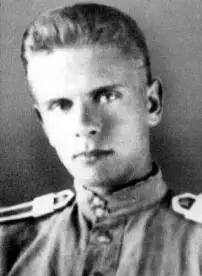
The scientific triumph of a young scientist stimulated his rapid academic and political career. In 1969, P.G. Kostyuk became a national academician of the Academy of Sciences of the Ukrainian SSR, in November 1974 - the "big" academician of the USSR Academy of Sciences (RAS). Since 1975, he was a member of the Presidium of the Academy of Sciences of the USSR (RAS), and from 1975 to 1988-academician-secretary of the physiology department of the USSR Academy of Sciences.
In this 12-year period, so important for the development of physiology in the Soviet Union, almost every week on the night of Monday on Tuesday, one compartment in the wagon of a quick train of Kyiv-Moscow turned into an office. Platon Grigoryevich took with him manuscripts, experimental data, many other materials and worked for many hours under the knock of wheels. In the morning, he went to a meeting of the Presidium of the Academy, and then solved many cases related to the coordination and organization of physiological research in the Soviet Union. In the evening, he again sat on the train to the next morning on Wednesday to be within the walls of his native institute.
The Institute of Physiology was the main arena of its multifaceted activity. The institute has become a powerful scientific school, which has passed a lot of talented youth. Departments at the institute headed by V.I. Skok, M.F. Shub, O. Kryshtal and other wonderful scientists. Thanks to the energy and authority of P.G. Kostyuka, in 1979, his employees received a new 16-story building of the scientific and experimental corps, perfectly equipped with modern devices. The institute held conferences, schools, symposia. They attracted many scientists from around the world.
Many important discoveries were made within the walls of this institute. This is the development of the intracellular perfusion method and the discovery of new types of ion channels. Many work were performed without the direct co -authorship of Plato Grigoryevich, but on the experimental and ideological base created by him.
In the July NATURA issue of last 2009, two large articles of the Eric Guo Laboratory (Oregon, USA) were published, which represent the crystalline structures of two receptor-controlled ion channels of the Eukaryot, activated by ATP and hydrogen. Not everyone who read and admired these works imagine that the foundation of these research was laid within the walls of the Institute of Physiology. A.A. The pilgrim. For the first time, the ion currents of these channels were discovered and examined in detail by O. Krystali, V. Pipoplichko and their co -authors, Kostyuk students.
Careful attitude towards students was another remarkable quality of Plato Grigoryevich. He provided his pupils with scientific freedom, took care of them and supported them at the slightest necessity. In the difficult period of the 90s, the “Brain leak” reached its peak. Many talented, well -trained students of Kostyuk went around the world to different scientific centers. Now more than a hundred immigrants from the Institute of Physiologists are working abroad. Some are heads of laboratories, large scientific projects. When Platon Grigoryevich was in the USA, Germany, England, France, they joked that he could collect an away scientist council or conference from his former employees. According to the President of the Academy of Sciences of Ukraine Boris Paton, Kostyuk wisdom turned into a disaster into the advantage: “His messengers contribute to the receipt of grants, participate in providing his laboratories with the necessary devices and reagents ... The main thing, obviously, is that such“ umbilical cords ”were not interrupted, therefore, the chicks of the“ Kostyukovskaya ”Pleiades are returned and, I am sure, will be returned home, I will return home, will be returned home. For their nostalgia is understood and morally divided by the teacher. ”
Kostyuk paid special attention to the development of the experimental base of the institute. Since electrophysiological equipment, and many other devices were very difficult to purchase, or even simply impossible, they were created in the development office of the institute. New devices were developed here - both original and having their prototypes in other countries, but converted to “our” manners.
I recall the story of the tweezers. In 1978, at the invitation of the Nobel laureate of Bernard Katz, I worked in the department of biophysics of the University College of London. One morning I was preparing the drug for an experiment and suddenly P.G. Kostyuk. Of course, I was very delighted with a high and speaking guest in my native language, but I was very embarrassed: then the difference in age and position especially made itself felt. He began to tell him about our experiments and projects. Platon Grigoryevich listened carefully and looked at the table on which I was preparing the drug using surgical instruments. Then he suddenly said: “Listen, this tweezers are a very interesting configuration. Could you give me one like that? ” I said: “Yes, of course. Why do you need this tweezers? " He smiled: “And I will take him to the institute, give it to the guys from the experimental workshop - they have golden hands - and they will produce such tools for employees.”
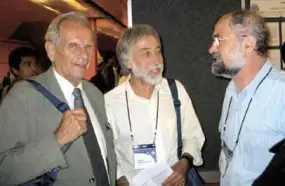
A detailed listing of scientific achievements, bonuses and administrative posts Kostyuk can occupy pages. He was elected the head of many international scientific societies. He was the vice president of the International Brain Study (IBRO) and the chairman of the Soviet Committee IBRO (1974-1990), vice president of the International Unions of Theoretical and Applied Biophysics (1975-1980) and physiological sciences (1980-1994). For multifaceted activities, Kostyuk was awarded many high scientific and state awards. He is the Hero of Socialist Labor (1984), Hero of Ukraine (2007), awarded many orders and medals.
A brilliant career, high posts and regalia, huge workload did not affect his devoted attitude to experimental work. He remained a generator of ideas, worked with his hands, wrote articles and books. P.G. Kostyuk is the author of more than 650 articles, 17 monographs and 7 discoveries. Under his leadership, more than 30 doctors and 80 candidates of sciences in areas of neurophysiology, molecular physiology and biophysics were trained. Kostyuk is the founder and head of the educational department of the molecular and cell physiology of the Kyiv branch of the Moscow Physics and Technology Institute (1982) and the International Center for Molecular Physiology of the National Academy of Sciences of Ukraine (1992). Together with the Laureate of the Nobel Prize by Erwin Neoor, he created in 2000 on the basis of the Institute of Physiology. A.A. Bogomolets International Department of Molecular and Cellular Physiology under UNESCO. He is also the founder of two scientific journals: the domestic Kiev neurophysiology (editor -in -chief from 1969 to 1988 and co -editor from 1993) and the international journal Neuroscience, (Oxford, Great Britain; co -actor since 1976).
In recent years, it was very difficult for him. Revolutionary disasters in the country, the lack of stable financing (sometimes its complete absence) - all this created enormous difficulties in the work of the institute. Besides, years they made themselves felt. The previous energy and strength was lacking. But he fought and continued to actively work until the last.
In the multi -billion dollar human community there is a rare category of people whose activities capture the huge spaces of science, politics, human destinies. We call them missionaries. For me, Platon Grigoryevich is a missionary in science. His contribution to the development of physiology, especially neurophysiology, is vague. Devotion for science, performance, the breadth of vision of problems, organizational talent, self -discipline, care of others, softness, wisdom -these quality, influencing others, change the human environment.
With all the multiplacies of Plato Kostyuk, it seems to me that at the top of his hierarchy of affairs and values - the knowledge of the world. Everything else - posts, regalia, administrative activity, creating magazines, writing books, organizing conferences and schools, and much more - funds subordinate to this main mission.
Platon Grigorievich, entitled his only “non -scientific” book of an autobiographical nature, enters “over the ocean of time” by words from Solomon’s parables: “I ask you for two things: do not give me a bustle and lies, poverty and wealth, do not give me.” The life of Plato Grigoryevich passed within this framework, in maximum dedication to people.
And the last. Above the desktop of Ilona, the long -term secretary P.G. Kostuka, a piece of paper hangs. On it, Plato Grigoryevich’s hand says: “I will be in an hour. P.G. ". He, indeed, has not gone anywhere, remaining in business and students.
Pyotr Breestovsky, Mediterranean Institute
Neurobiology (Marcel, France)