
Translated material
Two scandals in archeology
From the shackles in our archeology are not so often found, especially large ones. I decided to talk about two similar ones on the topic because the fact that they flared up in domestic archeology is an accident: they could erupt in any other science. Therefore, they should be interesting to everyone.
Roman and death of Childe
The first occurred in 1956. In its center was the largest British archaeologist Gordon Child, we can say the leader of British archeology, extremely influential in the world. This archaeologist adhered to Marxist beliefs and was a great friend of the Soviet Union. True, his Marxism was different from the Soviet one, was more liberal. Three times he came to the Soviet Union, adopted the experience of Soviet archaeologists, wrote articles on the achievements of Soviet archaeologists, rejoiced at the signs of democratization that he captured in Soviet life. In a word, his life was reminiscent of a knightly novel in which the role of his beloved was played by the Soviet archeology, the knight was devoted to ideals and in love and did not notice that his dulcinea is rude, false, cynical, calculating and full of unjustified claims. Under such conditions, the novel could not be happy. A big blow for Child was the exposure of the teachings of academician Marra as an anti -Marxist, even more Khrushchev’s lining about the cult of the personality of Stalin. After that, he arrived in the USSR for the fourth time. He visited Moscow, Leningrad and left. And having returned to London, he wrote to the most prominent Soviet archaeologists - Rybakov, Artsikhovsky, Artamonov and others the same bitter letter about his disappointment with the state of Soviet science - about the poor method of excavations, about the technical backwardness of laboratories compared to Europe, about the bad prospective level of publications, about the lack of prospecting of chronological schemes, etc.
Having received this letter, the head of the Archeology of Moscow University prof. A.V. Artsikhovsky came to the party bureau, holding the envelope by the corner so as not to leave fingerprints, and said: “Take it, I do not need it. He was probably forced to ... ". Other scientists received a letter. They arranged a meeting of the party bureau of the Institute of Archeology of the Academy of Sciences and decided not to respond to the letter. It is not to betray him with publicity.
And Child, having folded himself, the position of director of the Institute of Archeology of the University of London, went to his homeland to Australia and jumped there from a 70-meter cliff. Only his glasses remained lying on a ledge. He left his successor a farewell message, in which he wrote about his dissatisfaction with the state of affairs and the decision to die.
Meanwhile, Childe’s letter to our archaeologists, copied by some participants in the meeting, secretly dispersed in their hands, and many young Soviet archaeologists read it. And they understood that all the loud declarations about the superiority of Soviet science are a showdown.
Formures are trying on the armor of Child
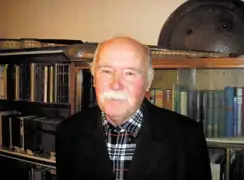
After a decade and a half, at the end of 1972, the Moscow archaeologist Alexander Formozov, the son of a professor of zoology, performed - full, bald, always with a shy smile on the moon -shaped face. He turned to academician Rybakov, the head of Soviet archeology, with a note on the bad state of our primitive archeology. Rybakov put it on an official discussion at an open meeting of the Academic Council, and the Council decided that everything is fine and no reforms were required. Concluding the meeting, Rybakov patted Formozov on the shoulder and said: “You need to go to the defense of the doctor, Alexander Alexandrovich,” - i.e. He brought all this to the personal discontent of Formozov with his position.
Meanwhile, perestroika made adjustments to the habit of silent and obey. I, by that time, was released from prison and did not work, I received the possibility of going abroad to teach and, taking with me the list of Childe’s letter, read it in London, on my report on the unfortunate novel by Childe with Soviet archeology. The British, who were sacred to everything from the pen of Child, decided to make a complete publication. The magazine "Russian Archeology", having learned about this, hastened to publish the Russian text first. So Child's letter was a common property.
Meanwhile, with my students, I released in English in 1982 a critical review of Soviet archeology (in the World Archaeology magazine), and in 1993, based on it, made the book “The Phenomenon of Soviet Archeology”, very critical (it is translated in Spain and Germany, is now translated in England). Formozov received an order “Russian archeology” for a review. The leadership, knowing the skeptical and cocky temple of Formozov, expected to get a devastating review. Formozov wrote an almost devastating review (1995), but its main content was that Klein was not critical enough . He did not sharply criticize the evil caused by archeology by Marxism and the Soviet government (I really noted some achievements of Soviet archeology).
Formozov Aristine
Formoses itself in a decade between 1995 and 2005. He erupted in a series of books about the true state of the Soviet and post -Soviet archeology. Of these books, two are the main ones: “Russian archaeologists under the totalitarian regime” (2004) and “Man and Science. Notes of an archaeologist ”(2005). In them, he raised the issues of the ethics of scientists, showing that the Soviet government bleed science, killing and throwing the best, and corrupted others, making cowardly and pleading.
And here the second scandal broke out, much more loud. Because Formozov did not just formulate a number of abstract truths about the morality and immorality of scientists, but dismantled all this on specific examples, calling all specific participants by name, including the most venerable - academics, directors of institutions, expeditions, heads of the departments, all. Fighting against all (in the Greek epic, such a battle is called Aristia), he accused many of incompetence, mediocrity, servility, unprincipled, fraud, falsifications, drunkenness, embezzlement, courage, plagiarism, etc. The names of the Academicians of Rybakov (“Hama and Samodura”), Okladnikov, Wooden-Ko, Molodin, Professors of Bada-Ra, Krainov, Gerasimov, Kiselev, Bernstam, Boriskovsky, not to mention such exposed fraudsters as Matyushin (head of the Russian archaeological society) or Timofeev, are named. Immediately the head archaeological magazine responded with a whole gulp of articles with refutations - five in one issue (Russian Archeology, 2006, No. 3)! Moreover, the magazine obviously informed that he would not print the answer.
Since then, the magazine has been silent about Formozov. But in the reviews of historians and in blogs, public opinion is on the side of Formosov: finally there was one who dared to say what had to be said for a long time! And the 80-year-old Formozov died in January 2009 from a serious illness.
There were memoirs written by him, where he probably said everything he was thinking about everyone. They will still come out ...
In their refutations, famous archaeologists are outraged sincerely, and often their foundations are convincing. He often judged Formozov subjectively, not indicated everything accurately and did not confirm everything documented, which was based on rumors and guesses. So, he wrote that in the 30s, “it seems”, the archaeologist Krichevsky reported to colleagues. His opponents are outraged: in such cases it is impossible to blame for guesses! Well, all the old archaeologists told me that Krichevsky was a informer. His wife S.I. Kaposhina herself boasted to me (threatening in 1962) that she planted many. But, indeed, these are only rumors and conversations. Documents are needed, and not everyone is available. I have no doubt that a number of colleagues received a click on the nose from Formosov, or even a slap in vain.
I judge by myself. I have been with Formozov in friendly relations for 60 years. We graduated from universities in one year (1951): I am Leningrad, he is Moscow. Met on expeditions and at conferences, corresponded. We had common goals and general enemies. His reviews about me depended on the vicissitudes of our personal relations. So far, everything is fine - the reviews are cool. He will be offended for something-I immediately have dark spots. And in the press there are different reviews about me.
But my dissatisfaction with specific reviews should not obscure in my mind the fact that, in general, his books are very needed and important that specific facts can and should be corrected, but in general, a picture of the weaknesses and disasters of our science is written vividly and correctly. Everyone sees it - we did not fly from Mars.
Word and business!
Formozov spoke passionately, colorfully, too subjectively and infinitely naive. He believed that saying the truth is the main thing that can be done in our situation. Oh, we live in a society that is used to not paying attention to words, even the most bitter and truthful. And if there is an overkill, if it hurt the innocent, then under this flag and guilty ones seemed to be without guilt.
It seems to me that it is necessary to put out specific measures for discussion that could eradicate, make it impossible, or at least reduce the typical shortcomings that forms noted in our life. This should be a certain code of scientific ethics, acting strictly and supported by government decisions.
So, bringing into line our system of scientific degrees and titles with international or not bringing, it is necessary to expel corruption from the defense of dissertations so that we are sure that doctoral diplomas cannot be bought, that each doctor wrote his dissertation himself, and not ordered or received according to the blat, that all degrees are equal in Moscow and in Dagestan. How to achieve this, through a bureaucratic Higher Attestation Commission or otherwise, can be discussed.
2. It is necessary that the occupation of a scientific position corresponds to objective criteria. This should be not so much scientific degrees and not just the amount and volume of printed works (accounting), how much their rank, determined by the criteria that will be developed (see articles in the Trinity version on expert advice and citation indices). Likewise, the teaching position should determine the teaching talent, and it is checked by students (and you can enter the rating).
3. I would propose to share the functions of bosses and scientists. If the scientist becomes the director of the institute or the deputy department, the department, then this should be for a limited time, and at this time (as well as some time after that) he should not have the right to release monographs and put his signature under collective labor.
4. If the scientist is noticed in plagiarism, then he should not only have a criminal punishment, but must lose the right to print any works under his name or pseudonym for a large (long-term) term.
5. Archeology belongs to the number of sciences in which not only general scientific ethics, but also ethics, embedded in the specifics of science itself, acts: it is almost impossible to experimental verification, and the study is simultaneously destroying the monument. Therefore, an employee, noticed in falsification, a fraud, intentional distortion of data, must immediately and forever be expelled from archeology.
6. Since drunkenness leads on expeditions to data loss and neglect of the methodology, it should be considered as a sufficient reason for dismissal.
7. Knowledge of languages is necessary to maintain a research level, therefore it is necessary to introduce large surcharges for each foreign language: two foreign ones - two surcharges, five languages - five surcharges.
Child complained about the backwardness of Soviet archeology from world science, forms to fall from the heights of the Russian archeology of tsarist time. Now we have post-Soviet archeology-just after the Soviet one? Does she have her own goal, essence and name? Perhaps she should start with her own ethics.