
Translated material
Himers Craig Venter

Over the past two weeks, two important events that filled the news feeds have occurred in molecular biology. Firstly, the sequence of the Neanderthal genome was determined and it turned out ... Well, in general, this turned out ... But more on that another time, and now-about the second sensation, the “artificial bacterium” of Craig Venter (J. Craig Venter).
The vast majority of comments on the Internet spoke about “bacteria from a computer”, “artificial life” and the like frightening-well, or inspirational-matters. Wenter himself contributed a lot to this, in numerous interviews, which abutted both possible biotechnological applications of the new technology and philosophical problems. What was done, what was the achievement and on which section of the path to creating bacteria with a given properties of “from scratch” are we now located?
Fifteen years ago, in October 1995, the sequence of the genome of the parasitic bacterium Mycoplasma Genitalium was determined. It amounted to 580 thousand pairs of nucleotides and contained 480 protein-coding genes. This is not a record - the smallest of the published genomes, Carsonella Rudii, has a length of 160 thousand pairs of nucleotides and encodes 182 proteins, but the difference is that Carsonella can live only inside a different cell (this is an insect endosimbione), and mycoplasma can be grown in a tube. Then a number of scientists became interested in what set of genes is really minimal. This problem can be studied on both sides. Our compatriots Yevgeny Kunin and Arkady Mushegyan from the US National Center for Biotechnological Information, and then other groups used a bioinformatic approach based on the assumption that if the gene is found in all bacteria, it is necessary. Experimental methods developed in parallel: genes were destroyed by random inserts and checked the viability of the obtained mutants. In particular, in 1999, the Venter group conducted such an analysis for mycoplasma and showed that about a hundred of its genes are not required for growth in laboratory conditions.
After that, Venter set himself the task of creating a bacterium with a minimum genome. To do this, it was necessary to solve a number of complex technical problems. Use the destruction of the genes is bad: it will turn out to be a genome with a minimum set of genes, but by a large number of fragments, which is uneconomical and ugly. It seemed more spectacular and effective to take the existing bacterium, remove its own genome from the bacterial cell, and insert a new one. But for this, it is necessary that the new genome earn with the old cell of the cell - proteins should be counted normally from it. And we must be able to synthesize very long DNA fragments.
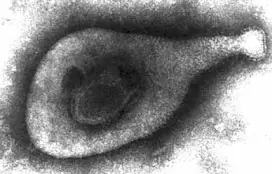
It turned out that it is more convenient to work with another mycoplasma, Mycoplasma Capricolum. Her own genome is larger, but it doesn’t matter - it will still be removed - and it grows much faster. Four years later, Venter with colleagues showed that it was possible to replace the M. Capricolum genome with another mycoplasma, M. MyCoides. The resulting cell lives normally, and its offspring after several divisions is indistinguishable from ordinary M. Mycoides, which is not surprising - the old proteins are gradually degraded, and the synthesis of new proteins is determined by the new genome.
The next step was taken in 2008, when the researchers synthesized by the M. Genitalium genome and inserted it back into the M. Genitalium cage. This was necessary to create the technique of synthesis of large DNA molecules and verify the fact that the synthesized genome is as operational as natural. To control, in order to distinguish the synthesized genome from the old, the authors of the article encode their names and email addresses in it in unimportant places.
Last year, these two techniques were united: the same procedure was done with the M. Capricolum cage and natural, but slightly modified, M. MyCoides genome. And finally, a few days ago, Venter with colleagues published an article about a fully artificially synthesized M. MyCoides genome in M. Capricolum. Having determined the sequence of the genome of the resulting organism, the researchers discovered several changes - point substitutions, inserts and permutations that occurred during the assembly of a synthetic genome from fragments. In fact, there were more such synthesis errors, one of them, which happened in the gene necessary to copy the genome, significantly delayed the work. However, most errors were identified in advance, when checking the functionality of individual fragments, and only those that do not affect the work of genes remained.
So, another important step has been taken on the path of creating artificial genomes. This is undoubtedly very beautiful and technically complex work. Does she deserve a rusted hype? Apparently, still not. There is no talk of any artificial life with pre -given properties. The fact that the genome of one bacterium works in a cage of another, very close, has already been shown earlier. The fact that the genome can be synthesized "from scratch" - too; In addition, even before Venter's work with bacteria, this was shown on viruses. Practical applications are still very far away. Moreover, generally speaking, it is not obvious why, from a practical point of view, this approach is better than long -developed and successfully used methods of genetic engineering of well -known biotechnological strains.
It is clear that the personality of the Craig of Venter, a person who is very inclined to publicity and loud promises, played an important role - and who knows how to fulfill these promises, as he proved by the work of determining the sequence of the human genome. The introduction to the last article looks very curious - it is read not so much as a review, but as an autobiography. And it is not surprising: Venter is so ahead of competitors that there is simply nothing to quote. And it can be assumed that in a year or two, an article will appear about the next step towards the “minimum bacterium”, in the synthesized genome of which there will be no genes, about which it is known from previous works that you can do without them.
And if we talk about real “artificial organisms”, we should recall the works of Peter Schulz from the Skripps Institute, which has been creating organisms with a changed genetic code for several years - not a genome, but a code, that is, a compliance with the DNA and proteins. To do this, a special TRNA (a molecule that delivers an amino acid to a synthesized protein) is designed and the “molecular evolution” of aminoacil-trunk-synthesis (protein connecting the TRNA with the desired amino acid) is carried out so that it recognizes a new amino acid missing in conventional proteins. As a result, the cell synthesizes proteins with such an amino acid that it is very useful for studying their structure, functions and interactions. But for some reason the noise around this is much less.
Mikhail Gelfand