
Translated material
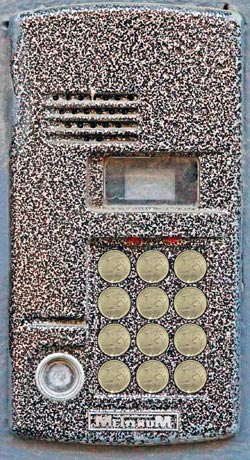
Golden intercom
Why are we paying public utilities?
A year ago, at a government meeting dedicated to the reform of the housing and communal services, Vladimir Putin said: “Residents must pay only for the services that they really receive, and not for what they“ draw ”in receipts.” However, both painted and draw.
For what we pay and where our money goes - the New Times recognized
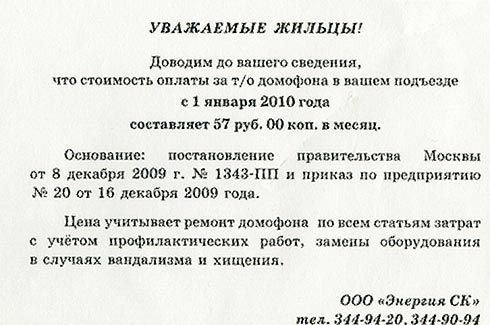
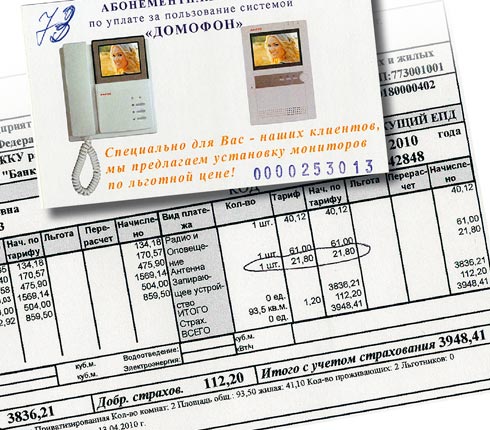
Muscovite Evgenia A. usually paid for the apartment without looking: all these abbreviations and numbers, which every month became more and more, caused her a dumb. Go to the housing office, stand in line, ask why one amount has doubled, and the other by one and a half - fire, easier to pay. But once she nevertheless looked closely at what was written in the fat. And with interest I found a item called “locking device” and the amount - 21 rubles 80 kopecks. It is not God the news of what money, but for this very device she, like the rest of the tenants, for five years now she paid the company that installed the intercom - as of January 1, 2010, this fee was 57 rubles a month. Where did another “locking device” come from, for which, as it turned out, they took money from the residents from at least January 2008? In the State Unitary Enterprise Evazh, * * State Unitary Enterprise of the city of Moscow for the operation of high -rise administrative and residential buildings. On the balance of which the house is located, they were surprised: the management company had no agreement with another locking office. The money, however, was taken.
Miracle Lesnik
It is precisely the obscure and inattention of citizens that public utilities use, inventing various ways to replenish their pockets. Why not declare an intercom and a locking device with two different services and get twice as much money? The main thing is that the scheme has long been invented and even known in the bureaucratic environment called the “staircase”: each new step (that is, the structure) that appears in it “throws” its 10-15% of the cost of the service. It was such a scheme that Eugene A. came across “Competitions for various work in the field of housing and communal services are often won by the same companies related to the city housing and communal services,” says Anatoly Golov, co-chair of the Russian consumer Union. - The scheme is simple. The official collects companies and says: do you want to get a city price? Then you pay a fake to me or an intermediary 20% (figures can vary from 10% to 50%-in different cities and different work different prices) and participate in such and such competitions. But you will only get this order. In the rest you will be a “boob” - you will identify your participation, but do not try to win. At the same time, the cost of work is overstated compared to the market by 2-3 times. The difference, of course, settles in the pockets of officials, part of it goes to the owners of the company. ”
"
The meaning of this communal abundance is that they take from everyone a little, but since the payers are several million, a solid amount is obtained
" 
There is no need to go far for examples. On the website of the same GUP Evaz, serving the house of Evgenia A., the correspondent of The New Times found an announcement of the competition for maintenance of poetry escalators such as LP-6. According to the announcement, the monthly maintenance of four escalators of the specified type costs 154.5 thousand rubles, taking into account VAT. Thus, the maintenance of one escalator per month, according to the management of the State Unitary Enterprise, should cost about 38.5 thousand rubles. At the same time, the price that is set for the same service of the organization for maintenance of elevators and escalators is 3-4 times less. “Serving an escalator of the LP-6 type per month costs from 8 to 12 thousand rubles,” said the Rev., CEO of Artintel CJSC, one of such specialized companies.
The New Times met amazing prices in another announcement of the same GUP - about the competition for the installation of a local network. For example, the Cisco WS-C2960G-48TC-L switch, according to GUP Evaz, costs 332,754 rubles. Meanwhile, it is enough to go to the Yandex-market electronic search engine to find out: the average price in Moscow for this type of product is 156,377 rubles. It turns out that public utilities overtaken the price more than doubled ...
For clarifications, The New Times turned to the State Unitary Enterprise Evaz: “The LP-6 escalators are very old, the 60s, and organizations that can put spare parts for them, units,” explained in the tender department. - In addition, these machines require almost weekly repair and prevention, since they are very often breaking. Hence the prices are like that. ” Answering the question about the overstated price of the switch, Elena Schigakova, deputy director of the State Unitary Enterprise Evaz, noted that their price, unlike the online store, also included warranty services for this device for at least three years. However, after the request of The New Times, these quotes from the GUP website for some reason disappeared ...
The loss is small
Scribbled with small print, our receipts for paying for housing and communal services services, upon closer examination, contain many "white spots". How many have read the lines, according to which the fee for a radio is 40.12 rubles, and for the antenna - 61 rubles? The absolute majority pays for these services without hesitation: too small amounts to sacrifice their time and nerves for them, even if you do not use either radio or antenna. And in vain. “This is a hidden form of requisitions from citizens,” comments Sergey Mitrokhin, chairman of the Yabloko party, in the recent past, a deputy of the Moscow City Duma. - Money is charged by management companies and make up part of their profits. The meaning of this communal abundance is that they take a little from everyone, but since the payers are several million, a solid amount is obtained. ”
The amount is really solid - even on the scale of one Moscow. “There are more than 40 thousand houses in Moscow,” Anatoly Golov counts. - The exact number of apartments is unknown, so we take the lower rating for the capital - 2 million apartments. Let's figure out how many of them they do not use a radio station - let it be 20%, that is, 400 thousand apartments. This means that per month people pay for unused services 16 million rubles (40 rubles per point). This is the procedure for the amounts that disappear without a trace in the housing and communal services system in only one city and one service. ”
Do not be lazy to save
Public utilities, of course, disagree with such calculations. According to The New Times in the Moscow State Service State Institution, the engineering service, a fee for each specific type of services-whether it is a radio, antenna or something else-goes into business, that is, it goes to the service provider: for the use of radio engineers-to the MSRS account (Moscow City Radio Translation Network), for the use of the antenna-to the account of the organization that provides this service according to the results of the results of the results of the results of the results competition. “There is the so -called common property of the owners of the premises, which serves at once for many apartments: this, in particular, cable, wiring,” explains Dmitry Gordeev, leading legal adviser to the Institute of Economics of the city. - Owners of apartments must pay them regardless of whether they use this property or not. In case of breakdown, it will be repaired at the expense of general means. But the service received on these networks and wires is already paid separately, and you can refuse it. ”
This is what the townspeople who learned to count their money are doing more and more often. Housing and communal services market experts note: since the beginning of the year, the number of such fundamental citizens has been growing. “Find the strength to turn off the radio point if you do not want to pay a month after a month for the only prospect - to find out by radio about the beginning of the nuclear war,” the blogger Konstantin Orlov campaigns.
Deputy Galina Khovanskaya calls on the townspeople to adopt the decree of the Government of the Russian Federation No. 307: in accordance with him, residents are required to recalculate for uncented services. “The heating system does not work in your apartment, the temperature is below the installed - you have the right to demand recalculation,” Khovanskaya instructs. “For this, you need to invite a representative of the management company or chairman of the HOA and fix the fact of failure to provide services.” The same in the absence of hot water: “If in the summer you are not given hot water, according to Decree No. 307, you should not pay for the period during which it is absent,” Anatoly heads enlighten. “But many management companies charge this money, and only if you threaten the prosecutor’s office and the court, they agree to recalculate.”
DEZ in law
According to experts, citizens do not receive 10-14% of paid utilities. These interest includes uncleaned stairs and courtyards, barely warm water and batteries and much more. Why do we pay with our eyes closed? “The stereotypes are to blame,” Dmitry Gordeev is sure of the City Institute. -For us very often everything has already been decided: who is responsible for servicing our house, what a list of work, what kind of work ... and try to invite instead of DEZ, which is a state unitary enterprise or a 100 percent city OJSC, someone else! And we are not used to being the owners of the premises in the house and making some decisions. And we all have our own affairs after work. ”
At the same time, the position in the industry for the better does not noticeably change: the fixed assets of the communal sector are worn by 60%. Although considerable funds are allocated for the needs of housing and communal services: last year, 2 trillion rubles were exceeded last year. But, despite tremendous financing, housing and communal services remains a chronically unprofitable industry. Probably, largely because officials are very carefully composed of fat, and citizens pay inattentively for them.
How to pay less for housing and communal services?
• a break in the supply of hot and cold water cannot exceed 8 hours a month, while no more than 4 hours; The permissible duration of the power supply break is 2 hours;
• for each hour of a break in the supply of cold or hot water, as well as electricity, the size of the board is reduced by 0.15% of the size of the board, determined based on the readings of metering or standards;
• if the composition and properties of water do not comply with sanitary standards, the fee is not made for each day of the provision of low -quality service;
• the air temperature in residential premises should not fall below +18 ° C, in the corner rooms +20 ° C; The permissible duration of the heating break is no more than 24 hours (total) within one month;
• Residents are obliged to reduce the fee for certain types of utilities if they have left for more than 5 days and can confirm this with documents (a copy of the travel certificate, a certificate from gardening, medical institution).
Source: Decree of the Government of the Russian Federation No. 307 "On the procedure for the provision of utilities to citizens"