
Translated material
In search of windows to Europe
What to expect from the Russia -Esses summit
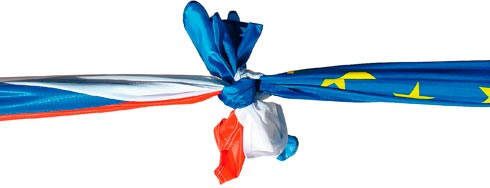
The pragmatic approach is the abnormality of the current situation in relations with the European Union, first of all, the lack of a strong ideological base in them, has already become obvious to everyone. Therefore, in the Midovskaya “program of effective use on the systemic basis of foreign policy factors on the subject of long -term development of the Russian Federation, the Midovo -based use program, the conclusion of the agreement between Russia and the European Union with the loud name“ Partnership for modernization ”is indicated as the closest purpose. Russian priorities of such partnership are also indicated: technological development and mutual exchange of technologies; achievement of compatibility of technical norms and regulations; practical assistance to Russia's entry into the WTO; relief of human contacts and promotion to a visa -free regime. There is a need to attract “smart” investments and highly qualified personnel from the European Union.
A similar approach to cooperation with the most important economic and political partner of Russia in the international arena looks completely pragmatic. We really do not have enough substantial scientific and educational exchanges, direct investments in the non -market sphere, modern technologies and production methods, worked out technical standards and regulations, and Europe has something to propose. In other words, the European Union, directly interested in the Russian modernization, is proposed to take an active part in its support.
The failed union, however, a logical question arises: what prevents all these mutually beneficial programs from implementing now? The main problem of relations with the European Union today is not at all Russophobia, not the complete inability of Europeans to make agreed decisions and not even excessive immersion of EU members in their current and very serious economic troubles, which Russian politicians and diplomats love to talk about. The Georgian war, murder and persecution of journalists, lawyers and human rights activists, gas disabling, warlike rhetoric and rattling with weapons, prison torture and lawsuit, trade and investment scandals, and the atrocities of the pro -Kremlin youth - all this could not but form a sustainable distrust of Russia as a partner in Europe.
It is appropriate to recall that the declared desire to borrow European technical norms and regulations is a vivid evidence of the failure of one of the most important, but successfully ill -bitten reforms - technical regulation. That recently there has been a sharp increase in the withdrawal of foreign investments from Russia, and the share of direct foreign investment against this background has reached a record minimum. That the European Union actually invariably showed the support of Russia's entry into the WTO, despite the constant erratic throwing of the Russian side - from the “trifles” such as introducing prohibitive export duties on wood to the amazement of a sudden government decision to stop the negotiations to join the WTO in order to join there as a composition of the Customs Union, which, as it has just become obvious, is unlikely to be used.
The popular slogan, not hoping to seriously gain laurels in the main areas of cooperation, at the upcoming summit with the European Union, Russian negotiators decided to launch their favorite trump card - the requirement of the speedy introduction of a visa -free regime. This slogan is simply doomed to popularity among Russian citizens tired of the nit -picking of consular services of various European countries. (In fairness, it should be noted that the European is not easier to get a Russian visa.)
The EU, in principle, without objecting against the visa -free regime, in response declares its concern to the transparency of Russian borders for illegal migration and requires additional guarantees from us. Unfortunately, to date, this problem is not the problem for any, even the most massive cash injections into the equipment of borders and passport technologies. Unimaginable to date, not only in Europe, but also in any normal country, the police officer does not help at all: in particular, the regime for the migration registration of foreigners arriving in Russia and the anti -constitutional procedure for registering (registration) of the Russians themselves.
The only reason for this is the all -pervasive corruption of power structures, the real determination to overcome which the Russian authorities, despite all their fighting rhetoric, is imperceptibly. On the contrary, according to all measurements, the state of affairs in this area worsens that the Kremlin is forced to reluctantly recognize.
Yes, and an effective fight against corruption without real, and not imitational political competition, without genuine freedom of the media and public control over the authorities, is impossible. And these factors, without which life in countries - members of the European Union is inconceivable, is not in Russia today. As there is not even mention of them and in all kinds of modernization programs, which are another hopeless attempt to pour new wine into old fur.
An obsolete article here is the main reason for the inconsistency of the positions of the parties. In Article 2 of the Agreement on Partnership and Cooperation between Russia and the EU of 1994, it was recorded that "compliance with democratic principles and human rights ... lies at the heart of the internal and foreign policy of the parties and constitutes an essential element of partnership." Since in recent years, the Russian authorities have done everything to deprive this formulation of all content, the European Union is faced with a difficult dilemma today: to continue to insist on observing the democratic norms that are universally recognized on the European continent or try to “reboot” relations, that is, to close his eyes to the gaping gap between the Russian and Western understanding of basic values.
And if in the first case, the European Union risks not getting profitable contracts for the supply for half-Kremlin modernization of some “sappsans” and other high-tech technology, which in the current Russian conditions is not working, then in the second he will simply lose his face and will once again strengthen the Russian leaders in their sincere conviction that the world will rule money, and the values do not know anything. This will only push Russia from Europe and move even further into the future prospects for the European development of our country.
Truly mutually beneficial and effective cooperation is possible only on the basis of common values. Strategic partnerships between Russia and the European Union cannot be built without restoring their normal foundation.