Of course, you learned the source of this quote: so Joseph Brodsky began his Nobel lecture. Hardly defending his right to be a private person, the poet, nevertheless, never strove for hermitism. The Nobel lecture was for him, according to him, awkwardness and testing, but nothing more. The Nobel Prize itself was a symbol of victory over the circumstances, at least the numerous evidence of friends and colleagues speaks of this.
People realize their right to be primarily a private person in different ways.
J. Salinger, as you know, chose the ultimate situation - hermit in the literal sense of the word. The architect Femel, the hero of the novel by Heinrich Bully, “Billiards at half past nine,” made a constant instruction for his secretary: “I am always glad to see my mother, father, daughter, son and Mr. Schrell, but I don’t accept anyone else.” Starting from the 60s, this phrase was popular among my close friends who joked (in relation to my usuals) over possible candidates for the role of Mr. Schrell, who-since he was always happy-apparently could afford to appear in the house without a call.
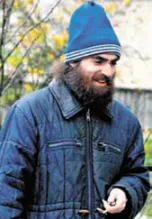
From some point, Grigory Perelman tried to realize his right to a purely private being within a small St. Petersburg apartment. This was perceived relatively calmly, like the "bait of a genius." But the story of the Prize of the Clay Institute, which has (by any standards), a large monetary expression, was not in any usual framework and was discussed at all the “intersections” of the Internet.
From my point of view, such an assessment of the situation indicates the poverty of our social and psychological imagination. After all, a premium million dollars should be somehow reasonably disposed of, but how to do this, remaining a private person?
No! Any transactions even with less serious amounts of money are associated with contacts with specialists on the use of financial instruments - in this case, for example, with non -profit funds. There are a lot of them, as you know,; They are very active and initiative. Even the process of choosing such a fund and even more so - the specific sphere of donations is already, as they say, Full Time Job.
In fact, Grigory Perelman left the Kleya Institute possible concerns in this connection - as you might assume, without bothering the legal design of such a non -standard situation. Apparently, the statutory documents of the Clay Institute do not provide for anything close - and therefore the notorious million dollars “wait” to whom he is intended in this case.
I mentally put my three long -standing acquaintances - famous mathematicians in a similar situation. All of them owns the solutions to the problems mentioned in the literature with a reference to their names (theorem n; algorithm x, etc.). Unlike Perelman, they are sociable people, but moreover, they highly value their right to remain private people. Most likely, they would find a legally correct way to direct the awarded reward for good goals - I am sure that it is anonymous. However, they, most likely, would also have to use the above formula of the hero Henry Bello ...
Grigory Perelmanofficially abandoned a prize of $ 1 million, a message about this on the institute’s website awarded to him by the Clay mathematical Institute. The Clay Institute promises to announce where the prize money will be directed in the fall of 2010 so that it benefits mathematics.
As always, the mathematical genius was short: “Speaking very briefly, the main reason is a disagreement with an organized mathematical community. I do not like their decisions, I consider them unfair ”(these words Grigory Perelman gives Interfax).
Perelman noted that the work of American mathematician Richard Hamilton made no less contribution to the solution of the problem (for which he was awarded). According to the TRS, Perelman had the opportunity to influence anyone on the prize, but he did not use this.