
Translated material
The genome of another person
Ten years ago, sequencing (determining the sequence of nucleotides) of the human genome was announced. It was a black sequence, then several more articles appeared about the final, most final and most, the most final version; The sequence of the genome was supplemented, corrected and clarified. It was a chimary genome, i.e. averaged by several people; Over the past two years, several individual genomes appeared and even individual genomes of healthy and cancer cells of one person.
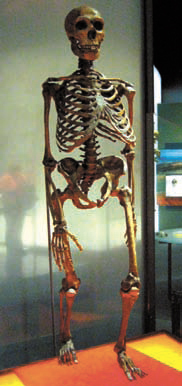
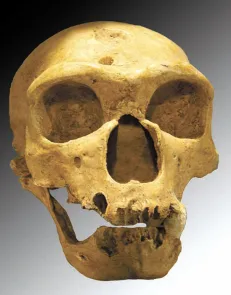
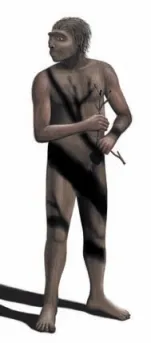
And this year, the draft, but accurately accurate for non -trivial conclusions by the Neanderthal genome, a representative of another branch of the species of Homo sapiens [1], was published.
Problems and solutions
There are four main problems when working with DNA from archaeological sources. The first two have a chemical nature. For thousands of years, when the bones lie in the ground, DNA is destroyed in them, and therefore most fragments are very short, their length is small dozens. Secondly, DNA is undergoing changes, and some nucleotides turn into others; The sequence is randomly changing. Two other problems are biological. Only a small fraction of DNA isolated from the sample is what you need; The overwhelming part (95-99%) is DNA of soil microorganisms. And the most serious problem, critical in the study of ancient human genomes, is pollution of modern DNA. The number of surviving DNA fragments is so negligible that during the excavations, staying in the museum and in the laboratory, a comparable, if not more, the amount of DNA of those who worked with it gets on the bone. For sequencing, the internal parts of the bone are used, extracting them in sterile conditions: it helps, but does not relieve the problem completely.
Therefore, to prove the fundamental ability to sequenate the ancient DNA, they began not with a person, but with a cave bear. In 2005, the groups of Svante Paabo from the Institute of Evolutionary Anthropology in Leipzig and Eddie Rubin from the United Genomonnaya Institute, located near Berkeley in California, sequenced and published fragments with a total length of 27 thousand nucleotides of a 43-thousandth tooth found in a cave in Austria [2]. A comparison with well -known sequences showed that they really belong to a close relative of modern bears. Well, since before that in the laboratory they never worked with samples of DNA of representatives of the predatory detachment, the issue of pollution was resolved by itself.
To combat microbial contamination, special methods were developed that reducing the share of such fragments. The main load in this case falls on computational methods: they obviously do not take sequences similar to the known sequences of microorganisms, as well as the sequences of unknown origin, i.e., ultimately only fragments are used, the origin of which can be reliably established by inter -heinomatic comparisons. So far, this is the only way out, but this means that we cannot analyze the unique fragments or genomes of living creatures that do not have modern close relatives.
When working with human DNA, a critical problem is the pollution of modern DNA - from archaeologists who extracted bones from the Earth; anthropologists who described them; molecular biologists that distinguished DNA; Yes, and just DNA molecules from laboratory air. When in 2006, the Paabo and Rubin groups published the first articles about the Neanderthal nuclear genome made by different methods on the same material from Vindia cave in Croatia [3, 4], it was noticed that their conclusions were partly contrary to each other [5]. Subsequently, it turned out that up to 40% of the sequences obtained by the Paabo group then is modern DNA.
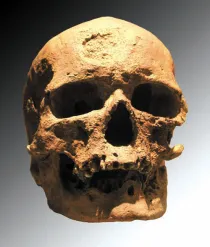
However, the studies continued. It turned out that even problems can be turned into a tool of work: the very chemical changes that have occurred over thousands of years can be used as a sign that distinguishes ancient DNA from modern. This is done computational: fragments of the alleged DNA of the Neanderthal are compared with the genome of modern man (Cro -Magnon) and consider differences.
The fact is that these chemical changes are not arbitrary replacements, but absolutely specific: CT and GA. Accordingly, the assessment of the number of such substitutions (up to 6% of nucleotides for the studied samples of approximately 38 years ago) compared to other replacements and with the ratio expected from the known frequencies of “normal” biological mutations, allows us to evaluate the share of this ancient DNA in the resulting selection. Changes occur independently in every individual molecule, and with a large amount of data, each nucleotide is read many times in different fragments. Therefore, even with a significant frequency of chemical changes by a simple “vote” of fragments, you can find out whether we are really dealing with the honors of the studied genome from the reference or this is the result of these changes.
Genom and genes
One of the first substantial conclusions of the new article of the Paabo group: the bone under study belonged to the woman (how to talk about our closest relatives of Neanderthals -not the “female”?). This followed the fact that only a few fragments coincided with the areas of the Y-chromosomes (available only in the male genome): with this amount of data for the male genome, about 500 fragments of the Y chromosome would be expected. By the way, this was another indirect evidence of the lack of noticeable pollution of modern DNA, in the previous work, it was precisely such pollution that led to the fact that the same bone was attributed to a man.
For a more accurate assessment of the share of pollution, special computing methods were developed, based on comparing the differences between genomes of various Cro -Magnons (i.e., representatives of various ethnic groups of modern man), with their differences from Neanderthal genome and chimpanzees. It turned out that the pollution is no more than 1%.
Then the study itself began. The differences between the Neanderthal genome and the Cro -Magnon genome amounted to 12% of the difference between human genomes and chimpanzees. Thus, if we accept that a person and chimpanzees dispersed 6.5 million years ago, our discrepancy with a Neanderthal began about 800 thousand years ago. However, the authors note that this conclusion is based on the assumption (apparently correct) about equality and approximate constancy of molecular evolution speeds and on paleontological data (not very accurate) about when the last common ancestor of a person and chimpanzee lived.
In addition, it should be noted that if you take two individual genomes, the average time of their discrepancy will be greater than the divergence of the corresponding types (i.e. the time from the moment the mass flow of genetic information between populations has stopped) due to the complex structure of any natural population. For comparison, for the couples of Cro-Magnons from different populations, the average level of differences was approximately 8-10% of the differences in the human-germanzer. The time of the “real” discrepancy between the Cro-Magnon and Neanderthal, estimated using various population models, amounted to 270-440 thousand years. The same data was confirmed by sequencing of samples from El Sidron in Spain, Intermai caves in the Caucasus and from the Neandertal Valley itself in Germany, despite the fact that the material from Intermayskaya is 20-30 thousand years older than from other places.
The presence of three genomes - Cro -Magnon, Neanderthal and chimpanzees made it possible to find changes that occurred and recorded in the genome of modern man after separation with a Neanderthalist: for this, it is enough to consider the three nucleotides, which are the same among Neanderthal and chimpanzees and differ in all the studied Cro -Magnons. Mutations that change the Collaged protein were found in 73 genes; The authors did not investigate potential regulatory mutations, because it is not clear how to distinguish them from insignificant changes.
Several protein mutations occurred in genes that affect the color of the skin and hair. Even earlier it was shown that Neanderthals, like Europeans, were fair -skinned, but due to other mutations [6].
Thus, this adaptation to life in the middle latitudes occurred in Neanderthals and Cro -Magnons independently. There have been changes in six smell receptors (it is known that these genes evolve very quickly) and in one gene that plays a key role in the perception of taste.
DNA sections were allocated, which do not just change, but, apparently, make useful changes. The fact is that the selection in such a field quickly captures a new version, and therefore the variety of the genome (when comparing different individuals) is reduced in it. This approach has been used for a long time, but the Neanderthal genome made it possible to choose areas where the selection acted after the discrepancy between Neanderthals and Cro -Magnons, i.e. He was specific for a modern person. Among these areas are the Thada gene related to energy exchange; It is known that mutations in the area of this gene cause a predisposition to diabetes.
Background
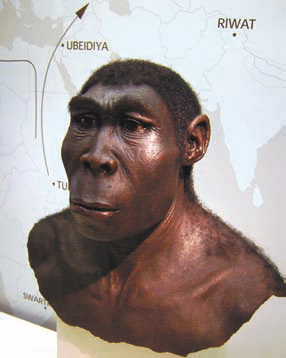
But perhaps the most interesting result of the article was that there are sections of the genome (1-4%) common to Neanderthals and modern Europeans and Asians, but absent in the genomes of Africans. This means that after the release of Cro -Magnons from Africa, dated about 100 thousand years ago, they mixed with Neanderthals, and the traces of this remained in our genes. The fact that there are no such traces in the genomes of Africans indicates that this is precisely a Neanderthal admixture in Euro -Asian genomes, and not vice versa. Moreover, this happened after the separation of the branches of Cro -Magnons who went to Europe and Asia. In accordance with archaeological data, the most likely scenario is the contact between Neanderthals and Cro-Magnons in the Middle East 100-50 thousand years ago.
More detailed scenarios will be developed as new data appears. There is hope that it will be possible to distinguish between the genetic contribution of the very ancient population of Europe and the late waves of migration related to the spread of agriculture. For example, the developed methods of filtering pollution helped establish a sequence of mitochondrial DNA from the skeleton of the early Cro-Magnon from the parking lot of the Kostya-14, which lived 30 thousand years ago in the territory of the modern Voronezh region (mitochondria-small organelles present in a large number in each cell, therefore the amount of mitochondrial DNA in Ancient samples are significantly larger than nuclear and it is easier to sequenate: mitochondrial genomes of six Neanderthals are already known) [7].
On the other hand, mitochondrial genomes of 24 representatives of the first European farmers, who lived 7.5 thousand years ago in Germany, Austria and Hungary [8] were sequenced [8]. A comparison of these genomes with mitantho-chondria genomes of 22 hunters and collectors and with genomes of modern people showed a very weak genetic connection: these are three different populations [9]. And this already allows us to make an important (before) historical conclusion: the spread of agriculture took place by crowding out some populations by others, and not by cultural exchange. However, a more detailed analysis will be possible only after sequencing of nuclear genomes.
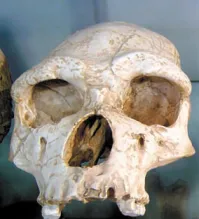
And the most amazing result associated with sequencing of mitochondrial DNA is a genome of 40-thousandth bone from the Denisis cave in Altai [10]. Judging by the number of differences in the sequence, for about a million years it is defended from the genomes of Neanderthals and Cro -Magnons. The problem is that it is not clear which of the varieties of a person belongs to this genome. Bone remains are not enough for anthropological conclusions, and the discrepancy seems to be too late to attribute to this genome to the closest relative of Homo Sapiens - Homo Erectus (Pithecanthropus), who lived in Asia after separation from our branch about 2 million years ago (not according to genomic, but according to anthropological data). At the same time, Neanderthals and Cro -Magnons lived in Altai.
Prospects
It is clear that work with DNA from fossil residues will continue and develop. I really want to know the genomes of the “hobbits” from the island of Flores - another variety of a person who disappeared only 13 thousand years ago, but there are few hopes for this. In the conditions of DNA tropics, it is not preserved: either permafrost or dry climate is needed.
They work not only with the human genome: a few years ago, they sent me a message on the mailing list: one Western laboratory invited the postdrok to work the population genetics of mammoths and mastodons. Of course, there is a certain sensation of sensation in this: ultimately it is completely not clear how it is more interesting than the population genetics, say, elephants (the more, the disputes continues about whether two populations of African elephants are independent species). But for understanding the origin and evolution of man, the significance of research of this kind is difficult to overestimate.
I am glad that Russian scientists take part in the studies of ancient DNA. For example, Vladimir Doronichev and Lyubov Golovanov from the ANO “Laboratory of Doistory” in St. Petersburg participated in the work on the Neanderthal genome. The material from the Denisova cave was provided by Mikhail Shunkov and Academician of the Russian Academy of Sciences Anatoly Derevyanko from the Institute of Archeology and Ethnography of the SB RAS. A.P. Derevyanko was also among the co-authors of the article about the mitochondrial genome from the church-14. True, all this is not molecular biologists and biochemists, but archaeologists and paleontologists.
As with oil, Russia still supplies raw materials, and - as with oil - it seems that sometimes there is a situation of rent from investments made a long time ago. Say, the skeleton from the church-14 was opened back in 1954 [11], and therefore it is not clear what was the role of the only Russian co-author of the article, director of the Institute of Archeology and Ethnography of the SB RAS, born in 1943: is it really only in obtaining permission to use museum material?
Good news: in the vast areas of eternal permafrost of the material for the analysis of ancient DNA - there are a lot of the same mammoths. With the advent of modern sequencing technologies in Russia, this geographical advantage can be fully used. The first steps are already being taken: as far as I know, three Russian groups are working on the study of DNA from the remains of the mammoth.
Mikhail Gelfand,
doct. Biol. sciences,
Professor of the faculty
bioenginery and bioinformatics of Moscow State University
1. Green Re et al. Draft Sequence of the Neandertal Genome // Science 328: 710 (2010).
2. Noonan jp et al. Genomic Sequencing of pleistocene Cave BEARS // Science 309: 597 (2005).
3. Green Re. Analysis of One Million Base Pairs of Neanderthal DNA // Nature 444: 330 (2006).
4. Noonan jp et al. Sequence and Analysis of Neanderthal Genomic DNA // Science 314: 1113 (2006).
5. Wall DJ and Kim SK. Inconsistencies in Neanderthal Genomic DNA Sequences // Plos Genetics 3: 1862 (2007).
6. Lalueza-Fox C et al. A Melanocortin 1 Receptor Allele Sugggets Varying Pigmentation Among Neanderthals // Science 318: 1453 (2007).
7. Krause j et al. A complete Mtdna Genomes of An Early Modern Human from Kosteenki, Russia // Current Biology 20: 231 (2010).
8. Haak W ET Al. Ancient DNA from the First European Farmers in 7500-Year -ld Neolithic sites // Science 310: 1016 (2005).
9. Bramanti B. et al. GENETIC DISCONTINITY BETWEEN LOCAL HUNTER-GATERERS AND CENTRAL EUROPE FIRST FARMERS // Science 326: 137 (2009).
10. Krause j et al. The Complete Mitochondrigal Dna Genome of An Unknown Hominin from Southern Siberia // Nature 464: 894 (2010).
11. Rogachev A.N. The burial of the ancient Healthy Age in the parking lots of the XIV (Markina Gora) // Soviet ethnography No. 1: 29 (1955).