
Translated material
Barbie doll manufacturer is accused of 15-year-old industrial espionage
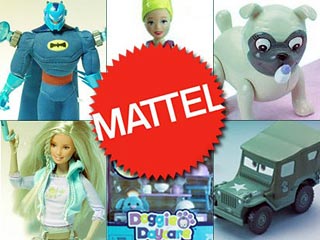
The largest in the United States, the manufacturer of Mattel toys, which produces Barbie dolls, has been accused of conducting industrial espionage for at least 15 years and theft of commercial secrets of competitors regarding more than 50 items of goods. The corresponding lawsuit, the details of which were distributed on Tuesday, filed a competing company of EM-Ji-Hey to the Federal Court of Los Angeles. She produces popular Bratz models and, like Mattel, is based on California, ITAR-TASS reports.
The essence of MGA accusations boils down to the fact that Mattel employees, at the instruction of management, have been explorating in the halls of competing firms at toys exhibitions around the world for many years. Acting under fictional names, the “spies” were engaged in the theft of ideas, studied the pricing policy and features of advertising companies not only MGA, but also LEGO, SONY and HASBRO.
Mattel thus gained an advantage in developing a strategy for promoting the market for the market to the detriment of rivals, MGA believes. Mattel did this in order to fix the "unlawful advantage to imagine itself to be the embodiment of good, and opponents - the embodiment of evil," the statement of claim.
According to experts, almost all large companies are engaged in industrial espionage to one degree or another. The outcome of the lawsuit in court decides evidence - the direct recognition of employees in the embezzlement of other people's secrets from the sanction of the leadership. And the MGA lawsuit is based mainly on the testimony of the former Mattel employee, who resigned as a sign of disagreement with its methods of combating competitors.
Recall that last year the scandal was also resolved, the main participant of which was Mattel - she was accused of violating environmental standards in the production of Barbie. Mattel agreed to pay a fine of $ 2.3 million . An almost two -year -old epic ended with the American consumer safety commission, as a result of which Mattel recalled hundreds of thousands of Barbie dolls and over 90 other names of toys produced in China since 2006. In these parties, an excess of lead content in the paint was discovered.
The manufacturer of the most popular doll in the world, at the same time, refused to admit his guilt in violation of the law, since new, more stringent quality standards for children's goods were adopted by the US Congress after the sale of "harmful" Barbie.
Barbie is the most popular toy on the planet. Every week, about a million dolls are sold in the world, two dolls every second. An American girl of 3-11 years old has an average of eight Barbie dolls, Italian - seven, Frenchwoman, German and English women. Russian girls have on average only one Barbie. Mattel has sold Barbie dolls for 50 years.