
Translated material
Mathematics outside of any fashion
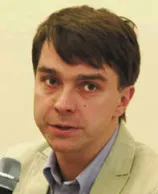
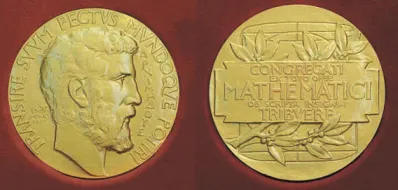
When a conference on a scientific diaspora was held at the European University on June 24-25, 2010, most of the participants did not know that among them are not only Efim Zelmanov and Vladimir Voevodsky -the Laureates of the Field Prize of 1994 and 2002, but also the new recipient of this highest mathematical award. Laureate himself, a professor of mathematics of the University of Geneva , Stanislav Smirnov , already knew about the award, but in the existing etiquette could not tell about this to the Congress of the International Mathematical Union in India.
In the future of a high award, it is interesting to turn to the text of S. Smirnov’s performance on June 25, 2010 in EUSPB. The published option is the connection of the decryption with the theses of Stanislav, as well as its fresh commentary on the previously said things, prepared specifically for the TRV-hobby.
B lagodar conference organizers for the opportunity to speak. I will talk about what I have the best idea - about the situation in Moscow and St. Petersburg, and above all with mathematics. Of course, mathematics differs from the experimental sciences, where large costs and state participation are needed. But similar problems are faced with other areas, primarily before informatics, theoretical physics and the humanities. It is not so that expensive laboratories are needed (even the meaning of “physical” libraries falls with the development of the Internet), and direct communication is important.
On the other hand, mathematics is a good example: it is out of fashion trends, in Russia there was a generally high level, but now it has fallen and not enough active young scientists. Undoubtedly, we must do something, unless, of course, we want to save Russia as one of the mathematical powers.
I want to once again touch on the issue of possible forms of the further participation of representatives of the diaspora in building up the scientific and educational potential of Russia. As you know, science and education only work together. Experience shows that mathematics at the university can mostly actively work in science by researchers. And vice versa, in order for science to have, education is needed. All sciences and all education are somehow difficult to raise, because there are not enough problems and will not have enough effort even to us together. It is necessary to highlight something the most important, to concentrate on something.
It seems to me that the most critical is not the problem of the quality of scientific research and teaching in general (at universities we teach mathematics not only to future mathematicians, but mainly to engineers, bankers, programmers, etc.), and a narrower problem of training future scientific personnel.
In Russia, catastrophically lacking good young scientists, especially initiative, i.e. capable of conducting seminars, organizing scientific groups, etc. If you do not learn the next generation of mathematicians now, then soon it will be bad to teach, and this will affect both mathematics and many other branches of science, and our whole lives.
What is important in the preparation of scientists in Russia? People often argue about school problems, they say that the level of teaching mathematics in the country has fallen. But he fell more or less in all countries. And there are many reasons, even a psychological nature (there is no time to talk about it), and they are more or less universal, much does not depend on us. There are problems in both the USA and in Europe. Positive is that we have a unique system of extracurricular education. Although it still functions on enthusiasts independent of the state, it functions better than in Europe or the USA. This is exactly what we all need to support.
Big problems are manifested at the level of university education and further - graduate schools. It is very important to support the education of students and graduate students, as well as their entrance to scientific life. Here, the scientific diaspora can help greatly, but still the initiative should come from scientists living in Russia, because the organization of some kind of business requires a more or less constant stay here. It is difficult to come for 4 months and organize some long-playing project.
At the university level, an integral and modern courses, active student seminars, circles, summer schools, and scientific environment is important. In addition to this, graduate students should be more actively involved in scientific life and should participate in the organization of seminars, conferences ... It is necessary to prepare not only good, but also initiative scientists.
Therefore, the most significant scientific projects that have good potential for attracting and consolidating young people and for joint work (and cheap or expensive ones are not so important). Integration in the international scientific community is very necessary so that research is carried out at a good scientific level and Russia does not lag behind other countries. Now no country can afford to be in scientific isolation.
What to do? It is simply impossible to do something without the initiative and participation of scientists living in the country. We, representatives of the scientific diaspora, can express our opinion, but the main decision, what and how to do, must be made working in Russia, depending on the situation. Moreover, serious initiatives require long -term presence. I'm talking about the initiative of Russian scientists - it is much more important than any state support.
As for the latter, then, in my opinion, it is not necessary to destroy the existing system of wounds and universities, no matter how in favor of this some speakers spoke out. Although the existing system is far from ideal, it was created for other realities and stagnated in places, it would be counter -productive to destroy it - on the contrary, it is necessary to maintain its best elements and cooperate with them.
But it is no less important to organize and support new, independent and more flexible structures, better adapted to changed circumstances. An independent Moscow University, and the European University, and the Russian Economic School must be supported. It is necessary to help such projects more, especially since it is easier for scientists from the diaspora to help such non -state projects, since these institutions can show greater flexibility than state institutions. It is necessary to support any grant systems (they are important in mathematics), and it is very annoying that the RFFIF budget was recently cut.
What can we do without official support? It is too early to develop large projects : without the initiative from the inside, they will not bring benefits. The exception, perhaps, is the idea of a network university, where the meaning of the word "network" is wider than just the Internet. I do not think that training in itself the main program “at a distance” will work, it is not necessary to focus on this (and therefore the problems of accreditation, etc. will disappear).
But such a university uniting scientists from different countries could:
• work as a center of additional education;
• play an important role in the consolidation and organization of the efforts of the scientific diaspora;
• help cooperation with representatives of different sciences (which is not enough in any country);
• Coordinate small projects (visits, seminars, schools).
Within its framework, further ideas can be discussed. Again, a coordinated appeal from such a team has a chance to really influence the official scientific policy of the Russian Federation.
Many small projects have already been mentioned, but it was said little that for many of them you can attract the money of foreign grants that most diaspora representatives have. And international cooperation will be useful for both parties. Additional money, of course, will not hurt, but organizational support, and simply the interest of the Russian side is more important.
Short visits, seminars, mini -courses, summer schools, joint guide to graduate students, internships ... have already been mentioned. I would still add:
• Support for the system of extracurricular education;
• creation of educational literature in Russian;
• Attracting students not only from Moscow and St. Petersburg.
In conclusion, I want to say that here they talked a lot about the high scientific level of the Russian diaspora. But he is high not only because we had a good Russian scientific school, but also because when people left, this expanded their horizons, they learned the new system of organizing science, met other areas and with other customs to engage in science. I think that the experience of working in foreign universities has increased the level of many scientists who have left, and therefore the Russian diaspora is so strong.
It would be nice to get some kind of return on the potential accumulated by the scientific diaspora. It would be nice to return part of this experience to Russia. Returning scientists may not be very real, and this is not yet very well organized, but we must try. The main thing, maybe, try to exchange experience and maintain contacts with world science through the Russian diaspora.
Another small thing. Now it is customary to turn to the authorities and express our opinion. It seems to me that here you have to be careful, because 2-3 times the authorities will listen to us, but they will not listen anymore. Therefore, you need to handle only a few times and thinking well what we want to say that we want to discuss. (Applause.)