
Translated material
Arabic street syndrome
Why you can’t believe the word of power
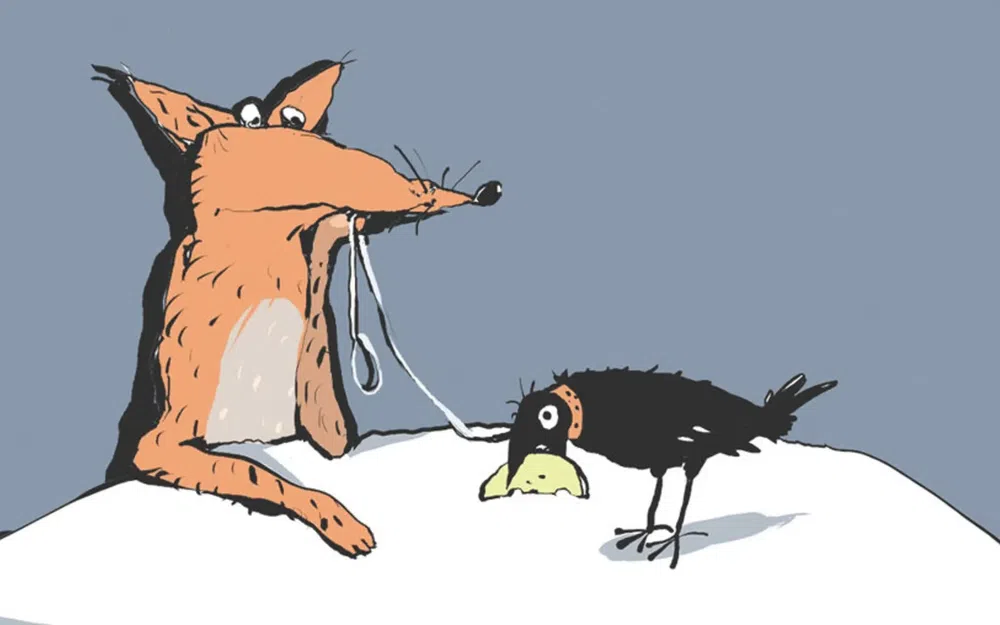
During the Second Iraqi War, the Government of Saddam Hussein was the Minister of Propaganda, he was called “Arab Goebbels,” Muhammad Said al-Sakhava. Clown and Brekhun. All day it flashed on the screens of television channels and told how valiant ...
During the Second Iraqi War, the Government of Saddam Hussein was the Minister of Propaganda, he was called “Arab Goebbels,” Muhammad Said al-Sakhava. Clown and Brekhun. All day it flashed on the screens of television channels and told how the valiant Iraqi army “knocks his teeth” with an American military machine. Every day he talked about tens of thousands of killed American soldiers. When the Americans occupied the Baghdad airport, he clearly talked about the victories of the Iraqi army. About the severed heads of the Yankee. And when shots were heard in the television posts, he still did not give up. After a couple of hours, the statue of Saddam Hussein was overthrown in the frame.
And how did people react in the streets? They were convinced that these are “military tricks of our generals,” as the respected Muhammad Said al-Sakhava assured. The expression of children's amazement on the faces of the Arab Street elusively recalled emotions on the faces of our citizens who for the third time entrusted their contributions to the next financial pyramid. Or who learned from the news about the new tariffs of natural monopolies, commercialization of budgetary institutions, etc.
In my opinion, one of the weakest points of our national identity is complete indifference to the nature of the power that controls us. The people are an object of power, not a condition. The sacredness of power for most of society is natural and familiar.
Shalamov has a phrase: “The intellectual distance from a man to Immanuel Kant (I replace him with a“ citizen. ” - S. P.) is much larger than between a man and his horse.”
Like few people who understand that vials should not be allowed into politics. The electorate does not bother with a critical assessment of what is happening.
Why are people so tolerant of hypocrisy and lack of principles? Yes, because they themselves have no opinion and prefer to swim with the flow. To have beliefs is a strange eccentricity.
A few months ago, being in Indonesia, I saw a huge demonstration. Asked people: "Why are you going here?" I first saw the inhabitants of those places in the paintings of the Gauguen field - natives with thick lips, it seemed to me that three hundred years before our development. Now this demonstration was against the salvation of some bank. The government decided to save the bank and allocated $ 700 million. The Indonesians took to the streets. I ask the guy on a scooter with a flag: "And you left?" “Yes, the opposition asked us to go out and support, today there will be big debates.” The next morning I open the newspaper: the government canceled the decision. That is, these, as it seemed to me, “Papuans” can today without whipping windows, without burning cars to go out onto the streets and tell their government: “No, we do not agree with a waste of $ 700 million”.
How to learn this? We will always choose, of course, to the Motherland between the Motherland and the truth, whatever it may be there. Sometimes we will confuse her with the authorities. For success, for effectiveness is a terrible blow.
What public flaw makes our people be trusting and passive? If you admit in advance that a person is smarter than you, there is no chance. Such people were simply doomed to live 73 years under the Soviet regime.
Some lived, dancing rock and roll and creating silicone valleys. Others also made missiles and trembled with fear of their power. Today they have stopped trembling. To the question: "Are you not trusting our bodies?" - We no longer squeeze into the wall and do not merge with our own shadow. But before the understanding that the greatest danger to society comes from our own government, we are still infinitely far away. It does not occur to us that obtaining permission for a rally is to put a public contract upside down. The street belongs to the people. This is understood by any English housewife, to which the demonstration on the street prevents the street with a stroller. She calmly gives way to the road, recognizing the right of citizens to protest.
While society continues to believe in the word of power, “the syndrome of amazement of Arabic street” cannot be avoided.