
Translated material
When does Monday end?
"Monday begins on Saturday ..."
A. and B. Strugatsky

From our course, three were distributed to distant green. The beauty Natalie, having arrived, sat on her suitcases and cried - could you live here on the edge of the earth?! Then she looked around and realized: you can live. And in something-very good. More than a quarter century has passed since then. But in order to discern the beginning of this story, we will have to look at Natalie, crying on the suitcases of Natalie, a hundred years ago.
The systematic development of the northern seas by Russian biologists began in 1882, when the first marine biological station was founded on the Solovetsky Islands. It lasted 17 years, and then the monks changed the authorities, and the existence of the scientific station under the side of the brotherhood was recognized as ideologically inappropriate. Scientists were kicked out. However, they did not calm down and did not fold their hands, quickly proved to the then power to those who were in power, and the station was transferred to the port of Aleksandrovsk (now - G. Polyarny), located in the Catherine Harbor of the Kola Barents of the Sea. In 1902, the station was renamed the Murmansk Biological Station and worked until the 30s, when the researchers were crushed by interdepartmental intrigues-a solved place was required for the base of the Northern Sea Fleet.
It must be admitted that the exile of the 33rd year was more expensive than Solovetsky: eleven people were sent to the camps and a link, they received the same amount of the deadlines conditionally. But everyone knows that scientists are stubborn and tenacious people: after the next defeat, the station did not disappear, but only relocated to even more deaf and deserted places. The tactics of survival in the history of the tactics, which is what to say. Yes, and the ambitions and various interests of the new state of workers and peasants in the north were in full by that time, which was in the hand of scientists. A year later, a research expedition from E.M. Crees and his associates, securing the patronage of the "rich" names - I.P. Pavlova and L.A. Orbeli, found a comfortable Oscars on the coast of the Barents Sea - it is protected by islands, near the fresh lake, even areas for construction on an ancient moraine. An extensive beach, and near it is rocky and rocky litor, which gives rich material for research and educational practice.
On March 10, 1935, the Council of People's Commissars of the USSR adopted a resolution on the opening of the Murmansk Biological Station in the Dalnezenetskaya ona.
The case, apparently, was really necessary, because the station, which began with one large tent for workers and researchers, grew like yeast. Scientific works have been carried out from the first days of founding. By 1939, the construction of all the main station rooms was completed: a scientific building, a residential building, a bathhouse-laundry, a warehouse. A wooden pier was built, and a telephone was held. Already in 1937, the biostation had three motor-pairing bots. The first volume of the “works” of the station was prepared for printing in the same 1939.
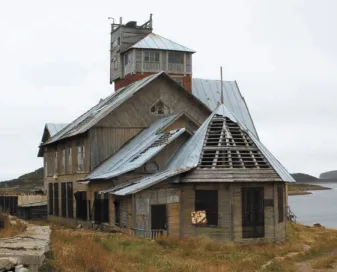
Youth, enthusiasm, indifference to domestic difficulties. Science, science, science ... evacuation to Central Asia during the war (all equipment and research protocols are saved !!!). After the war, the twice wounded director of the station V.V. Kuznetsov and his employees work literally for a day, restoring the station and simultaneously conducting scientific research. The wave of the party struggle against “Mendelism-Morganism” washed away from the capitals to Zelents of excellent scientists-Yu.I. Polyansky and M.M. Kamshilova. I was lucky for a student of LHU to listen to the lectures of Yuri Ivanovich in the zoology of invertebrates. It was nothing to compare with. The brilliant performance of one actor. Not fitting in the audience in several tiers peeked out of the corridor. Especially bright Polyansky depicted Foraminifer and a moving multi -stroke worm.
Far greens as a zone of freedom. Anna Vsevolodovna Uspenskaya, who worked at the station from 1949 to 1952, says: “... we had a very good system of seminars organized by Kamshilov and Polyansky. Once a month we received magazines, including foreign, German, English. All the literature received with the next flight of the ship, we were instructed to make a review. In all, and not only in their specialty, which, of course, greatly developed us. Firstly, it was necessary to read in different languages, and secondly, the coverage was wider than just parasitology, ichthyology or hydrobiology. Yuri Ivanovich always said, it was his crown phrase: "A self -respecting scientist should know at least three languages." Far from the capitals, but close to the rest of the scientific world. It was so.
In the 60-80s, the village flourished. Kindergarten, school, shop, bakery, weather station, dairy farm, 800 people, most of whom work at the institute and at the institute. The composition of the "scientists" was formed mainly from graduates of the Moscow, Leningrad and Novosibirsk Universities. The average age of Zelenchan is 30 years. “Attitude to work as the main content of life” - this is how one of its inhabitants described Credo Zelentsov. By the 80s, the station in distant Zelens, according to experts, became the best marine biological station in Russia both in equipment, and for the opportunities that it provides researchers. The work is carried out not only in the Zelentsov area. The institute owns two large vessels, they are made research flights to the Norwegian, Greenland, Pechora, Kara Sea, work on the New Earth, on Vaigach, on the land of Franz Joseph, on the island of Gooker. Russian scientists work together with the Norwegian and Canadian colleagues.
These were them - the revived heroes of the Strugatsky brothers. It was their world. Student practice from all over the Union, monitoring, description of new types, fundamental research.
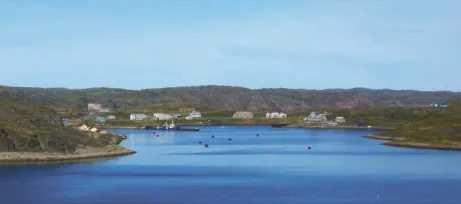
I myself, in the past, was a biologist there this year. I saw with my own eyes what was left of the institute, from ships and from the village itself. What happened to the best Russian marine biological station, which survived a clash with monks, Soviet power, Hitler Germany, Stalinist wars with pseudoscience ...?
In 1989, MMBI (Murmansk Marine Biological Institute) was transferred from distant Zelentsov to Murmansk. It was assumed that this translation would not significantly affect the distant greens-the biofermation there will still function.
How justified the translation of the institute to Murmansk was not unequivocal. Many believe that it was impossible to do this in any case, others say that it was otherwise not to survive. Intrigues? Private self -interest? General vigorous indifference to science? After the transfer of the institute to Murmansk, the population of the village was left without work. The village was officially closed. Its inhabitants were settled in the area of Severomorsk and Vidyevo.
Really now in Zelens one living laboratory is a laboratory of algology. One half -dead house is a hostel. Two or three people winter there. The students, who were brought by my biologists from St. Petersburg this year, paid MMBI for 600 rubles for accommodation in this hostel. per day per person.
The most amazing thing is that, judging by the documents and sites of MMBI, the base in distant greens exists. Ghost base?
They say that they even regularly receive funding for her. Where does it go? Allusias again to the Strugatsky - “Snail on the slope” - forest and institute - logical conclusion.
Recently, at a distance from the collapsing village, pretty yellow houses with all amenities were built - a commercial base for rich divers, and hung a sign: “Entishability and passage are prohibited”. Well? The "scientists" who have become strangers go around. There are still Krabolovs with their ship (it was precisely the scientists who released the young Kamchatka crab in the lip, he gradually took root, and now its number here is greater than in Kamchatka). From crabolov today you can buy a fish or crab.
Leaving aside the first two of the three traditional Russian issues - "Who is to blame?" (Confused, understanding) and "What to do?" (this seems to be obvious), let's move on to the third right away: "Kamo is squealing?"
The following goals and objectives seem to be indicated:
- The interests of Russia in the Arctic.
- The rise in science, including fundamental.
- A full -fledged higher education, which naturally includes the practice of students and graduate students.
- Ecological monitoring of northern waters.
- Tracking climatic changes.
- Preservation and maintenance of scientific traditions.
If we go exactly where it is officially stated and all these are not the next “conversationalists in favor of the poor”, so why now, right before our eyes, the almost hundred -year history of the oldest and northern northern marine biological base of Russia should end?
After all, after resuscitation, she could become not only a research, but also an excellent inter-vector base. And foreign colleagues? And the interests of industry, industrial ecology (by the way, here, in the village, there was the northernmost corrosion station, where samples of alloys were tested, but it naturally froze with the death of the institute)? Is it not worth the above to figure out what is happening, and “revive” the station along with its history, science, traditions?
Do we really need to first destroy everything to the ground, and only then invite the Varangians to the resulting ash ... Maybe at least sometimes you should do otherwise?
Zelens are not so distant
The editors became known that in the article by Katerina Murashova about distant greens published in the newspaper Trinity Option No. 19 (63) dated September 28, 2010, it contains borrowing the text and illustrations from the material of Alexander Goryashko “Farewell to the Far Greensters” , published five years earlier. The source of borrowings is not indicated.
A. Goryashko informed us about this in her letter, where in particular she indicated: “I have been engaged in the history of northern biostations since the beginning of the 2000s. I collected a huge amount of archival material, interviewed dozens of people, found and scanned hundreds of archival photographs, etc., etc. All these materials were generalized in the electronic edition of Littorin on Litreli, published in 2005 in the form of a disk and a site. I continue to deal with this topic, the site is constantly updated. It was during the further research that I came across an article by K. Murashova ... It was, to put it mildly, it was unpleasant to see without link to the source of the photograph that I went to Sevastopol, or pieces of interviews that I went to St. Petersburg ”...
We apologize to Alexander Goryashko.