
Translated material
Dr. Chekhov, writer
Donald Reifield, a well -known British philologist, published the Life of Anton Chekhov (Anton Chekhov: A Life) back in 1997. The book was transferred to Russian, our readers caused mixed feelings and quite curiosity, so that it was reprinted twice - finally, and I was also able to read the publication of 2010 also with very mixed feelings, which are below which below are below. I will share.
The “life of Anton Chekhov” was conceived by the author as a story about the life of the writer: the works are only mentioned, some are very concisely retold. As you know, Anton Pavlovich spent most of his life with his family. Accordingly, we receive detailed information not only about Chekhov’s parents, but also about his brothers and sisters, daughter -in -law and nephews, aunts and uncles. As well as about serving, neighbors, colleagues, friends, about familiar ladies, about correspondents and patients of Dr. Chekhov.
Life is described no less than in detail - houses, apartments and cottages, hotel rooms and stations, buying and selling estates, field work and garden care, repair care, as well as railway stations, crossings in the carriage and by train, letters, parcels and other postal chores, official lunch, meetings and wires, gifts, gifts, visits, etc. From some point it is alarming, then it is annoying.
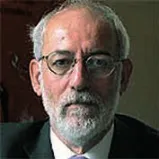
In 2005, when Reyfield’s book was first published in Russian, the author gave an interview with Radio Liberty in Moscow, where, among other things, he said: “Even if Chekhov was not a great writer, it would be worth writing his biography only because we had all the documents, all his letters watched his friends, friends, relatives. So this is just the documentation of a good Russian intellectual at the end of the 19th century. And such documentation, in my opinion, does not exist for any other writer. Although others conducted diaries, but Chekhov is not ” [1].
"Documentation", i.e. archives, really became available only in "perestroika" times; Let me remind you that in the late 1970s, the Politburo resolution “Against the Working and Discreditation of Chekhov” was issued in the USSR, which was aimed at closing archives for researchers ...
Chekhov’s correspondence readers remember that most of his letters are business, or playful. A well -known and often cited letter to his brother is undoubtedly the exception, as well as separate letters to Suvorin. Chekhov was not just a restrained person - he was hidden. As a result, from his letters, we can learn little about his writer's work and the least - about his moods. But we can find out many entertaining details - or rather it would be about the details presented by him as interesting.
Reifield wanted to talk about Anton Chekhov precisely as a man - for this, not only his own letters were needed, but also the letters addressed to Chekhov, as well as letters of his acquaintances and relatives to each other. Repeatedly remembered by Chekhov and his correspondents, the location of a waterclass in a hotel or in the country, a good or bad stove, an unsuccessfully prepared dinner - all this was significantly for a seriously ill Chekhov, who, up to the last few years, deliberately continued to lead the life of a healthy person: he traveled, lived in hotels and boarding houses.
“Mundered” household details, as well as a description of Chekhov’s relations with women, gave rise to a certain “confusion” and the miserable among readers of the book by Reifield. I would not agree with these reproaches. Yes, Chekhov, while he was single, visited the brothels - in those days it was in the order of things. Yes, his connections with women were very numerous - but he was young, charming and free. In the story, Reifield speaks of Chekhov as Anton - but in the English text it does not sound as familiarity.
The fact that Chekhov’s work is not used by Reyfield to reconstruct the life of the writer is just attractive. But is the plan itself adequate - to tell about Chekhov’s life, almost not discussing his work? This concept of the artist’s biography (as well as any other) can be disputed - for example, I am sure that an attempt to write Bunin’s biography, only mentioning his texts, would be obviously doomed to failure.
In general, if some assumptions regarding the logic of Chekhov’s life, Refield cannot be documented, he does not offer them to the reader. Sometimes it is upsetting. So, for me there was always an unclear goal of Chekhov’s trip to Sakhalin. The Ra-Field book tells in detail about how Chekhov was preparing for the trip and what exactly he managed to do on Sakhalin-but the author tries to limit himself to facts and does not offer neither reconstructions nor assessments.
It seems to me that Chekhov took this trip to get out of a deep spiritual crisis that did not have rational (or easily rationalization) reasons. Is this so remains a mystery.
“Even if Chekhov was not a great writer, it would be worth writing his biography,” the author of the book discussed. However, Chekhov was a great writer! And it was creativity that was the main content of his life. Different people in different countries, that's why they would like to know more about Chekhov. Apparently, one can tell about Chekhov’s life , only fluently mentioning some of his works, the question is that this story will satisfy this story.
1. Http://archive.svoboda.org/programs/otbl/2005/otbl.070305.asp