
Translated material
Oh, it's not easy to work! ...
In the first half of the 70s there was a massive influx of youth in Soviet science. In Troitsk, he had the character of a powerful wave, especially since the city was then intensively built. Now representatives of this wave celebrate anniversaries ... Everything in different places and in different quality. Someone left, someone became a businessman, someone became a stubborn researcher in his native swamp. And someone is a working horse drawing an infrastructure of Russian science from a quagmire.
Leonid Kravchuk, deputy. Director of the Institute of Nuclear Research of the Russian Academy of Sciences, Dokt.Thn.Sauk, belongs to the last category. The Institute is “heavy” in terms of capital investments and territorial disunity of units, but quite prosperous. Leonid Vladimirovich was 60 years old on September 24.
We will not follow the traditions of the previous number of the TRV, where the editors, showing the miracles of conspiracy, suddenly poured a bucket of barely on the head of its editor -in -chief. Leonid Kravchuk does not yet need Elee, so we limit ourselves to a direct and frank interview. A sort of Hard Talk with the anniversary, who was led by Boris Stern and Ilya Mirmov.
- What is the institution of nuclear research? List the largest installations.
-Firstly, the Moscow Meson Factory. The name should be considered conditional, since at present our, so far the only strong -flower linear accelerator of protons in Troitsk in Europe works mainly for experiments on neutron sources and spectrometers, for installation for radioisotopes and on a complex of radiation therapy.
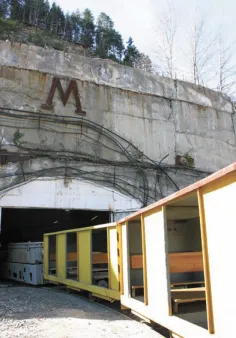
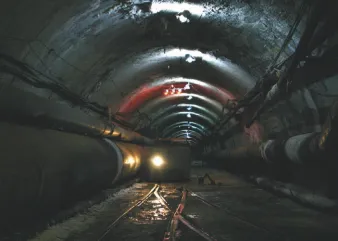
Installation of a comparable scale is a Baksan neutrinum observatory. This is a four -kilometer tunnel under the mountain with the halls in which the installations are located. The largest of them are Galli-German neutrinum telescope for registering solar neutrino and an underground scintillation telescope.
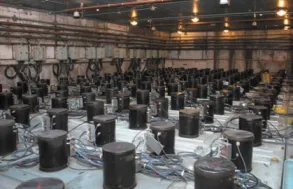
Next - the Baikal deep -sea neutrinum telescope - garlands of photographic photographs in water, registering secondary muons from atmospheric rainfalls. Even from large installations - the Trinity installation on measuring the mass of the neutrino.
In addition, employees of the institute work as part of international experimental and accelerating collaborations - in Cern, Germany, Japan, in the USA, etc.
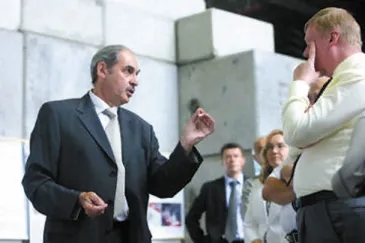
- What is your area of responsibility at the institute?
- In science - a meson factory. In particular, the accelerator and experimental complexes, the production of isotopes, the medical complex. In administrative terms, I act as the first deputy. Directors, I am supervised by the financial and economic unit, engineering services, safety precautions.
- How many employees are in IAI RAS?
- The normative number of employees of the institute is 1024 people. In the positions of researchers, 330 people, with the engineering staff involved in scientific work - about 2 times more. The rest are auxiliary staff. But the “living”, really working at full rate, alas, 997 people today. This summer we lost more than 20 people and failed for the “sign”, a thousandth mark. We never had so little. This, of course, is sad and also explainable. The situation at the institute, first of all, is financial, after several years of stable growth, it worsened markedly. That is, financing remains at the level of last year, and prices have increased significantly. We again found ourselves at about 2000, and I really would not want to slide further, back in the 90s, when in the country they simply spat on great science, throwing it to their fate, essentially offering to get out on their own. We coped, but why step on the same rake?! Moreover, now it has become much more difficult to earn on your own ...
- So everything is bad?
-It happens worse, but I’ll tell you a secret: there is simply no money for a communal apartment for the 4th quarter.
- How to be?
- And how does it usually happen? Until the thunder breaks. Firstly, we will do everything so that warm and light at the institute are. Even if the cost of canceling the most resource -intensive experiments. Secondly, at the beginning of the year we warned that we would not have enough allocated funds, and in such cases in our country there are always hidden reserves “for a rainy day”. We hope that just as last year, the state will fork out and allocate missing finances - both for our institute and the Academy as a whole. After all, there is money, as we all know, there is in the country.
- What does the institution have in absolute terms?
- Basic annual financing at the institute - 89 million rubles. excluding salaries. Our real budget is about 5 times more, i.e. We get another 80 % due to participation in the scientific programs of the Russian Academy of Sciences, state contracts, grants and contracts.
- How can I do experiments in such a financial situation?
- I report: we are ready to start the next session in the meson factory in November. Finally, an impulse neutron source in combination with experimental attitudes should be launched.
- But how, if such problems with finances in a communal apartment? After all, the accelerator requires a large number of resources ...
- Yes, it requires. The session is perm with. I hope that additional funds will be given. If not, we mobilize internal resources. If it is very bad, we will only start the attitudes that work under contracts, for example, the production of isotopes. There is a great demand for sessions under contracts that are well paid. Our customers are mostly foreign. Moreover, with the Americans (the Department of Energy) managed to agree on a small prepayment. In fact, we have real innovative activities. In addition to isotopes, we make equipment under the contracts for Desy, Current, J-Parc, for other foreign laboratories.
- Interestingly, in the world there are many accelerators, why are they addressing you? Low issue in the issue? Or can you provide something, from a scientific and technological point of view, what competitors cannot?
- A good question! Responding to him, I can boast: in the ratio of “price - quality” we really often win. And not only and not so much at the expense of the price, namely due to quality. It should be understood that for current contractual orders there is a long -term and productive work of the entire chain. Starting with theorists who have planned something “sort of”, then physicists -accelerators, experimenters and engineers who managed to implement ideas in practice, and as the crown of everything -a seducing managerial activity, when we managed, as they say, “sell our product”. Oddly enough, but our backwardness sometimes benefits us. There, abroad, a magnificent technique, both physical and counting, which leads to the fact that the operator copes with the process. But he often does not really know his essence. We collected a lot on the knees, and if it starts to work for us, it works no worse, but as a result we know physics and feel much better. So we find ourselves closer to science.
And one more plus born from our reality. What they say about now (I would say, they mainly only say, but do not do it!) -Susing and even dominating the innovative component in science, the active use of high -tech technologies in production and life -we have already passed, we have already done this since the 90s. We were simply forced to switch to innovative-commercial rails in the use of our knowledge and scientific equipment. Because only so, when the state waved a hand on us, we could survive. As a result, they also preserved science, and introduced new technologies, and continue to earn a living. Without this side of our activity (quite scientific, nevertheless) we simply cannot exist. At the expense of contractual work, we support not only scientific units performing work, but also management departments and auxiliary services.
Of course, there is a demand not only for scientific sessions, but also for applied. Our medical physics is very in demand, it is designed to really treat people. It is known that only 1% of all those in need receives radiation therapy. Moreover, our irradiation methodology (proton therapy) is more effective due to the best selectivity, and most importantly - less harmful than previously used ...
Although in the end it is worth recognizing that the so -called “innovations” greatly distract us from the case, for which, in fact, the institute was created, from fundamental science. And if the state really allocated adequate financing for purely scientific research, then we would have managed to normally manage both. Indeed, in hard financial ticks, we are forced to save on everything and not to completely load our equipment ...
- But science is not only money and equipment, it is ...
-In-o-oh! These are also people! Do you know why our accelerator will have to be closed in a few years? -There will simply be no one to work as an accelerator! The average age of staff is about 60 years. There is especially acute shortage in engineering frames, where its own specifics of current work, and the continuity of generations is especially important. And the experience, it turns out, is nobody to convey.
And the problem is not only in the salary. We can keep one or two particularly valuable personnel, but it should be really elite experts, they can often be found only on the side, but they need to.
- Housing!
- Yes - normal housing for ready -made specialists, simpler - for young people. At current real estate prices and salaries in science, they themselves will never earn this business, and the incentive to get an apartment is one of the strongest in every sense.
-And in the demographic too-how many families are not even planned due to the lack of their own corner.
- The factor is also forgotten when they complain about the outflow of our brains from science and from the country. After all, there are people who do not want to do anything but their favorite business. When financing science, it is absolutely necessary to lay funds on housing. We put the necessary people in the built service apartments with the right in 10 years to transfer them to property. This is not a loss of money, but on the contrary - their advantageous investment.
- You have listed large institute settings. Do they have a future in modern conditions? Are they competitive at the world level?
- With experiments on solar neutrinos and on measuring the mass of neutrinos, the answer is generally positive. For example, there is an obvious task of monitoring the flow of solar neutrinos.
The Baksan neutrinum observatory could also be used to measure neutrino oscillations in conjunction with any accelerator that is now developing in the world. By direct measurement of the mass of neutrinos for several years, the Trinity experiment will not have competitors. Now our restriction on a mass of neutrinos is a record, a new, more sensitive installation begins to work. The Baikal deep-sea telescope can now be considered something like a large existing prototype. If you increase it to a square kilometer, it will be the best installation of this class in the world.
- Regarding the meson factory ... it was created as a tool for fundamental studies in the field of physics of elementary particles. Do you agree that in this regard it is morally obsolete?
-Once our meson factory was the second after Los Alamos, I mean a linear option. Now there are several of them in the world. Some are built for one goal, others as universal attitudes. Our accelerator remains a universal installation, where you can do many applied things, in this sense it is not outdated. Of course, there are still fundamental tasks that we all flew by, for example, a mu-e conversion. (Muon’s decay into an electron and gamma quantum occurring in violation of the lepton number. The process is absent in the standard model and thereby interesting.-approx. TRV.)
Now it is outside the possibilities of the meson factory. However, if we upgrade our accelerator, then in the existing tunnel, you can reach the energy of 1 GEV and power in a bundle - near Megavatt. By the way, the Los Alamos Meson Factory is officially closed, but it continues to work in a different quality for almost the same tasks as us. The state allocated 250 million dollars for the modernization for 10 years, 40 of which they have already received.
- Is there in principle in our country that such a valid source of money (program, grant), where can I apply for funds, for example, to bring the Baikal installation to a scientifically significant size? Or for the completion and modernization of the me-zone factory?
- Formally, maybe yes, but in fact - no. Although the money is required quite reasonable. They are not at the academy, but there is certainly in the state. Do we download oil-gaz? We chop the forest? And we spend on what? I am ready to assume that Skolkovo could be a useful and advanced thing, but-as part of the country's innovative system why not use what is-an existing scientific and production structure?!
We have everything at the institute for such a project (albeit not a full -scale, but its integral part at least!) - territory, communications, entrances, resources, even human ones. Moreover, starting something serious here (which always implies large financial injections), I will immediately attract a bunch of people who are already where daily trips to Moscow. And these are literate, qualified, still quite able -bodied age. In general, continuous advantages. No, we need to build from scratch in a clean field, forgetting what already there is!
Or take Rusnano. We have passed the examination of two projects, on the way the third. And no one received the money. Everything rests on the requirement to find a co -investor by 51 %, then they will pay the rest. And where to get this co -investor in the realities of our country? So they erected a barrier to themselves .... Why is this done is absolutely incomprehensible. If scientific and economic expediency is already proved - let's have a full amount, and do not make us run with an outstretched hand again.
- Well, about the attitude towards science from the state officials, everything seems to be clear. But is the state to blame? Is the Academy itself impeccable? Is there a share of guilt of the Academy itself in the current position of Russian science?
- The background of the current situation is as follows. In the 90s, the Academy and in general science was hung in hunger. Then some hope appeared. In 2009, the fundamental research program began to be cut again. And somewhere here the leadership of the Academy made a mistake. Officials do not understand why the fundamental science is needed. Give them innovation - they tried to cut them off from the academy. And the leadership of the Russian Academy of Sciences answered: we are engaged only in fundamental science, applied - not our profile. Well, at least tell us us, - the officials say. “We will engage in exclusively fundamental science, do not go into our affairs, just give us money,” say academics. And here there are structures and people who are not alien to science, and they say: “We will do it!”. Who will the country's leadership work with?
Further. The Academy is proposed to participate in the revival of departmental science, in fact, the system of industry research institutes tied to specific production. The leadership of the Academy proudly refused - not ours, they say, this is a matter! And whose?! Who, besides scientists, can organize a scientific structure? And where do we have other scientists, except at the academy and universities?! After all, the industry research institutes really almost ceased their profile activities almost everywhere. Why was the Academy unlocking? After all, we have a lot of people who own the question.
By the way, I set out in sufficient detail my proposals on this topic in the article published exactly a year ago by the article "A dead end at the end of the tunnel?" In the newspaper "Search".
Another example. The government suggested that the RAS present projects in priority scientific and technical areas. Only our institute submitted 20 (!) Projects, which amounted to almost two -thirds of the total number of applications in the direction of “Nuclear Technologies”. And not a single (!) Of these was not supported without explanation; So, most likely it was simply not considered at the level of a special commission created at the Academy. If I were in the place of the commission, in general all the projects would have moved to the government ... Well, not all, but half for sure - they really deserved it.
What can I say: Iya is the largest nuclear ”academic institution in the country, and the leaders of the Academy for decades cannot find time to visit it.
- That is, while in the RAS system, nevertheless, you see and criticize its shortcomings?
- Why not? In principle, nothing happens ideal, and when we ourselves are substituted, then ... and we must also understand the difference between academics and the academy. The vast majority of academicians are worthy and well -deserved people, I really respect and love my nearest colleagues. But the Academy is thousands of researchers, ITR, workers and employees, and the structure is somehow not imprisoned for them ... As they say, from healthy confidence to unhealthy self-confidence-one step, and it is often the leadership of the Academy, unfortunately, is being taken.
- Well, what to do next with the academy? In the media, people conduct hot discussions about this. There are also issued points of view. Let us call them in decreasing order of radicality, and you comment. The first point of view is the louder than anyone is expressed by Maxim Frank-Kamenetsky: the academy must be dispersed as archaic feudal structure. The institutions, however, are left.
— Ну, и что институты будут делать без профессиональной (подчеркиваю это слово) управленческой структуры? Кто будет заниматься организационными, финансовыми и другими вопросами большого государственного ведомства? Будет паралич.
— Видимо новая управленческая структура…
— В этом случае получится та же академия, только, может быть, под другой вывеской. Главное — не надо революций: «до основанья и затем… » Проходили уже. Потом (в лучшем случае) получится то же самое, но на создание новой управленческой структуры уйдет несколько лет, за которые потеряем и время, и деньги, и людей.
— Следующую точку зрения озвучивают Сергей Гуриев, Михаил Гельфанд и Константин Северинов: Академию надо аккуратно реформировать, но, поскольку она сама этого сделать не в состоянии, надо оказывать неразрушающее давление извне: ввести предельный возраст для занимания административных должностей, увеличить конкурсную составляющую, добиться честной экспертизы с привлечением иностранных ученых.
— Конечно же, реформирование — самый разумный путь. Банально — брать лучшее, убирать отжившее, менять устаревшее. Пускай даже реформирование «извне», но — вместе с нами! Поверьте, мы и сами знаем, что у нас плохо. Конечно, все перечисленное выше имеет смысл. Предельный возраст приведет к обновлению практически всего руководства как Академии, так и структурных подразделений институтов, поэтому вводить его надо постепенно и аккуратно. А главное здесь — это вопрос пенсионного обеспечения. Почему у работников «Газпрома» пенсии как у госслужащих, а у сотрудников государственных академий — нет?
Гранты, независимая экспертиза — все замечательно, кто бы возражал.
But this is not enough. Например, физик выигрывает грант для проведения исследований на дорогой установке, эксплуатация которой стоит несравненно больше, чем сам грант. Где взять деньги на эксплуатацию и развитие установки? Как построить новую установку? Это конкурсами не решить.
— Это из той же серии, что мы уже затронули: должен быть какой-то стандартный, прозрачный путь для получения денег на достройку Байкальской установки, Мезонной фабрики, для нового оптического телескопа и т.п.
— Да, это должны решать, конечно, чиновники в правительстве, но с полным и всесторонним участием научного сообщества и по понятным, неабсурдным критериям. Часто ведь дадут копейки по госконтракту на два года и требуют отчета по числу защищенных докторских диссертаций за этот период.
— Бот и получится конкурс, только другого масштаба. Наконец, последняя точка зрения, высказанная сотрудницей СО РАН Ириной Самаховой: у нас сейчас не могут ничего реформировать. Получается «как всегда». Поэтому лучше уж совсем не трогать Академию, чтобы не загубить. Оставить ее в покое. Ну, добиться какого-то увеличения финансирования на РФФИ, и, может, она сама как-то выкарабкается и доживет до лучших времен.
— Наверное, это и есть самое правильное.
— То есть Вы хотите сказать, что вариант «дайте нам много денег и увидите, что мы на самом деле можем» — самый разумный?!
— А чего ж нет-то? Стоит только уточнить. Много денег на конкретные дела, предложенные специалистами, выделяемые по ясным критериям и с жестким контролем за расходованием средств. Не с тупым контролем (когда невозможно перебросить финансы с одной статьи в другую по своему разумению), а с разумно-бюрократическим. And yet. «Много денег» — это не значит на 2-3 % больше, которые все равно съест инфляция. Уровень финансирования фундаментальной науки должен быть не меньше, чем в странах большой двадцатки, раз уж мы там себя позиционируем, и это будет разумным и перспективным вложением с последующими девидендами в виде высоких технологий. И с нашей стороны: фундаментальная наука — основа основ, но не бежать от инноваций и не манкировать сотрудничеством с государством, находя разумный баланс.
Мое мнение: потенциал у Академии по-прежнему велик, его надо грамотно использовать на пользу страны, которая в свою очередь должна понимать, что наука только тогда станет приносить ей (стране) отдачу, когда перестанет выживать, а сможет развиваться. Американцы, немцы, японцы, китайцы и «прочие шведы» это поняли, они реально ВКЛАДЫВАЮТСЯ в науку, признавая ее приоритетом развития. А развития нет без новых проектов и модернизации действующих уникальных научных комплексов.
Что касается нашей области. Вы знаете, уже создаются ассоциации по ядерной физике в Латинской Америке и Африке, интегрированные в мировое ядерно-физическое сообщество, а мы на карте мира, с установками по физике высоких энергий, ядерной физике и др., вскоре можем оказаться белым пятном со всеми вытекающими для последующих поколений.