
Translated material
Wait and see
After five -year construction in Moscow, a new building of the multimedia complex of actual arts finally opened. Previously, this was modestly called the Moscow House of photography
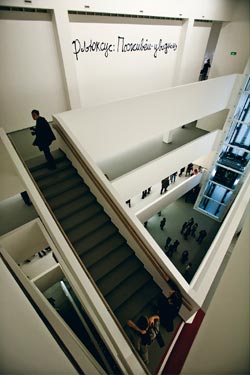 |
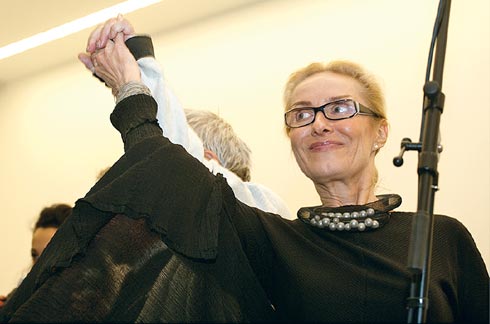
| The new modern exhibition space is the embodiment of the dream and will of the director of the museum Olga Sviblova |
Wait and see. After five -year construction in Moscow, a new building of the multimedia complex of actual arts - multimedia art museum of Moscow (MAMM) finally opened. Previously, this was modestly called the Moscow House of photography. The current abbreviation is an obvious hint of the famous New York Museum of Modern Art Moma (Museum of Modern Art). The new exhibition space looked around The New Times
The rebuilt building of the Moscow House of Photography (architect Andrei Bokov) is located in the same place where the museum was even before - at the beginning of the Ostozhenka. The modern building with a hint of hi-tech is in the depths of the old quarter. From the previous unique mansion of the 19th century, a small decorative facade has been preserved, tied to the traditional urban development.
Our Guggenheim Square of a new building is 9 thousand square meters. meters, of which 2.5 thousand are given to exhibition sites. The architect worked with fantasy, but the absence of air and light in the building makes the current museum similar to a set of white boxes, strung on an uncomfortable staircase and a booming atrium, filling the space with a deadly white light. The layout itself-the ramp system promoting on four floors-refers to the famous spiral of the Guggenheim museum in New York. “Each centimeter of this building is pouring my blood,” says MDF director Olga Sviblova. And you certainly believe her words. But having created a new exhibition space, the director of the museum faced the absence of the subject of collecting.
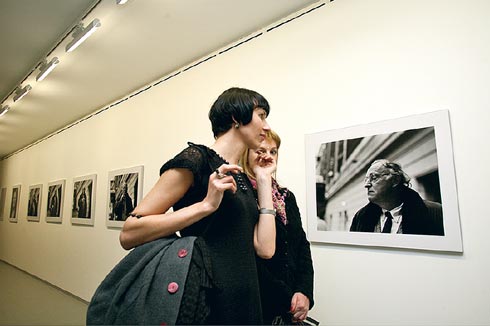
One of the exhibitions is dedicated to the poet Joseph Brodsky
The meeting of the Moscow house of photography consists of 80 thousand storage units, for the most part these are the work of classics of Russian-Soviet photography. The Western artists have never purchased the works of Western artists. Photos of Rodchenko, Stepanova, Baltermans and other famous authors are exposed today in the lower halls of the museum in order to show the “product face”. All of them are well known, many times exhibited, so the current exposition is no surprise. Probably, it should not. Olga Sviblova has repeatedly stated that the new center would not have a permanent exhibition, its halls will only be given to the exhibitions, so Rodchenko also hangs here temporarily.
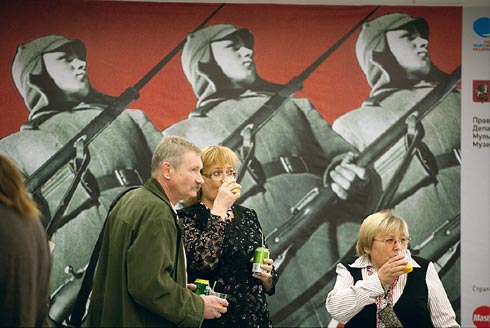
Furset against the background of the 1930 collage "Red Army soldiers" Varvara Stepanova (photographer Boris Ignatovich)
The place for the photograph of this October was the exposition from Paris “Fluxus: We will live - see ...” The exhibition is dedicated to movement, which is still not too known in the world. “Fluxus” is a community of artists and non -artists who participated in collective actions in the USA, Germany, France and Japan. The exhibition is an endless documentation of the activities of this movement, which did not leave behind a single significant work of art. Letters, telegrams, small collages and playful images ... Everything seemed to be pulled out of the attic and tried to organize in any way. Important for art historians, this exhibition, of course, has nothing to do with photography or multimedia space. But Olga Sviblova gently insists that her activity has long gone beyond the photo. It is no coincidence that she planned (but did not have time to open the MDF by the exhibition of the French artist Annette Message (the exhibition was held at the Ekaterina Foundation), although this artist also did not have and has nothing to do with multimedia. Multimedia is rather forced, Olga Sviblova’s ambitions are a museum of contemporary art (“Modern Museum of Modern Art,” she says about mamm), but there is already one in Moscow.
In addition to the Fluxus, about 20 black and white photographs of the recently departed master Alexander Slyusarev and several portraits of Joseph Brodsky (the author-Sergey Bermeniev), which are actually a “uprising” of one picture, were exhibited on Ostozhenka. In a press release, this is called "a series of portraits for the 70th anniversary of the poet's birth." Slyusarev is not mentioned at all. Several video arts have also been exhibited, among which the composition of Rostan Tavasiev, made of red plush carrots (2009), was amazingly placed. How these beautiful carrots ended up in the collection of the Moscow House of photography is not entirely clear, but by themselves they are fully consistent with the unexpected exposition space that Olga Sviblova created.
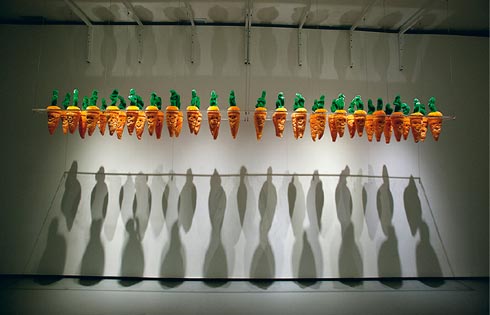
Plush carrots of Rostan Tavasiev
Thus, we can say that a new modern exhibition space with restoration workshops, a repository, a library, and premises for lectures, and a photo laboratory appeared in Moscow. But the discovery of Mamm was confirmed by the fact that in Moscow there is still no house of photography-a place where the best works of modern photographers would be exhibited. The photographer Alexander Tyagni-Rastyly told The New Times that the director of the museum from the museum work itself "systematically left." The classic of Soviet photography Viktor Akhlomov, on the contrary, is full of enthusiasm and believes that there is always a place in a new building.
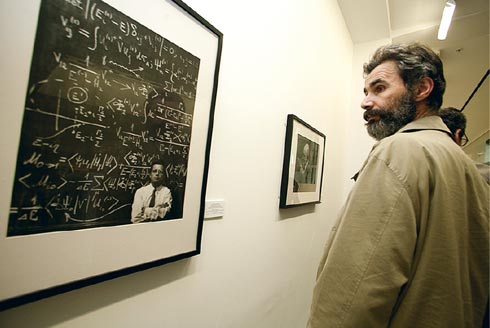
In the lower halls of the museum - an exhibition of Soviet photo classics
Surprises ahead of course, in order to work with collections and photographers, the museum should have curators. Apparently, there are no domestic curators in the mamm. There are invited - the exhibition “Fluxus” was presented by the Frenchman Bernard Blisten, and Olga Sviblova said about the closest plans of the museum: “We will have a crazy exhibition“ Electric Nights of the Pompidu Center ”. One of its curators is the director of the new center Pompidu in Metz Laurent Le Bon, a man with a wonderful sense of humor. Next year will be the long -awaited Arte Povera from the Castello di Rivoli museum - there are also wonderful curators, daughter Mario Merets and Elena Jeuna. And there are many more surprises ... "