
Translated material
In Myanmar, led by a military junta, elections are held for the first time in 20 years
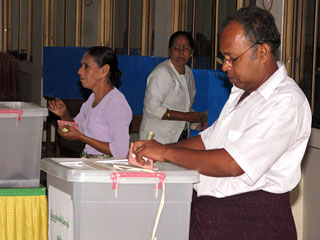
The first, starting in 1990, the parliamentary elections ended on Sunday in Myanmar: polling stations are closed, the deadlines for the final results are not called, RIA Novosti reports. According to the current authorities of the country, the elections will help to move from military dictatorship to democracy, but the opposition calls the vote of grand falsification.
Two thousand candidates were put forward from only two parties - the pro -government "United Party of Solidarity and Development" and the "Party of National Unity", the leader of which 50 ago laid the foundation for the rule of the military junta.
Foreign journalists and observers for election coverage are not allowed, which allows the American President Barack Obama to make statements about the "undemocracy of the elections and the absence of the manifestation of the freedom of the will of Myanmar."
The elections in Myanmar aroused criticism of the international community, which doubted the legitimacy and transparency of the process of the will of the people. According to Assotiated Press, about 48% of the population of Myanmar do not support the ruling junta. The turnout in the elections was very low, the agency reports.
Earlier, US President Barack Obama said: "They (elections), just not free and honest."
The main opposition party "National League for Democracy", led by the Nobel Prize Laureate, Aun San Su Ji, refused to participate in the elections, because she does not consider them fair.
Su Zhi herself, who was 65 years old in June 2010, is under house arrest. Under the law adopted in March, persons serving the terms of the conclusion by the court order cannot participate in the elections. From 1990 to 2010, Su Ji spent a total of 15 years under house arrest.
The last time the elections in Myanmar were held in 1990. Then it was not the highest bodies of legislative and executive authorities, but by the constitutional assembly, which was supposed to develop a new constitution and electoral legislation.
The opposition NLD won a convincing victory in the election, but the government prevented the convocation of the constitutional assembly with the opposition majority, motivating this with the need to eliminate threats of national security and the integrity of the country before the democratization of society.
In 2008, after the national referendum, a new Constitution of Myanmar entered into force. Then the government of the country announced that the elections to the highest authorities will be held in 2010.