
Translated material
The company is inconsistent
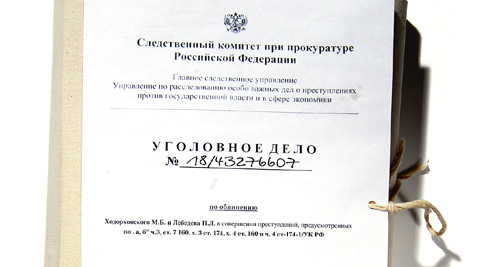
The company is inconsistent. The history of the destruction of the most successful oil corporation in Russia is the history of hundreds of its employees, arrested, put on an international wanted list, put before the most severe choice: to escape from the country or be in prison. In the list of Yukos case, about two dozen people who went through the prison and still serving their sentences. About a hundred emigrants are scattered around the world. What are these people expect from Khodorkovsky and the sentence in his case -
I found out The New Times, I am proud that among thousands of Yukos employees in seven years of persecution, there were no persecution of those who would agree to become a false witness, to sell their soul and conscience, ”said Mikhail Khodorkovsky in the last word on November 2 in the Khamovniki court. - Dozens of people experienced threats, were torn off from relatives and friends, tortured some. But, losing their health and years of life, people retained what they considered the main thing for themselves - honor and dignity. ”
The arrest team Khodorkovsky spoke about the employees of the oil company, not familiar to him, who in July 2003 after the arrest of Plato Lebedev were at risk. People from the close circle of Khodorkovsky told The New Times that it was then that it became clear: "Given the team for arrests." Mikhail Khodorkovsky gathered all the top managers, warned them about the danger and said that the case would not end with Lebedev’s persecution, the authorities declared war on Yukos. “People were explained that they could quit the company or leave for a while from Russia,” one of the former lawyers of the company told The Nw Times. -Someone left then. Then interrogations began. It so happened that at first people were called as witnesses, and then suddenly charged. Many were scared and left. "
Emigrants from Yukos can very conditionally be divided into several groups. The first: those whom the Prosecutor General’s Office put on the international wanted list, because they have charged in Russia, and they left. There are 25 people. There are people who went through the criminal cases related to the company, and could well become the accused. Third group: those who "left just in case." Those who were afraid that they could be charged due to the official position that they occupied in the company.
Since the summer of 2003, about a hundred Yukosovites have left for forced emigration. This number needs to be multiplied by at least two: each of those who left has husbands, wives, children. The main part of the emigrants are representatives of the middle managerial link. Some settled in London. Someone is in other European countries and in the USA.
The top of the company is in Israel: Leonid Nevzlin, Vladimir Dubov, Mikhail Brutny. These people, of course, are also emigrants. But, as one of the interlocutors of The New Times said, still not exiles: "They can console themselves at least by the fact that they returned to their historical homeland."
Most of those who left have already received political asylum in different countries. Russia tried to achieve the extradition of some of them, but not one of the states in which the Yukosovites settled, they did not give them out.
Run away from the arrest Leonid Nevzlin
* * The co -owner of the company Yukos, in August 2008, the Moscow City Court sentenced him in absentia to life imprisonment on charges of organizing murders and attempts on murders. He left for Israel on August 1, 2003. Recently, in his blog in LiveJournal, he wrote about the latest meetings with Khodorkovsky. He came to him in Tel Aviv in August and September 2003. Nevzlin then persuaded his partner to wait out “this period” abroad-in the States or somewhere else. But Khodorkovsky did not agree. “My house is there. I'm not afraid of anything, ”he said and returned to Russia.
After the arrest of Khodorkovsky in October 2003, Yukos employees began to be carried on interrogations in the mass order. In some of them, investigators directly suggested that: "Leave, otherwise we will plant." The investigation probably was even profitable: people leave, they are charged, put on the wanted list and do not have to prove anything. In 2005, the head of the Alm Feldmens Law Office
* The bureau served Yukos. Pavel Ivlev was charged with theft of oil and the legalization of income. In the indictment in the second case of Khodorkovsky - Lebedev, Ivlev was named one of the members of the organized crime group. “When the investigator Khatypov once again called me for interrogation, I realized that the case would end in arrest. He left the building of the Investigative Committee in Technical Lane, bought a ticket to Kyiv, and then moved to the States. After that my family moved to me, ”said Ivlev The New Times.
The head of the legal department of Yukos Dmitry Gololobov left before Ivlev, in October 2004. He was accused of assigning shares of the eastern oil company. After searches in his house and office, the headlobs did not appear for the next interrogation and went to London. Instead, his deputy Svetlana Bakhmina suffered. They say that colleagues warned her about a possible arrest. In one of her visits to London Bakhmina, they even offered to stay there, but she did not agree: "The son just went to first grade, it is not good to tear him from school in the middle of the year." Probably, she simply did not believe that her, a simple employee of the company, who was innocent, could take and arrest like that.
Everyone in December 2004 was arrested in December 2004. In April 2009, they released.
* April 19, 2006, the Simonovsky court of Moscow sentenced Bakhmin to 7 years in general regime. The Moscow City Court reduced the term to 6.5 years. In defense of Bakhmina, 100 thousand signatures were collected. On April 21, 2009, the Preobrazhensky court of Moscow satisfied Bakhmina's petition for parole. Even now, six years after the arrest and a year and a half after the release, Bakhmin does not feel free. She does not comment on the “Yukos case”: in fact, its term will end only in June 2011. It is not known what during this time it will embrace in the head to those who hold all the Yukosovites on the “hook” and constantly recalls the possibility of new criminal persecutions.
Does not want to give detailed comments and the former Executive Vice President of Yukos Vasily Aleksanyan.
* Arrested in April 2006. In prison, SKP investigators suggested that Aleksanyan are stipulating Khodorkovsky - in exchange for treatment for mortal illness. He refused. After three decisions of the European Court of Human Rights, he was transferred to a civil hospital. In January 2009, he was released on bail. In June 2010, the case against Aleksanyan was terminated due to the expiration of the statute of limitations. He has not yet been returned to the property seized during searches, the house and cars are still under arrest: he can use them, but, for example, to sell-no. Investigators do not answer the petitions of Aleksanyan, and the judge, making a decision to terminate the case, said: the arrest from the property has not yet been removed.
“My attitude towards the Yukosovites who left the Yukosovites at the same time,” said Aleksanyan The New Times. - I am not a judge for them, but such behavior does not cause me respect. I thought and I think that you need to be a fighter. And if you are not afraid of anything except the Lord, even our homegrown fascists will not be able to do anything with you. It is said in the Old Testament: "Found for the truth to death - and the Lord God will fail for you."
Among those who were arrested and planted, there are those who received a “complete coil”. Alexey Pichugin, convicted of life imprisonment, refused to testify to Khodorkovsky in exchange for liberation.
* Alexey Pichugin, Yukos Security Service. He was arrested on June 19, 2003. He was accused of organizing several murders and attempts. In August 2007, the Moscow City Court sentenced him to life imprisonment. The head of the Fargoil company, the subsidiary of Yukos, Antonio Valdes Garcia, was held in the case of Malakhovsky -Reveverzin.
* Vladimir Malakhovsky, general director of Ratibor, and Vladimir Pereverzin, deputy director of the Yukos external debt directorate, were accused of embezzlement of oil and legalization. Crane was sentenced to 11 years in prison, Malakhovsky - for 12 years. Garcia believed the Prosecutor General and returned to Russia in the summer of 2005 to testify as a witness. He was placed in the Sanatorium controlled by the special services, where he required evidence for the top managers of Yukos. He was brutally beaten and thrown out of the window of the second floor "Sanatorium". Survived. He left for Spain. Another sen is Aleksey Kurtsin (manager of the Management Company of the Yukos-Yukos-Moscow LLC) in December 2008, the Tagansky court of Moscow was found guilty of assigning and laundering 74 million rubles and sentenced to 15 years in prison.
"
If the sentence is justified or conditional, then Medvedev can become the president, and there is a hope that everything will begin to change
"
The exile in comparison with what the arrested and convicted had to endure, the problems of those who went abroad may seem insignificant. But they, of course, have their own truth. For most, this is not emigration, but exile. Someone says that he understood: I can’t withstand pressure, they can make perjury, better leave. Khodorkovsky helps one of those who left, no one-no: you have to adapt to an emigrant life. Many can hardly find a job similar to the one that they were engaged in Yukos. A corresponding Western education, good knowledge of the English language is necessary. “Most have nostalgia, but people somehow got a job,” says the New Times, one of the former employees. -Someone is engaged in educational projects, someone business, someone works in law firms. There are those who are actively monitoring the process of Khodorkovsky and helps his lawyers. ”
As the interlocutors of The New Times, the vast majority of the Yukosov residents support Khodorkovsky and his desire not to give in to the authorities, not to admit their guilt.
London is not a prison Dmitry Gololobov, probably the only one who adheres to a different point of view. In his articles and direct appeals to Khodorkovsky, he repeatedly stated: the head of the Yukos should think about agreements with the authorities. In the interests of mercy in relation to specific people, and not abstract justice. “The idea of agreements is by no means new and not only mine,” said Gololobov in an interview with The New Times. - I, as a person who began in Rosprom and Yukos as an ordinary employee, cannot but bother the fate of the people who are still in prison and in exile. As for the legal form of such a “agreement” - this may be a request for parole or pardon. And do not dramatize the situation, bringing it to the formula "If Khodorkovsky admits, then everyone will not be forgiven."
The ex-head of the analytical department of the Yukos Alexei Kondaurov categorically disagree with Hololobov.
* Kondaurov repeatedly interrogated as a witness in various cases of Yukos, lives in Moscow. “Firstly, Khodorkovsky has absolutely nothing to negotiate with the authorities,” he says. -Secondly, Khodorkovsky owes nothing to anyone. On the contrary, all those who left are obliged to live in London calmly. He remained in Russia precisely because he understood: only if he was in prison with Lebedev, the “Yukos case” can be turned into complete absurdity in the eyes of the West. And if he fled with everyone, then they would be issued at the request of Russia. Khodorkovsky did everything that he could. Let the emigrants hardly financially, but still this is London, not a prison. ”
All Yukosovites: both in prison and exile are waiting for the court decision in the Khodorkovsky case. And probably, many of them will agree with Vasily Aleksanyan. “If the verdict is accusatory with a real term,” he told The New Times, “then Putin will be the next president and then there is definitely nothing to do in Russia. If justifying or conditional, then Medvedev can become the president, and there is a hope that everything will begin to change. ”