
Translated material
The head of the traffic police called on drivers not to refuse kvass and kefir
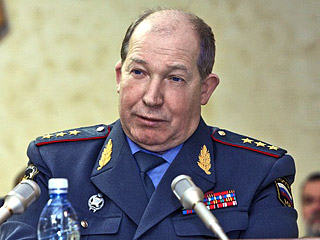
The chief state traffic inspector of the Russian Federation Viktor Kiryanov believes that after the introduction of the “dry law” for drivers, they should not refuse kvass and kefir.
"Dry Law" is a kind of allegory that entered into use. In fact, a note was canceled in the Code of Administrative Offenses of the Russian Federation about the maximum permissible norm of alcohol in blood or exhausted air, when exceeding which the driver was recognized as drunk, ”Kiryanov told Interfax .
According to him, on the statistics of accidents, the abolition of permitted ppm has not yet been reflected in any way, since too little time has passed since the decision of this decision.
“In addition, the number of accidents involving drunken drivers has steadily decreasing over the past ten years. We see that changes in the legislation, in particular, related to the tightening of sanctions for being drunk, as well as preventive measures, have become an incentive to reduce accidents,” the chief state traffic inspector noted.
He said that, according to the seven months of the current year, the number of accidents, whose participants were drunk drivers, decreased by 8.2% compared to the same period last year. "We hope that in the end we will reach the minimum indicators striving to zero," Kiryanov said.
The main state traffic inspector is known for the common opinion that after the use of some non -alcoholic drinks in the body, ill -fated ppm may appear.
"There is no evidence confirmed by scientific research on this score. This is more a judgment based on the personal opinion of people who believe that, due to the characteristics of the body, under their certain conditions endogenous alcohol is manifested," the head of the Russian traffic police noted.
“But even if this is so, kefir, kvass, koumiss, etc. they cause a short -term effect, through a short period of time endogenous alcohol disappears,” he said.
“In any case, the motorist who was stopped by the traffic police officer always has the opportunity to undergo a medical examination that will put all the points over I - the driver was used by alcohol or not,” Kiryanov emphasized. In case of disagreement with the conclusions of doctors, the driver must defend his case in court.
The traffic police officer, in turn, must act strictly according to the law: if there is reason to suspect that the person is intoxicated (and these signs are clearly defined in the Decree of the Government of the Russian Federation), he has the right to conduct an examination using a certified dashboard - the so -called alcoholters, Kiryanov concluded.