
Translated material
Frank Lacey: "Everywhere there are people playing jazz"
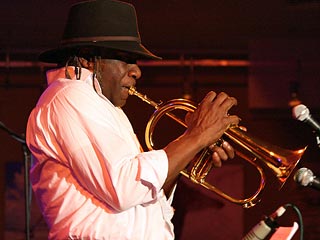
Last weekend in Moscow, one of the leading thrombonists of the modern Jazz Frank “Ku -Umba” Lacey is a multi -instrumentalist, vocalist, an arranger, an acting member of Mingus Big Band, who also collaborated with the legendary Jazz Messengers and Dizzy Gillespi.
This musician is unique in that masterfully and with virtuoso ease connects a variety of musical styles: ragtime, swing, dixiland, jazz, bibop, post-bop, fusion, flask, blues, gospel, rock-n-roll, boogie, pop, aphrobit, rap, hip-hop, new-eig Creates his own music. Lacea is also known as a vocalist, composer and arranger, to whom Down Beat magazine appropriated the title of "Best Saydman of Modern Jazz."
During the break between the two compartments, the musician answered several questions from the Newsru correspondent.
- Are you from a large family (Lacey six of the twelve children - approx. Ed.) - Anyone from your brothers or sisters became a musician?
- My father is a professional guitarist, he taught at school for 45 years. The older sister played drums, another on the clarinet, but she died. Two more sisters sing Gospel.
- "Ku-UMBA"- something means?
- On Suakhil, this means "creativity", "creative person" - one of the principles of kuansa (the annual festival -trail, conducted by African Americans in order to preserve traditions, - approx. Ed.).
- It is true that you were on the cover of the Down Beat magazine (the American Jazz magazine is one of the most reputable jazz publications in the world, approx. Ed.)?
- Yes (lively), it was in 1998. How do you know that?
Then Russian musicians intervened in the conversation, explaining Lace that Russian journalists were able to use the Internet. They answered the next question, assuring that Lacea is not the only Sidman who managed to show off on the treasured cover.
- You played in foreign groups for many years. Journalists even hung on you the label of the "best Sidman". How did you decide to record your solo album? What was moving?
- Everything is simple: tired of being a Sidman.
- You are now playing Mingus Big Band and at the same time tour. How do you succeed?
- Oh, it is very difficult. It is really difficult to keep such a (large) team. There is no permanent composition in Mingus Big Band. In total, about 100 musicians participate in it, many of whom every now and then go on tour. The group is led by the widow of Charles Mingus (Sue Mingus - approx. Ed.).
- And yet why was your secondary education from the field of physics?
- As a child, I dreamed of becoming an astronaut.
- The question that may interest the musicians: in one of the interviews you said that you are playing on the classic Bach Stradivarius 42G. Do you still have this model?
- No, now I am playing, I don’t remember exactly, it seems, King 2b.
- Previously, you stated that you are listening to Wayne Henderson (the famous thrombonist, one of the founders of the popular 70s of The Jazz Crusaders - "Crusaders of Jazz") and Jay Johnson. Are you listening to modern jazzmen? What do you like in modern jazz, what do not like?
- I'm listening? Yes, I play with them, with many of them. For example, with Orrin Evans (American jazz pianist, just like Lacea, playing Mingus Big Band).
- You once said that Europeans are more enlightened in terms of jazz than the Americans. By the way, why did you record your solo disk in Europe? And what about Russia? How would you assess the situation with jazz here based on your tour?
- Jazz play around the world, and everywhere there are people who do it well. And about the disk - there was simply such an opportunity.
(At that moment, Lacey was asked to end a break and go on stage)
- The last question: you call thrombone a tool closest to the human voice ...
- Yes.
... But at the same time, say that come to the game on it as a violin game?
- This is in a technical sense: thrombone is a non -dimensional tool, like a violin. You have a very deep approach to the interview, thanks.
Talked by Newsru.com correspondent Maria Zotova