
Translated material
Medvedev for the first time holds the All-Russian online reception of citizens: in the regions excitement
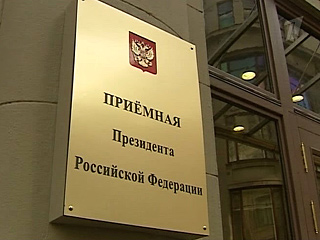
Russian President Dmitry Medvedev for the first time conducts personal communication with citizens who got the opportunity to contact him from the reception of the head of state, officially opened on Monday in all 83 regions of the country. According to the media, the online reception caused a stir: in the morning, people began to line up in line. Medvedev, who was in his reception on Ilyinka Street in Moscow, wished the employees of regional foster "attention and sensitivity."
The main topic of conversation with the population was the problems of housing and communal services. The President said that a meeting of the Presidium of the State Council of Russia, dedicated to the reform of the housing and communal services, will be held on Tuesday, ITAR-TASS reports. He demanded that the regional and municipal authorities give priority importance to the solution of housing and communal services. “If I spend it on this time, then you must do this all the more,” the agency quotes the president.
In addition, Medvedev spoke out for the introduction of disciplinary and administrative responsibility of officials for violation of the deadlines for consideration of proposals and complaints from people. At the same time, he emphasized that it is important to be attentive not only to the deadlines, but also to the content of citizens' appeals - this should be on the special control of regions and municipal leaders.
- Medvedev puzzled the department with a state of electric networks and light bulbs
The head of state emphasized the inadmissibility of formal notes from officials. “Even if this or that problem cannot be solved at once, it is necessary to explain to people why this cannot be done today, and not just brush it out,” Interfax quotes his words.
People should be given the opportunity to track the result of consideration of their appeals - through electronic media and information technologies, including the official website of the president. In this purpose, at the first stage, the so -called electronic receptions will appear in 48 constituent entities of the Russian Federation, the president said.
According to Life News , those who wanted to talk with the president lined up in line in the morning. The influx of people was observed in the center of Moscow. Security services cleaned the pedestrian zone in front of the presidential administration building on New Square, and passers -by had to change their usual route and go around.
According to statistics, an average of 125 people come to the main reception of the heads of state at Ilyinka, and about 3 thousand appeals come to the president remotely.
The format of a video conference for Medvedev is not new: earlier he already twice in Moscow and once in Blagoveshchensk talked with the Russians through satellite communications. The president, who positions himself as a supporter of modernization, first tested the video conference format last year on the day of the opening of his reception at Ilyinka on April 9, then he promised to take this type of communication with the population into service, recalls BBC .
Then Medvedev said: "I think that we will use this form of control regularly, because it does not require, I emphasize once again, some significant organizational costs and at the same time is very, very effective."
Today's online reception Medvedev begins a series of large-scale interactive events with the participation of the president, as well as Prime Minister Vladimir Putin. A week later, on November 30, the head of state will announce a message to the Federal Assembly. A week later, Putin will perform in Khabarovsk at the Far Eastern Conference of United Russia. And in mid -December, the traditional television "conversation with Vladimir Putin" will be held.
The current communication of the president with the people will be the first in this format during his presidency. In 2008 and 2009, the prime minister spent direct lines on the body. The similarity of such an action on the part of the head of state was the conversation last year on the air with the heads of three Russian television channels.