
Translated material
Take care of your heart!
The AK is known that since stagnation, mortality in Russia has been growing like yeast. It would seem that medicine is progressing, life has become better, life has become more fun ... But it was not there! Why would it be? - You ask.
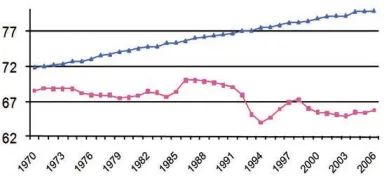
There are several factors affecting the mortality of Russians (see Fig. 1). Here is the general aging of the population, i.e. There are more old people, less youth, and therefore the total mortality per 100 thousand people increased. However, the population is rapidly aging in all industrialized countries, and yet there are no such high indicators of mortality in them, and the structure for deaths is completely different.
Total alcoholization and injuries associated with it plays an important role. We have a lot of crawls in us - men's cancer in men, women are still leading breast cancer in women, although the smokers have been equalized by the smokers from the men's age after 15.
There are other factors. However, domestic mortality statistics are shocking with its cardiovascular mortality. For example, in Japan from cardiovascular diseases, only about 100 people per 100 thousand die, i.e. 8-9 times less than ours! We stay here (in an embrace with Belarus and Ukraine) unchanged leaders around the world, whether it is the most elderly countries in Europe or youth African states. Nowhere in the world there are so many cores! What is the matter?
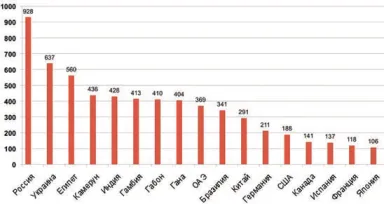
First of all, it should be understood that our statistics are greatly affected by the incorrect diagnosis of causes of death. Traditionally, we have all “incomprehensible” deaths on our acute cardiovascular deficiency. In the structure of mortality, for example, diabetes and Alzheimer's disease are clearly underestimated, some of the leading causes of death in industrialized countries.
There is an official assessment of the qualifications of Russian doctors, according to which only 16% of our doctors can make most diagnoses as part of their qualifications. We have only 28%competent pathologists. And as you know, incorrect intravital and posthumous diagnostics greatly distorts the statistics of mortality.
But even taking into account large diagnostic errors, one cannot disagree with the fact that cardiovascular diseases still remain the number of number one Russian citizens.
It is known that in cardiovascular incidence, genetics and lifestyle play the main role (diet, motor activity, smoking). Timely identification and treatment of such pathologies are of certain importance.
So, maybe the Russians are wrong with the genes? It would be stupid to assume that in the Russian genetically heterogeneous population, everything would be disfigured. There remains a way of life and inadequate medical care in acute cardiovascular pathologies.
A lot was written about the lifestyle. Here, eating cholesterol remain the leaders (the same mayonnaise kills the Russians wider than any war), a sedentary lifestyle, smoking, etc.
But to write about medicine is already sick. As before, most of our “heart attack” departments are not able to conduct stenting or shunting coronary vessels in the acute period. The only thing the doctors essentially do there is passive observation of the patient: he will survive - will not survive. According to official figures, in 2009 we conducted 138,000 heart operations, of which 81% using high technologies. This, so that you understand, are ten times less than in the USA or in Europe. Note also that these operations are mainly done not on an acute myocardial infarction (because the issue of money in Russia must be resolved in advance), but for the prevention of this in patients with coronary heart disease.
But in the treatment of acute extensive myocardial infarction, the restoration of blood flow in the coronary artery during the first 10 hours is cardinal importance! Then there is simply nothing to treat, because after 6-10 hours the entire section of the heart muscle, bloodsuading with a blocked artery, is already dead.
A lot of lives could save modern thrombolytics (drugs that dissolve a blood clot). In the acute period in many countries they are introduced in a heart attack of paramedics right in the ambulance. We have a cities where there are modern thrombolytics on the ambulance, you can count on the fingers (there is such an injection of about $ 2 thousand).
Nobody teaches first aid of people either.
In general, despite the fact that our cardiovascular mortality shocks the whole world, the government has not undertaken anything significant over the years. But all grandmothers drink useless corvalol with buckets and swallow validol ... Doctors in clinics rarely select adequate treatment regimen for hypertension or heart failure. Grannies and grandfathers were deprived of free drugs, which, perhaps, is tactically and true, however, at the current prices for Norvask, monopril, concor, pawix, statins and other effective means, it is hardly possible to imagine that our poor old people can acquire vital drugs in pharmacies for their pension, which in the regions can hardly cover the rent. Officials take care of increasing the production of domestic bullomicins, such as arbidol.
Also, pay attention to how mortality is in the Moscow region above the Central Russian! Mortality has also increased significantly in the first half of the year (from January to September 2010). A lot of old people did not survive the catastrophically hot and smoky summer.
Alexey Yakovlev,
Chairman of the National Society
industrial medicine
* * *
First aid for a heart attack
1. Call an ambulance - 03 (112, if from mobile).
It is impossible to pull, since a heart attack develops in 4-6 hours, after which there is nothing to treat: either a person dies or recovers on his own. Talking with the dispatcher, be sure to say that we are talking about the heart!
2. Give nitrate (nitroglycerin, nitrohorbide, trinitrong, etc.) under the tongue. If there is a nitrate in the form of a spray, use it.
If the pain has passed quickly, most likely it was an attack of angina pectoris. Preservation of struck on nitroglycerin is a formidable sign (you can think about heart attack). We continue to give nitroglycerin in order to expand the artery necrosis adjacent to the focus of necrosis in order to at least somehow delimit it. Abroad, nitroglycerin is not part of the first -aid kit and is released only as prescribed by a doctor. In the Russian Federation, first aid using nitrates is still justified due to undeveloped infrastructure (distance and time of ambulance) and an ambulance. However, they should be used with caution! A patient, unusual for nitrates, may develop dizziness, severe headache, tachycardia and even loss of consciousness (collapse).
3. Give a tablet of aspirin (chew and not swallow). Make sure that the patient has no intolerance to the drug.
In our time, only one sensible indication remains for aspirin - the prevention of thrombosis. Even in small doses, the drug works as an excellent anti-sigan gant ("liquefies" blood). With myocardial infarction, the probability of survival is increased by 15-20%.
4. If the patient loses consciousness, immediately begin cardiopulmonary resuscitation (artificial respiration + closed heart massage).
If you still do not know how to, urgently sign up for courses, even in the same red cross!
Do not give the patient all nonsense like Validol, Corvalola, Valocordin, Valerian, etc. Do not waste time !!!
The sooner the doctor arrives, the more a heart attack patient has a chance to survive.
Not all pain in the chest certainly relate to coronary syndrome. In young, shooting and stitching pains associated with respiratory movements indicate neuralgia, and not in the heart. Often, infarction rally pain imitates mental disorders (panic attacks). You can not always give a clear answer by complaints. Despite this, with the first ranging pains of a pressure, baking, bursting in nature, as well as with long (more than 20 minutes), angina attacks in people aged, I recommend not to hesitate not to hesitate to call an ambulance. Better to play it safe!
Conclusions:
1. The main conclusion: with myocardial infarction, everything decides everything, and the patient has very little it.
2. The faster you provide first aid, the better.
3. The faster the doctor will provide qualified assistance (oxygen, the introduction of thrombolytic on an ambulance, if necessary, defibrillation, anesthesia, etc.), the better.
4. If the diagnosis of a heart attack is confirmed, ideally the patient should be taken to a specialized cardiac surgery for emergency coronarography and stitching/bypassing of the blocked area of the coronary artery.
5. For everything about everything you have no more than 10 hours.