
Translated material
The threat of the attacks of the amulets remains in Egypt - the wrong predators were killed
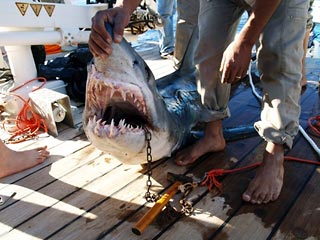
The threat of sharks attack on tourists bathing in the Red Sea is still high in Egypt, since the not those predators who attacked the Russians were killed in Sharm-Esh-Sheikh. Representatives of the Egyptian non-governmental organization Association of Protection and Environmental of Hurghada made such a warning, ITAR-TASS reports.
According to them, photographs of predators taken by divers shortly before the attack on tourists are different from those where carcasses of already killed sharks are captured. Meanwhile, last Thursday, the Ministry of Health, HEARA said that the shark caught is fully consistent with the descriptions of eyewitnesses of incidents, in which three Russians and a Ukrainian tourist suffered strongly.
“Comparing the images of the long -winged ocean shark, which attacked people with photographs of the caught predator, it becomes obvious that different animals are depicted on them,” the association emphasized. According to ecologists, over the past six years, only 11 individuals of long -winged sizes corresponding to the descriptions of the victims have been identified in the Red Sea - 2.5 - 3 meters.
Meanwhile, today the 48-hour ban on swimming in the Sharm Esh-Sheikh zone has been canceled, and the beaches are again open to vacationers.
November 30 and December 1 in the Red Sea in the zone of the Egyptian resort city there were three unrelated cases of attacks by amules. Moreover, as Russians say, including a Muscovite, a resident of the Moscow Region and a tourist from St. Petersburg, they all swimming near the shore, without swimming for buoys. Attacks each time took place unexpectedly and swiftly. As a result of attacks, tourists received severe injuries of their arms and legs.
The long -winged shark, although it was considered in the history of the "thunderstorm of the seas and the victims of shipwreck", does not belong to the category of especially dangerous for people. She almost never approaches the shores. Its food is mainly made up of various fish, in particular, tuna, squid, sometimes mollusks, as well as any available discharge from the galley of passing vessels. Cases of attacks on people are extremely rare.
According to ichthyologists, an uncontrolled catch in the sea of fish, which serves as the main source of nutrition of sea predators, forces sharks in search of food to come closer to the coastal strip.