
Translated material
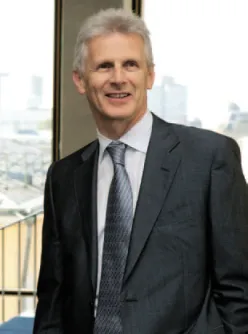
Andrey Fursenko about megaggrandi, personnel and examination
Megagrators
-Apparently , the first question is about the “Megagran competition”. Are you satisfied with the results?
- In general, yes.
- And in details?
-Probably, there are some things that could be done better, but there are few of them. For example, it is a pity that not all meetings of the Council were attended by all its members, but this is a natural thing; If we want to attract really first -class experts, then we must understand that they are often busy. In addition, they greatly pressed the deadlines, this created certain problems when announcing and presenting the competition, and when submitting projects, and during examination.
“Why couldn't it be prepared and declared everything in 2010 in 2010?”
- If we had not started this competition this year, it is a great probability that the money could be redistributed. There are rules that are established not by us and the overcoming of which occurs not even at the level of the government, but at the level of legislation.
In order for the process to go, it was necessary to launch it. As a result, in practice, procedures were presented, it is shown how they can work, and the first result was obtained, which, in my opinion, is acceptable. Not perfect, but acceptable. This fact itself is very important. Next begins issues that can be resolved in a working order.
- The idea to award part of the grants now, and part - then, was discussed in the summer. It itself looks reasonable, but why was it decided at the last moment?
- Such a decision was made by the Council after a detailed discussion of the pros and cons. Council members received response from scientists who were not going to submit applications, but were interested in the project to take place. There were those who were going to submit applications, but did not have time, and those who submitted, but believed that he did this in the best way. The decision by the Council was made almost unanimously. This does not contradict any of the formal procedures, although it creates certain difficulties in the “transfer” of money to other terms. This is my headache. But, I think, in terms of meaning, the solution is correct.
-Speaking of the Council: the procedure for secret voting is still not quite typical. Usually there is a panel discussion and ...
- The panel discussion was very wide. Almost, every candidate was discussed.
- Of the more than a hundred candidates?
- First, candidates from 507 were discussed. We had two meetings, and quite long. At the first meeting, all submitted applications were discussed. Expert conclusions were sent to members of the Council in advance, so they could get acquainted with the results before the meeting and form their point of view. At the meeting, the issue of the fact that there should be no profanity should not be artificially discussed, there should be no artificiality. If a person moves ...
- From Novosibirsk to Tomsk there was a large stream of applications, and back.
- Well, for example. Or from Moscow to St. Petersburg, from St. Petersburg to Moscow - this is not excluded, but quite artificially. Or, for example, can the director of the institute allow himself to leave for four months a year.
- Can a deputy director?
- I would not want to dwell on how the discussions took place, because we agreed from the very beginning, they will be confidential. This is very important so that people have the opportunity to absolutely freely express their considerations. Council members were involved as experts representing themselves personally as scientists. They should not have fulfilled someone's directives, each of them was personal responsibility for the final decision.
“ But there are two aspects.” On the one hand, the confidentiality of the discussion is a very correct thing, on the other hand, the person who was discussed has the right to know what was said about him. Expert assessments or some consultations of the Council will be returned to applicants?
- We agreed that all comments on expert estimates will be sent to applicants, and this is already being implemented. My position and position of the Council was that people should have the right to know the comments, including so that when submitting the next applications they had the opportunity to correct some of their shortcomings.
Although I can say that there were cases when there were many comments, but at the same time very good marks, and vice versa. We understand that any examination is subjective. But it is necessary, because according to purely formal criteria it is hardly possible to give an unambiguous assessment of scientific work or scientist. Although I repeat, we strove to ensure that the formalized component of the assessment was present.
- What was taken into account besides the scientific quality of the application? Were there any regional considerations, a balance in science?
- It was taken into account how ready the university is. It was taken into account whether the university has a good young team that needs a leader. If a strong person works with her for three years, then a normal scientific school may form there. Or, for example, there was a kind of gentleman's agreement that it was not good when two strong people go together to one faculty. The issue of which part of these works will contribute to the following steps, including innovative activity, was also discussed.
- But there was nothing in the applications about it.
- It was not, but nevertheless, these issues were also discussed. In some ways they could influence.
- Do you think the situation is a correct when a member of the Council is either the receiving party or sending? Is there a conflict of interest in this?
- Unfortunately, we have never been able to avoid conflicts of interests in science. The scientific community is very cramped. Formally, there may not be any connection, and de facto-these are suopefilled people. Or maybe on the contrary, someone does not want a strong competing school to arise.
- Maybe it makes sense to draw up a council of people with less administrative duties and, accordingly, with less potential for conflict?
- I will not hide that I gave proposals on the composition of the council, trying to follow the main thing: members of the Council are people who value their reputation. Each of them has achieved significant results in science, and I did not hear from anyone that these scientists are not worthy to solve such issues. Working together, they also controlled themselves, realizing that the decisions made would be very actively discussed.
- You said that there was a discussion, but not all directions were presented in the council. When a member of the Council says that such and such a scientist will take such and such a niche at such a university, he must know the scientist, the university, and the niche. And if the specialty is not presented at all?
- We had expert assessments. The Council did not replace the examination. Expert assessments with comments were constantly appearing when discussing a particular application.
- Is it known when the next tour will be announced?
- We want contracts with the winners of the first round to be concluded first. In addition, it is necessary to solve a formal issue of transferring funds. I think that the second round should be announced this year, I hope there will be a little more time ...
- To prepare?
- Both for preparation and examination. By summer, everything should be decided.
Personnel program and examination problems
- This competition is interesting in that this is an example of how the system should work. But questions arise about other programs. When they accepted the FCP "Personnel", there was a lot of enthusiasm, but it gave way to disappointment. Are you satisfied with the quality of the examination in the personnel program?
-In the competition on the Decree of the Government No. 220 (the program “Megagrators.”-TRV) we managed to leave 94-ФЗ (law on state procurement.- TRV). It was not easy and required special efforts. In the program “Personnel” (FCP “Scientific and Scientific and Pedagogical Personnel of Innovation Russia” for 2009-2013.-TRV) we could not leave him. Therefore, the weight of the examination in these two programs is different.
In the competition to attract scientists, we managed to find a serious additional resource for the implementation of the examination. It is usually believed that examination can be carried out by the Ministry of the Ministry. Our position is that an additional external examination in such issues is required. This is a fairly expensive thing, but it pays for itself. This approach of the regulatory authorities raises questions, misunderstanding and even some serious complaints: "You must give money to scientists, and instead you give it it is not clear what."
In the competition of scientists, we deliberately went to maximize the base of the examination, attract foreign experts - there were almost twice as much as Russian. And this base of experts is not one -time, it should be used not only to conduct a second round. By the way, the members of the council quite highly appreciated the competition procedure. This is important because, I hope, the practice of this type of examination will expand. This project will, I hope, prove, including some of our colleagues from other departments, the correctness of our approach. It is extremely important to widely disseminate the information that this experiment has passed, and, as you said, "not as bad as usual." Even from the point of view of our regular opponents.
-You can talk about the shortcomings of the examination in the “personnel” program if the expert of two strong chose the most powerful, but there are some completely anecdotal punctures. Is it somehow tracking?
- Tracks. And dumping is monitored, and stories, when suddenly a failure occurs, which is administrative. I can say that almost every puncture, every incomprehensible decision is tracked. And taking into account the fact that the ministry has become one, firstly, the unification of competitive procedures for various events will be carried out. And, secondly, administrative decisions will ensure more stringent and adequate monitoring of how these procedures will be implemented.
But at the same time, I want to emphasize: we have no right to violate formal requirements. We have cases when the competition wins a very weak, incomprehensible or, conversely, “understandable” company. The only thing we can do if all formal procedures are followed is sufficient to approach the acceptance of work, attract really cool specialists to it and not accept. By the way, as a rule, experts do not want to participate in this. I say: "Colleagues, we all must protect the clearing together, it cannot be protected purely administratively." Good experts are often ready to informly inform us of their point of view, but they refuse to take part in the acceptance of work and officially give a conclusion that this or that work is nonsense.
-When this happens due to dumping, this is the 94th law, and you cannot do anything. But often expert assessments of anecdotal projects on the content part are also high. How is this controlled and what measures are taken to those people who put these grades?
- A list of such experts is being held. But we must understand that every year several thousand projects pass through us. When they say to me: “You steer there,” I reply: “You do not understand the technology of work, it is basically impossible to proceed at the level of thousands of applications.” It is extremely difficult to twist something. It is always noticeable and attracts attention.
We have no right to cancel the result, because it becomes known not at the stage when someone suddenly gave a high appreciation, and when the competition has already taken place and raised questions. But in retroactively, we can track the number and try not to attract such specialists in the examination of our projects.
- Those grades that are published are exhibited on behalf of the members of the commission. Is this an average expert assessment, or a member of the commission can modify it?
- This is an average expert assessment for each criterion. If there is reason, the commission can only reject the expert assessment. The commission cannot say: "We delete and give our estimates."
-There are situations when competitions win some LLCs who have never been engaged in the corresponding theme. After that, they come to the institute and try to hire it at half -price. What in this case to do to those who were robbed?
-Yes, there were simply flagrant cases when it was absolutely clear that it was a one-day company. If they do not hand over work, then they get a blacklist and can never again participate in competitions. But for them this is not scary, they are often created to “perform” one work.
- They actually work for an advance.
-There was a moment when, due to such facts, it was necessary to abandon advance payments-this caused a protest from many worthy scientific institutions. We answered: "Either you will walk under dumping, or look for the possibilities of co -financing at the initial stage." Dozens of companies went to dumping, we could not fight them. There were even cases when, realizing that this is a purely “left” company, we still gave a project to the one who really could fulfill it, and went to the courts, and lost these courts with the corresponding punishment of my employees.
Nevertheless, we do certain things: detailed formulations of TK, very strict acceptance of work. And, in addition, the institutions do not need to succumb to blackmail. They say: "So we will at least get something." But if they can do work for less money, then they themselves must reduce the price.
The law on state procurement
-The ministry makes proposals to change 94-ФЗ. Can you comment on them?
- The price factor is preserved, but it should not be decisive. The high weight of the expert assessment should be preserved. In this case, certain qualification requirements are added. There was a very long discussion from the Ministry of Economic Development of Russia and the FAS (Federal Antimonopoly Service. - TRV) about the fact that qualification requirements are informalized in nature. We believe that there are formal criteria: for fundamental work, these are citation indices, and for applied, the amount of intellectual property, which was created by the organization in the previous time, the number of qualified specialists in this area. If the part of the “weight”, which now falls on the price, is transferred to this side, then it becomes possible to approach work more objectively.
However, very strong opposition arose, and counteraction from the most unexpected side - from the expert community. The fact is that today we have all analytical and consulting work within the framework of R&D.
- I'm even afraid to touch this topic ...
- At the same time, people who are engaged in this qualifiedly say: if you insert such requirements, then no consulting structure will be able to win from the academic institute. Because in the Academic Institute, which has long been incapable of operational work related to analysis of the economy, markets, etc., there are much more doctors, publications and other things. And well -known, recognized not only in the country, but also in the world, analysts say that this work will return to major institutions that are maximum - after the allotted time to write a report that will not be contained.
My point of view lies in the fact that these works are not quite legitimately attributed to R&D. This is not R&D, these are analytical research, they have different criteria, different requirements.
I believe that the qualification requirements that can be formulated could be a certain primary filter. There is an idea to replace everything with a system of examination. In my opinion, it is impossible to carry out thousands of projects that are going on, conducting such a deep examination as it was according to the 220th resolution. We physically do not have so many experts. This means that there should be formalized requirements. They should not be decisive, but they must be present. They will supplement and in some case replace price requirements. As for the future 94-FZ, as you heard, President D. A. Medvedev in the message to the Federal Assembly demanded to significantly change it. I think that the protests of the scientific community played an important role in this decision.
Our ministry believes that public procurement in the scientific and technical field requires a specialized law, and even prepared relevant proposals. Some of them entered the current 94-FZ, but this is not enough.
- What was the point in analytical projects, for which the ministry paid tens of millions and which then attracted attention to the fact that the reports seemed to the scientific community not very substantial?
- We just talked about those expert and legal problems that arise in the implementation of competitions, projects, and the implementation of the FCP. But we do not have the opportunity to carry out the necessary analytical work for their solution. We order these works to solve practical issues.
One of these analytical projects, for example, gave us the opportunity to systematically see changes in civil legislation governing R&D, existing problems and contradictions in it and summarize and make proposals to existing legislation.
Другие аналитические проекты по прогнозированию развития научно-технический сферы позволят нам сделать комплексный прогноз научно-технического развития страны на долгосрочную перспективу до 2030 года.
— Вы говорили, что надо тщательно прописывать техзадание в условиях лота. Но получается парадоксальная ситуация, потому что тем самым экспертиза просто выносится на ту стадию, когда экспертная комиссия по непонятным правилам сопоставляет написанные в произвольном формате предложения и потом формулирует техзадание, фактически под те институты, которые должны выиграть. В программе «Кадры» от этого пытались уйти, объявляя конкурсы по наукам.
— Надо понимать, что программа «Кадры» — это попытка реализации грантовой системы в рамках 94-ФЗ. Сейчас мы добиваемся того, чтобы ФЦП можно было вести не только в рамках 94-ФЗ, но и в рамках грантовой системы, т.е. переходить к публичным конкурсам, которые не подразумевают таких жестких ограничений.
Вопрос надо делить на две части. Есть де-факто гранты. В общем их тематику формулируют ученые. А есть работы, которые являются частью реального госзаказа, когда государство нуждается в разработке чего-либо и формулирует соответствующий заказ. И если в первом случае мы должны максимально уходить от формализации и пытаться оценивать работы по качеству предложений, то во втором вопросе ТЗ должно быть очень жестким.
— Если я правильно понимаю, это разница между наукой и технологиями.
- In general, yes. Хотя мы должны работать в приграничной зоне. Потому что если говорить о фундаментальных исследованиях, то, наверное, надо в большей степени доверять РФФИ, Академии наук. А министерство должно закрывать промежуточную зону.
— Сейчас в программе «Кадры» имеются одни и те же формы, одни и те же критерии оценок для проектов, по замыслу исключительно фундаментальных, и проектов очевидно технологических. Есть ли шанс, что это будет постепенно разводиться?
- Eat. Отчасти это уже делается. Выставлены разные требования и по софинансированию, и по индикаторам к небольшим поисковым исследованиям, и к комплексным проектам, которые по затратам существенно больше. Более того, НКС, который существует по всем программам, по ряду направлений делал исключения, в частности, по софинансированию.
Новые лаборатории и университеты
— Как продумывается проблема выхода из программ? ФЦП «Кадры» рассчитана на пять лет, проекты трехлетние. Если человек выиграл в первый год, то вроде бы он — самый сильный, прошел в первом туре. Группа получает финансирование на три года, а потом еще два года, когда программа идет, а новых конкурсов уже не объявляется, группа должна как-то существовать на подножном корму и сэкономленных деньгах. То же самое по программе для возвращенцев, она объявлена де-факто на два года. Что будет с лабораторией, когда программа закончится?
— Когда университет берет на себя создание лаборатории, то он должен одновременно брать на себя ответственность за то, что созданная лаборатория ему нужна не на три года, а на долгий срок, что эта лаборатория будет дальше существовать, работать и развиваться. Есть другие источники финансирования, не только ФЦП. Давайте не забывать, что ФЦП — это не очень большая часть общего объема финансирования и университетов, и академической науки. В общем объеме финансирования науки наши программы составляют небольшую часть.
— Кого ни спросишь, все так говорят. Академики то же самое: «А что вы от нас хотите? Мы — всего 13 процентов».
- Right. Надо и думать о том, как каждый должен делать свою часть. Мы запускаем новые проекты, мы поддерживаем их развитие, но не сохранение. Целевая программа должна иметь конечную цель.
Сейчас идет переход на новые формы организации хозяйственной деятельности университетов, в рамках которого вводится специальный раздел, помимо текущего финансирования услуг, — субсидия на так называемую «программу развития». Если университет после того, как грант закончился, в своей программе не указывает развитие и поддержание этой работы, то, наверное, мы ошиблись и с выбором университета, и с выбором этого проекта.
Я встречался с ректорами, буду встречаться с разработчиками — говорю только об одном: «Давайте вместе думать о том, что будет дальше».
— От университетов требуют показывать увеличение индикаторов. С МГУ в результате случился тяжелый анекдот, потому что те публикационные индикаторы, которые сейчас опубликованы в его программе, возникли как раз в результате такой работы представителей университета с кем-то в министерстве, и они получились абсолютно нереалистические. Там студенты, включая первокурсников, должны писать в среднем по статье в год и иметь десяток международных цитирований. И это возникло в результате общения министерства с ректоратом.
— Если это так, то очень плохо. Могу рассказать похожий случай. В рамках конкурса по исследовательским университетам, один из участников подал заявку, по которой к окончанию срока программы публикационная активность должна была составлять, по-моему, 12 статей в год на одного преподавателя. Специалисты понимают, что это невозможно. Поэтому, когда мы проводили оценки в рамках конкурсной программы исследовательских университетов, мы красным отмечали и слишком низкие параметры, и слишком высокие, с тем, чтобы члены конкурсной комиссии обращали на это внимание и относились к этому с опасением.
— В МГУ кивают на министерство, говорят, что у них такого не было, а министерство заставило вставить.
— Не хочу переходить в заочную дискуссию, но никто не может заставить меня написать глупость. Мы (министерство) тоже должны писать индикаторы, когда разрабатываем и защищаем свои программы; и когда мне говорят, что какой-то индикатор нездорово выглядит, надо бы получше, я отвечаю: «Товарищи, я не могу писать то, за что не могу отвечать».
— Как Вы думаете, нужен Московскому университету свой собственный спутник?
— Стараюсь не участвовать в научной экспертизе. То, что случайно какие-то вещи я знаю лучше, чем знает рядовой чиновник, это — факт из моей биографии. Это иногда помогает мне жить, иногда — мешает. Иногда в неформальных личных беседах высказываю свои соображения моим коллегам, почему я думаю, что что-то годится, что-то не годится. Относительно спутника могу привести аргументы и «за», и «против».
РФФИ
— Два вопроса про РФФИ: про статус и про финансирование.
— Сейчас министерство вносит в правительство соответствующий закон. Статус РФФИ сохраняется как независимый. Проблема в другом: средств в РФФИ действительно должно быть больше. И у РГНФ, кстати, больше, и у Фонда Бортника. Но Бортнику добавили, потому что там понятен выход. В результате достаточно сложных переговоров на данный момент мы сохранили финансирование РФФИ на 2011-й год на уровне 2010-го.
— Но без учета инфляции.
— Без учета инфляции. Но первичное предложение было совсем другое. Очень рассчитываю на то, что, базируясь на возможных дополнительных доходах, мы сумеем увеличить финансирование на будущий год. Очень важно, что это принято председателем правительства, экономическим и финансовым ведомствами.
Надо изыскивать возможности и, как минимум, сохранять уровень финансирования, а вообще — увеличивать.
Сейчас мы получили поручение от председателя правительства провести детальное и публичное обсуждение работы перечисленных фондов. Надеюсь, что нам удастся обосновать эту позицию.
— Но Вы могли бы опираться на некое давление со стороны научного сообщества.
— Я опираюсь не на давление, а на реальное общественное мнение об эффективности этого института. И я полностью разделяю это мнение. Я действительно так считаю, несмотря на все претензии и вопросы, которые есть к РФФИ. При этом мы должны помнить, что, хотя бюджет РФФИ уменьшен по сравнению с 2009 годом, реально он все-таки сохраняется на уровне 2008 года, и, несмотря на то, что многое у нас сокращено, задача-минимум — закрепиться на уровне 2010 года — решена. С большой долей вероятности, думаю, нам удастся добиться того, чтобы финансирование было увеличено уже в 2011 году, хотя и не с самого начала.
—А не с самого начала — это не очень осмысленно, потому что конкурсы-то сейчас идут.
— Это осмысленно по той причине, что с будущего года РФФИ будет как минимум новым бюджетным учреждением. Это означает, что ему будут передаваться субсидии, которые смогут переноситься на следующий год.
Могу озвучить свою позицию, которая не противоречит позиции руководства страны и нашим экономическим ведомствам: этот институт — важный, и надо изыскивать возможности, чтобы его развивать. Без обид воспринимаю критические замечания по поводу того, что мы уделяем РФФИ недостаточно внимания. Считаю, что уделяем внимание, но понимаю обеспокоенность.
Аспирантский призыв
— Вопрос, который был актуален летом и опять станет актуален следующим летом. Расширение сроков призыва и вся ситуация, связанная с призывом в армию после института. Переход на болонскую систему — значит, тратятся обе отсрочки, значит, на аспирантуру уже не остается и т.д.
— Есть несколько принципиально важных вещей. Первое — нельзя разрывать процесс обучения. Вторая — есть закон о воинской обязанности. Он есть не только в нашей стране, но и во многих других. Переход на контрактную армию полностью — эта тема движется.
— За счет расширения сроков призыва есть промежуток между получением диплома и поступлением в аспирантуру, когда будущих аспирантов приходится просто прятать.
— Эта тема так же, как и ряд других проблем с призывом, например, аккредитация новых специальностей, существует, мы ей активно занимаемся и пытаемся сделать так, чтобы выполнение конституционных обязанностей по службе в армии не вступало в противоречие с нормальным образовательным процессом.
— Спасибо за интервью.
— Хочу еще раз подчеркнуть: мы готовы работать вместе со всеми заинтересованными сторонами. Наша главная задача — создать эффективную систему финансирования и организации научно-технической деятельности в стране, которая включает в себя университеты, НИИ, инновационные компании. Задачи образования, модернизации и инноваций будут осуществляться в разных формах, но должны не разъединять, а объединить интересы ученых, бизнеса, государства и общества для формирования новой современной научно-технической и образовательной сферы в России.
Беседовал
Mikhail Gelfand.
ТрВ благодарит пресс-секретаря
Минобрнауки Ирину Ган.