
Translated material
Fedotov: There will be no teninization
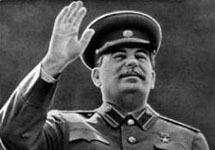
The head of the Presidential Council for Human Rights, Mikhail Fedotov, denied the information that the Red Stalinization campaign was being prepared in Russia, reports FINAM FM. According to Fedotov, the council will talk about increasing compensation for the victims of political repression and perpetuating their memory. Earlier, the Communist Party leader Gennady Zyuganov filed an open letter to President Medvedev "due to the fact that his human rights commission suddenly intended to judge the Great Stalinist era." Zyuganov said this in an interview with RIA Novosti.
On November 25, Fedotov stated that the first meeting of the Presidential Council of Human Rights in a new composition will be devoted to teninization. According to Fedotov, human rights activists will demand to completely open the Soviet archives and conduct a trial of totalitarianism. The meeting of President Medvedev with the new composition of the Council is scheduled for mid -January.
According to the member of the Council, Sergei Karaganov, the words "tennich" will not be on the agenda of the January meeting, the topic is more broadly - about the national reconciliation and the memory of the victims of the totalitarian regime. The general topic is indicated in order not to reduce everything to the cult of the personality of the Secretary General and emphasize that we are talking about overcoming the nation of the crossings of the past, Karaganov explained.
The Presidential Council and the Human Rights Center "Memorial" developed a draft federal program for perpetuating the memory of victims of repression, consisting of 4 blocks. The first is the complete declassification of the Soviet archives. It is proposed to remove the secrecy vulture from all Soviet documents and simplify the procedure for access to departmental archives, investigative documents, the archives of the Cheka, the GPU, the CPSU (B.), the cipher -telegrams that have entered the central apparatus, and the personal affairs of citizens.
The second block of the program concerns memorialization - the search for camp burials, the installation of monuments, the creation of full museum expositions. The third block is the social protection of the victims of repressions. They, according to the "Memorial", are about 800,000 people - prisoners of camps and their children. By law, they are supposed to be monthly compensation, but now it is entrusted to the regional authorities. Human rights activists offer to return federal guarantees of payments to prisoners, and the surviving prisoners of the camps (about 30,000 people) to increase the amount of payments to increase and endow them with natural benefits - for example, free medicine.
The fourth requirement of the Council is to give a political and legal assessment of the crimes of totalitarianism. One of the options may be a presidential decree with a clear list of crimes and an indication of the inadmissibility of glorification of Stalinism.
The Council also offers the trial of crimes of the regime. “We are not even talking about crimes of specific people,” explained the member of the council Sergey Krivenko. “The block of regulatory documents must be evaluated from a legal point of view: according to collectivization, according to Katyn, by greater terror.” The verdict on the facts of the extermination of entire groups of the population is believed in the Council, should be issued by the Supreme or Constitutional Court.
The government of the Presidential Council draft is evaluated carefully. “You can’t wash the history of the country. One of our priorities is the struggle against attempts to distort history,” said Prime Minister Dmitry Peskov.
In 2009, on the day of memory of the victims of repressions, Dmitry Medvedev said that the justification of Stalinist repressions under the guise of restoring historical justice is unacceptable. Medvedev noted that "no development of the country, no successes, ambitions can be achieved at the cost of human grief and losses." "On October 30, this is a day of memory of the millions of crippled destinies. About people who were shot without trial and without investigation, about people sent to camps and exiles deprived of civil rights for" not the same "occupation or for the notorious" social origin. "The stigma of enemies of the people and their accomplices then went to entire families," the president said.
“It is impossible to imagine the scope of terror, from which all the peoples of the country suffered,” he added. “His peak fell on 1937-1938. The“ Volga of People’s Green ”was called by Alexander Solzhenitsyn the endless“ stream ”of the repressed at that time. Over the course of twenty pre -war years, entire layers and estates of our people were destroyed. The Cossacks were practically liquidated. The peasantry was bloodless.
“We pay a lot of attention to the fight against the falsification of our history. And for some reason we often believe that we are talking only about the inadmissibility of revising the results of the Great Patriotic War. But it is no less important to prevent those who destroyed their people,” Medvedev said.