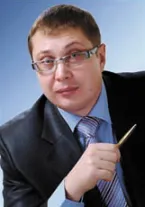
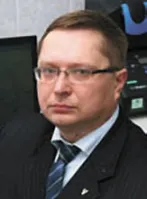
When we say the “rector”, we usually imagine a scientist’s husband “over fifty”, but there are exceptions. December 27, 2010 at Voronezh State University will be held elections of the rector; The election conference delegates will have to choose one of the two candidates - the VRSU vice -rector for economic development and innovation of Dmitry Endovitsky (40 years) or the head of the department of genetics, cytology and bioenginery of Vasily Popov (36 years).
The current Rector of the Vorone State University Vladimir Titov did not exhibit his candidacy. He announced this decision after a meeting with the Governor of the Voronezh region Alexei Gordeev. According to the Kommersant newspaper (regional issue) [1], Vladimir Titov explained his decision with a desire to give the way to a larger manager: “The rector of the largest university in the Black Earth Region should be not only a large scientist, but also a strong manager.” After that, seven candidates were nominated by university units, and Dmitry Endovitsky received the greatest support. In this regard, the newspaper Kommersant quotes the scientific secretary of the VSSU Vladimir Listengarten: “Most units of the university after the Self -Release Vladimir Titov advanced Endovitsky. This is an indicator. "
The USSU Council included in the list of candidates for the position of rector of the Vorone Service, submitted for consideration by the certification commission of the Ministry of Education and Science, five people. At the meeting on November 25, 2010, a meeting of the certification commission of the Russian Ministry of Education and Science, it was decided to “coordinate the candidates of Endovitsky Dmitry Alexandrovich and Vasily Nikolaevich to participate in the election of the rector of the State Educational Institution of Higher Professional Education“ Voronezh State University ”. Thus, the two youngest candidates reached the final.
Information about candidates:
Dmitry Alexandrovich Endovitsky
- Born on December 3, 1970
- Doctor of Economics, 2000, Professor, 2002
-Corresponding Member of the RAEN.
- Since 1999 - Head of the Department of Economic Analysis and Audit of the Vorone State University.
- Since 2006 - Vice -Rector of the VSUSU on economic development and innovation.
- Chairman of the Council for the Protection of Doctoral Dissertations in the Specialty 08.00.12 - accounting, statistics (since 2002).
- under the leadership of D.A. Endovitsky defended 36 candidates and 3 doctors of science.
- Director of the Chinese language and culture center at VSU.
-Head of the Training and Methodological Center of the Vorone Service for the training of professional accountants, financial managers, auditors and tax consultants.
Published 220 scientific papers and 30 scientific and methodological works. The author of the 15 textbooks and monographs that published in the publishers Knorus, Finance and Statistics, Unit-Dana, Prospekt, Eksmo, Economists, Rid Groups;
- Since February 2008 - Head of the Department of Genetics, Cytology and Bioenginery of the Vorone State University.
Under the leadership of V.N. Popov defended 4 candidates of sciences.
- laureate of the State Prize of the Russian Federation in the field of science and technology for young scientists for 1998.
- laureate of the European Academy Prize for young scientists from the CIS countries for 1997.
January - July 2006 - invited editor of the special release of Biochimica et Biophysica Acta (BBA) - Bioenergetics.
169 publications, including 3 monographs, more than 40 articles in international and Russian journals, 15 educational and methodological works. The quoting index according to Web of Knowledge - 228.
So, at a classic university, a university with history, there will be a young rector. What are representatives of the new generation with the elections? The newspaper Trinity Option-hubby turned to Dmitry Endovitsky and Vasily Popov with a request to answer a few questions. Vasily Popov found time to answer our questions. We publish an interview with him. Questions were asked by Evgeny Onishchenko.
-Tell us a little about yourself and your scientific work.
-I entered the Biological and Hind Faculty of Voronezh State University in 1991, that is, for almost 20 years I have been directly connected with the university, having traveled the path from the student to the head of the department. He graduated from the full -time department in 1995. During his studies, he was the owner of the scholarship of the President of the Russian Federation and the grant of the International Soros Educational Program. In 1995, having entered graduate school, he began to work as an assistant to the Department of Physiology and Biochemistry of Plants of Voronezh State University, whose graduate I am. In 1997, I defended his thesis. For the research that included in it, he was awarded the European Academy Awards for young scientists from the CIS countries for 1997 and the State Prize of the Russian Federation in the field of science and technology for young scientists in 1998. In 2003 he defended his doctoral dissertation. Then, in March-April 2004, he was an internship in the management of scientific research at Utah universities (USA). In 2006, I was awarded the title of professor. From February 2008 to the present, I am the head of the Department of Genetics, Cytology and Bioenginery of Voronezh State University. The scientific studies that were conducted under my leadership were supported by various grants and scholarships; In particular, I was the head of the Intas, CRDF grants, the Russian fundamental research fund, grants of the President of the Russian Federation to support young doctors of sciences, grants of the competitive center of fundamental science of the Ministry of Education of the Russian Federation and the Universities of Russia program. From 2001 to 2010, grants were won 10 times in a row for young teachers of the charity fund V. Potanin. Since 2009, I have been the head of research in the Scientific and Educational Center “Physico-Chemical Biology and Bioenginery”, where six projects have been implemented within the framework of the Federal Center for Scientific and Scientific and Pedagogical Personnel of Innovation Russia.
-The90s of the last century are the most “hungry and cold” time. Why didn't you leave science or went abroad? What helped you, then a very young scientist, not only to survive these years, but also to grow, take place?
- In October 1998, immediately after receiving the state aid and default, which turned this award into a very insignificant amount of money, I received the scholarship of the Alexander von Gumboldt fund for work during the year in the Free University of Berlin. Work experience at the German University was very useful for me: firstly, I practically mastered a wide range of molecular biological methods, and expanded the area of my scientific interests. Secondly, I was able to draw a lot in the organization and financing of scientific research. In a laboratory working with genetic material, dangerous substances, German discipline is one of the necessary conditions for success. In addition, I worked for 3-4 months at the Free University of Amsterdam, at the University of Campinas (Brazil). And this experience abroad helped to survive complex times, allowed both his financial status and maintain scientific qualifications in the context of a sharp compression of science financing in Russia. The key to me was a fundamental decision to return to Voronezh. Having stayed abroad for more than a year, you begin to plan your career in the conditions in which you are. I had an option to continue my career in Germany, but I felt that I had to make a choice -to revive or stay forever. And I took a chance, returned to Voronezh, began to read the general course of biochemistry and, as you can now conclude, very successfully fell into a wave of growth in financing Russian science and supporting young scientists.
-Tell us briefly about your vision of the most acute problems of university life, about the actions necessary for their solution and your first steps as the rector, if you are elected.
-In my opinion, the strategic goal of the university in the next five years will be the modernization of the entire sphere of educational and administrative activities to ensure the status of the university as a leading university of the Central Black Earth Region and the transition to the model of the research university. For this, first of all, it is necessary to determine and expand the circle of customers of graduates of the university and the results of scientific and innovative activities both in the natural scientific field and in the humanitarian.
In my opinion, it is necessary to ensure the financial stability of the university and increase wages due to the openness of the budget process, optimization and transparency of all financial activities of the university, by increasing income from extrabudgetary educational services, grant and other research, innovative projects. One of the main tasks of the new rector should be the modernization of the infrastructure, the material and technical base of the university in order to ensure the conditions for obtaining high-quality education, scientific research, high-tech development of world-class, as well as the development of incentives for the participation of university employees in federal targeted and grant programs.
The fundamental, in my opinion, is the task of integrating the university into the world higher education system, the preservation of the advantages and best traditions of Soviet and Russian education systems, and ensuring the domestic and international mobility of students and teachers. I think it is necessary to expand the possibilities of gaining experience in leading Russian and foreign research centers for young scientists. I believe that in this regard, it is possible to do something at the expense of university resources. For example, linguistic practice is important to prepare and improve the qualifications of philologists, the opportunity to visit leading universities in the countries in which they specialize. We will negotiate with European universities on exchange programs, I plan to allocate funds annually for at least 30 monthly trains of graduate students, young and leading teachers at the main European universities.
-Oneof the most acute problems of Russian universities is the salary of faculty. Often ordinary teachers complain that the numbers of average salary in universities are called from high stands say little about, since they include both modest salaries of teachers and high payments to representatives of the administration, the size of which often secrets behind seven seals. Can you as a rector change the established order of things?
- The issue of raising salaries is key to the development of the university. I will note several points. Firstly, the budget process should be opened. The university’s scientific council should discuss how the money received by the university from commercial activity is distributed. This information should be available to employees on the University’s website, as well as information about wages and premiums of administrative personnel paid from general university funds. In addition, in the very near future, for my run, it is necessary to create a rating of scientific and pedagogical activity of teachers, which allows regulate the distribution of stimulating allowances both due to budget and extra-budgetary funds. But there is a significant problem associated with the demographic situation in the region. The university will not be able to significantly increase the volume of educational services in the coming years - this year it controls almost half of the regional market.
Therefore, in my opinion, the key to raising salaries is the involvement of university employees in scientific research. And here we must help and provide maximum freedom to the scientific advisers of projects carried out in the framework of target and grant programs. It is the supervisor that is responsible for the implementation of the project, and he, having financed the university’s overhead expenses, is free to determine who to involve the project to implement and how to plan the estimate of the project. At the same time, as a rule, the conditions for the provision of financing encourage the involvement of youth in scientific research.
Representatives of the Vorone State University are actively participating in the competitions of leading scientific funds, the FCP "personnel", etc., but, in my opinion, there are still significant reserves. Many, especially graduate students and young teachers, do not imagine how to prepare applications, do not know the features of the competitive documentation, which leads to losing in competitions. I plan to organize the work on the maximum informing of the university’s employees about the competitions, including publication on the university’s website and targeted newsletter, as well as organize a series of seminars for young scientists, on which they will be taught to competently draw up and issue applications. Leading scientists from our university and the main scientific centers of Russia will be told about this. I myself, having successful experience in attracting competitive financing, are also going to participate in this work.
- In recent years, the Ministry of Education and Science has invested significant funds in the development of science at universities; The most discussed program of recent times is a competition of megagrators to attract leading scientists to universities, about which Andrei Fursenko recently spoke in his interview with the Trinity Option-Hungry. What do you think is more important for attracting talented young researchers to the university-a fewlarge grants for “stars”, many ordinary grants or some global university development programs?
- I am deeply convinced that different flowers should bloom in this clearing. The support of those forms of competitive scientific financing that has already proved their effectiveness is fundamentally important. In this regard, first of all, a reduction in financing of the RFFIF is recalled. I hope that the fund’s budget will still be significantly increased, which will ensure financing a large number of working research groups. After all, it is they who create what is called a scientific product, and even the scientific atmosphere in universities and in other scientific organizations.
On the other hand, support for stars and megagrators are also important to universities. I agree that the priority development of research universities is necessary, the development of their scientific infrastructure. In the preparation of high -class specialists, it is simply necessary to give them the opportunity to work on complex modern equipment, to gain experience in the implementation of high -level research projects. And in this sense, attracting world scientific “stars” is also useful. The question, probably, in the context of the burden of these grants, is to create a modern scientific base in the field, to involve youth in basic universities to work on these projects.
-Sincewe touched on the topics of scientific competitions ... Based on our experience in participating in competitions for financing from leading scientific funds of Russia, within the framework of the Federal Target Party “Scientific and Scientific and Pedagogical Personnel of Innovation Russia”, etc., as well as on the experience of colleagues, how can you evaluate the system of competitive support for scientific research in Russia-does it work quite well or needs significant reorganization?
- Grant funding is the most working form of support for scientific research, therefore, as said above, I consider it necessary to increase the financing of the RFFIF. About FCP "Personnel". I am convinced that the very fact of the adoption of this program is a good sign for Russian science: that the state allocates serious means to solve the personnel problem of education and science is, of course, positive. However, as we realize even good intentions are realized - this is a separate issue. The 94-ФЗ law and related restrictions on the procedure for conducting competitions bring a huge number of problems that are widely discussed by the scientific community, including on the pages of the TRV-hobby. I believe that it is necessary to reduce the weight of the price criterion, simplify the competitive documentation, increase the time allotted for examination, and take care of its best quality organization. I hope that the amendments to the law on public procurement, which are formulated and discussed, will at least partially resolve these issues. In the meantime, you have to adapt. Alo, albeit with dumping, but managed to win contracts to support NOC and support the research of doctors of science, as well as two graduate students.
-Whatdo you think should be done to raise the level of scientific research at the university? Is it important for the successful development of the University of the world level in scientific research or should you focus on satisfying the current needs of the region?
- The total volume of R&D made at the University over the past two years reaches 500 million rubles. Научно-исследовательские работы выполняются по федеральным целевым программам, ведомственным программам Минобрнауки и других министерств, международным программам, грантам российских и международных фондов и др. То есть научный потенциал ВГУ безусловно высок, и надо сказать, что основан он на многолетних традициях и сложившихся научных школах.
Развитие современного университета немыслимо без высокого уровня исследований в естественных и точных науках, без классического гуманитарного образования. Я считаю принципиальной, во-первых, поддержку и развитие научных школ, которые своей активной работой доказали не только умение получать серьезные научные результаты, но и способность готовить высококвалифицированные кадры и привлекать в науку талантливую молодежь. Во-вторых, для интенсификации фундаментальных научных исследований необходима целевая поддержка привлечения молодых ученых, аспирантов и студентов ко всем формам научных исследований. Это может быть система регулярных внутривузовских конкурсов, мини-грантов с обязательным условием подготовки заявок на дальнейшее финансирование проекта из средств фондов или целевых программ.
Считаю необходимым создание лабораторного корпуса для концентрации высокотехнологичного оборудования, создание материальной базы, включающей современный приборный парк, разработку схемы обязательного софинансирования покупки крупного оборудования из сторонних источников (гранты, договора), закрепление права приоритетного использования этого оборудования за лабораториями, участвовавшими в софинансировании покупок.
Важно также обеспечить эффективное взаимодействие с российскими учеными, работающими в ведущих научных центрах РФ и за рубежом, разработать систему научных рейтингов сотрудников и механизмов стимулирования увеличения объемов НИР, привлекать молодых ученых к прикладным исследованиям и разработкам за счет развития технопарка и предоставления льготных условий для создания малых высокотехнологичных компаний.
Ориентируясь на международный уровень научных исследований, поощряя академическую мобильность, университет должен при этом оставаться интеллектуальным центром региона, обеспечивать его экономику квалифицированными кадрами. Поэтому особое внимание необходимо уделить ориентации системы образования на подготовку специалистов для предприятий Воронежской области и эффективное закрепление выпускников на предприятиях региона, развитие партнерских отношений с работодателями. Анализ существующих потребностей предприятий региона должен стать основой для разработки стратегии. Развитие университета должно быть частью программы развития науки и образования региона, и, возможно, для усиления позиций в конкурсе на получение статуса федерального или национального исследовательского университета необходимо продумать предложения по объединению усилий нескольких вузов города, которые пока участвуют в этих конкурсах по отдельности, создавая ситуацию внутренней конкуренции.
—Хватит ли у Вас опыта и знаний, чтобы справиться с университетской административной махиной? Сможете ли Вы достойно представить университет на федеральном уровне?
— Сегодня, после прохождения значительной части избирательной кампании и встреч с подразделениями университета, могу сказать: «Да, надеюсь, что хватит». Мне небезразлично происходящее в университете, с которым связана вся моя сознательная жизнь. В подавляющем большинстве дискуссий мы пришли к тому, что ВГУ не то чтобы деградирует, но отстает от лидеров определенно. Да, быть может, стоило бы еще потренироваться в управлении малым коллективом, но боюсь, что еще через 5 лет может быть уже поздно -наше отставание станет непреодолимым.
Что касается опыта работы с федеральными структурами, то здесь я оптимист. На протяжении уже пяти лет я активно участвую в различных объединениях молодых ученых и, как мне кажется, имею очень позитивный опыт отстаивания наших интересов. Нам удалось активно поработать при подготовке ФЦП «Кадры», отстаивая интересы молодежи, удалось добиться создания Премии Президента РФ для молодых ученых, которая скоро будет вручена в третий раз, удалось продвинуть множество малых дел. Именно эта общественная работа не только позволила мне быть включенным в резерв управленческих кадров, находящихся под патронажем Президента России, но и дала опыт взаимодействия с органами государственной власти, умение работать в команде, которое, надеюсь, удастся использовать на благо Воронежского государственного университета.