
Translated material
Start key
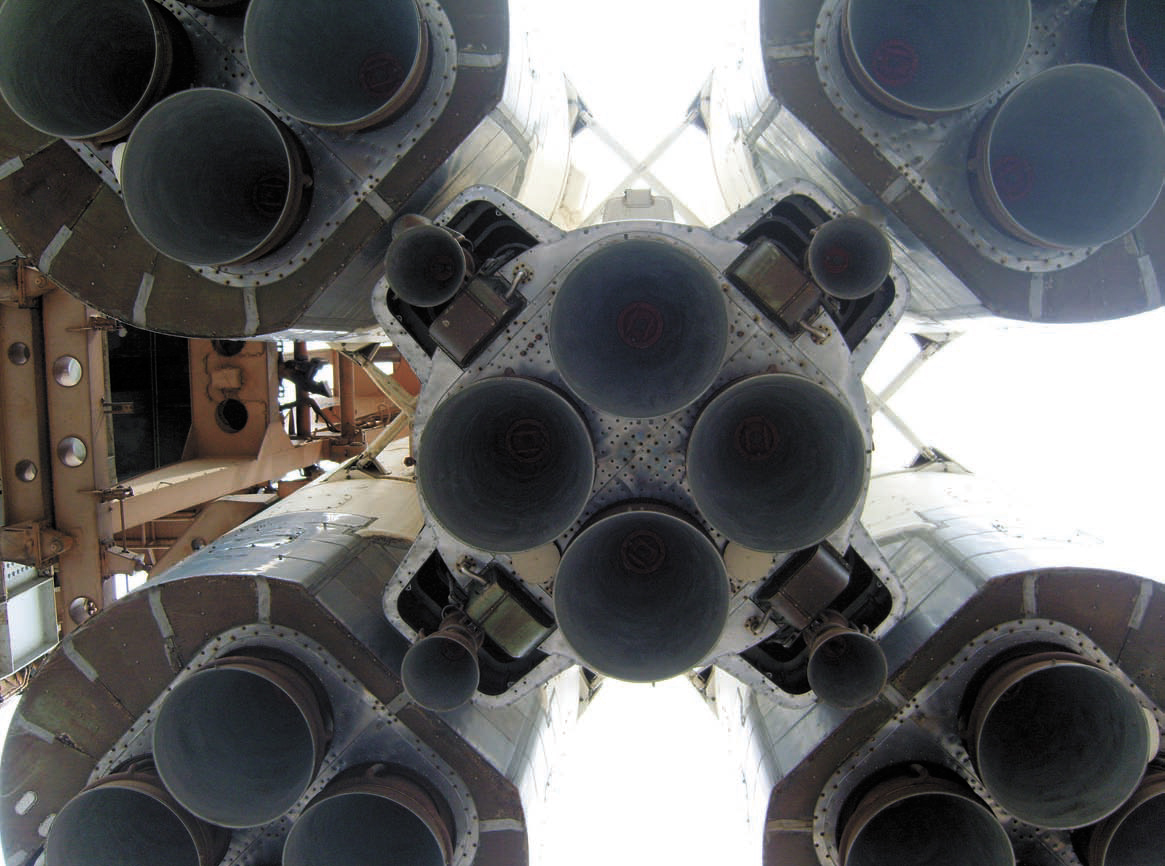
2011 was declared the year of Russian cosmonautics. The reason is obvious - in April, Yuri Gagarin is fifty years old. The word "legendary" in this case is almost devoid of pathos, for the figure of the first astronaut and the Russian word "went!" have long become symbols of world significance. Another reason, less well -known, but in the context of the topic is no less important - in February the centenary of the birth of Mstislav Vsevolodovich Keldysh, the “main theorist” of Soviet cosmonautics, mathematics and the president of the Academy of Sciences will be celebrated.
Apparently, the scope of the celebration of the Gagarinsky anniversary will be incomparably more than four years ago, when the fifty anniversary of the first satellite was celebrated - the day of the start of the cosmic era. In early October 2007, the covers of foreign scientific and popular magazines were full of images of Soviet devices, while in Russia the anniversary was essentially noted in missile and scientific circles. The topic for thought is quite interesting - however, now we will not touch it.
As usual, anniversaries and historical dates are a good reason to think about the present. 2011 is the middle of the federal space program for 2006-2015. Turning to it is extremely useful to assess the condition of domestic cosmonautics more or less objectively.
Cosmonautics is one of those, just say, few areas in which our country is still strong enough. Russia is still leading in the number of launches: in 2010, Roscosmos held 31 launch, of which 30 were successful (the USA and China-15 launches). All the main “workhorse” for flights to the international space station are Russian launch vehicles and ships. One way or another, the formation of the GLONASS group is nearing the end. Next year, the first start of the “Union” from the Cosmodrome Kuru in French Guiana is expected.
Here lies a certain terminological trap. Cosmonautics is a collective concept, it combines manned and unmanned vehicles, and the state and private sector, and fundamental science and commercial interests. And the situation in different areas can vary very seriously. That is why criticism of Russian cosmonautics is also justified. Although we remain leaders in the number of launches, a significant part of them is commercial launching and support for the ISS. The development of new transport systems goes with big problems (and in the meantime, Europe and Japan have already developed their cargo ships to supply the ISS). The lion's share of the space budget goes to support the ISS, but quite often you can hear doubts about the expediency of these expenses.
The Trinity Option is a newspaper of scientists and scientific journalists, so we focus on scientific space. The matter, however, is not only in personal addictions. Cosmic research is a factor of state significance. Including because it is here that they “extract” those knowledge about the universe, which then add a single picture of the world of the vast majority of the inhabitants of the Earth. Open any encyclopedia, ours or foreign, and you will see the panoramas of Mars and Venus, shot by the American Vikings and the Soviet “Venus”, pictures of distant stars and galaxies received by Hubble, photographs of Uranus, Neptune and Pluto, made by the Voyagger.
The results of the “first five -year plan” of space research in Russia, alas, are more than modest. As before, not a single full Russian scientific satellite is functioning either in the near-Earth orbit or in distant space. In 2009, the long-awaited launch of the Koronas-Photon solar observatory in 2009, but this joy turned out to be short-lived: without having worked out and the estimated period, the device failed. Other launches were pushed steadily. Only the experimental program on the Bion and Photon devices, as well as the international space station, is more or less stable, but its scientific “output” is not compared with the one that can give an automatic scientific apparatus.
Constant shifts of launches are bad not only in the sense of lack of Russian results, but also as a serious blow to the reputation of the country. Unfortunately, Russia is losing confidence as a partner, which jeopardizes future joint projects with foreign space agencies.
2011 gives another opportunity to turn a negative trend. In the fall of this year, the next astronomical “window” “opens” for launching spacecraft to Mars. At this time, the long-awaited start of the Russian Interplanetary Station Fobos-Grunt is planned, which, in case of good luck, will become the first Russian planetary project over the past twenty-odd years. Recall that the start has been postponed since 2009 in order to ensure greater reliability of the mission.
In addition to Fobos-Gront, this year, the first observatory of the Spectrum-Radio Astro series should be sent to orbit. This launch is associated with the launch of the Hydrometeorological satellite "Electro-L", since both devices use the new Navigator platform for the development of NGO named after S.A. Lavochkina. If there are no malfunctions in the work of Electro-L, then the Radio Astro is allegedly launched in spring or summer. The start "Electro-L" is now scheduled for January 20.
Finally, this year it is expected to launch a small satellite of the "probe-PP" for the probing of the Earth ...
This program looks modest enough, when comparing it with the scientific program of NASA or even ECA. However, no matter how trite, right now the main thing is to start. After twenty -odd years of constant shifts and overturning space plans, a peculiar and dangerous “habit of failures” could form. Now we are talking not only about the creators of scientific devices and spacecraft - no matter how sad, society also gets used to the fact that the media speaks only of Russia's plans in space, but very little about how they are being implemented.
Let's hope that in the new year plans will go into events.
And then? Further normal work will begin. Including planning a scientific program for the next ten years.
Olga is a snack