
Translated material
Results of the year: Science version
At the end of the year, it is customary to summarize a variety of results. Science magazine developed the idea: in addition to the results of the year, the results of only a decade of 2001-2010 published the results of the year. In both cases, the editors limited himself to ten topics, and most often called not one breakthrough work, but a whole direction. Articles of the special department www.sciencemag.org/site/Special/insights2010/ are posted on the network, and they can be read after registration on the magazine website.
1. The first in the list and, according to the editorial office, the most interesting result is the creation of the first “quantum machine”: a macroscopic (by the standards of quantum physics), which can be in two conditions at the same time. The result belongs to the research group led by Andrew Cleland and John Martinis from the University of California at Santa Barbara (USA).
2. In second place is the transplant “collected” in the DNA laboratory to the MYCOPPLASMA Capricolum bacteria cage. As a result of these manipulations, the bacterium turned out to be quite viable: the production of new proteins began in it, and the microorganism itself did not lose the ability to multiply. A successful result belongs to a group of researchers from the J. Craig Venter Institute in Maryland and California (USA) under the leadership of Venter himself. You can read more about this work in the TRV-hunger (No. 54 dated 05/25/2010, “Himers Craig Venter”) [1].
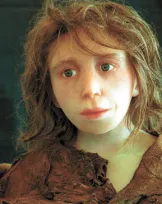
3. Deciphering the Neanderthal genome and its comparison with the genome of modern man. In 2010, the initial version of the decrypted Neanderthal genome was published. The international group of researchers is headed by Svante Paabo - head of the department of evolutionary genetics at the Institute of Evolutionary Anthropology of the Society named after Max Planck (Germany). The received data and their comparison with the human genome made it possible to make a sensational statement: it turns out that Europeans and Asians carry from 1 to 4% of “Neanderthal” genes (it was previously believed that the ancestors of a person were supplanted by Neanderthals without interspecific crossing). And about this work was described in the TRV-HOW (No. 59 dated 08.08.2010, “the genome of another person”) [2].
4. A number of results regarding the decoding of the human genome. First of all, the results of the international project “1000 genomes” are mentioned, the purpose of which is to characterize the variability of the genetic sequences of a person as in detail as possible. In 2010, the pilot phase of the project was completed. The main factor in the success of such studies, according to Science editors, is the dissemination of fairly cheap sequencing methods, as well as aiming only that part of the genome that encodes proteins.
5. A new method of "reprogramming" of somatic cells into pluripotent cells using synthetic RNA. As the editors obtained as a result of experiments of the cells in their characteristics are closer to embryonic stem cells than obtained using other methods.
6. A series of results on the search for the causes of the so -called Mendelian diseases - genetic diseases, which are based on a mutation of one gene. By the end of 2010, in this way it was possible to solve the cause of a dozen diseases. Among the discovered are genes that cause a vice in the development of the brain, low cholesterol and facial ugliness.
7. The first checks of controlled “quantum simulators”, which allow you to reproduce the dynamics of real quantum systems (in such a simulator the role of ions in the crystal lattice is played by laser points, and the role of electrons is atoms). These works are expected to give the key to the opening of superconductivity at room temperature. However, as the creators of the list emphasize, the main task now is to confirm that quantum simulators correctly reproduce the behavior of quantum systems.
8. Another breakthrough in calculations, this time in molecular dynamics. The group of researchers under the leadership of David Show from De Shaw Research and the Center for Computing Biology and Bioinformatics of the Columbia University (USA) (as in the case of the Venter Craig, we are talking about working in the named after himself), it was possible to simulate 15 cycles of turning and expanding the protein molecule - 100 times longer than it was possible to simulate until now. The study was conducted on a specially created supercomputer.
9. It was possible to develop several methods that allow manipulating from the DNA of the rat as conveniently as from the DNA of the mouse. Thanks to this, the palm of the championship among laboratory animals can move from mice to rats, which in their physiological and intellectual parameters are closer to a person.
10. HIV prevention. Two ways to protect against infection have proved their effectiveness. The use of a vaginal gel containing the antiviral drug Tenofovir reduced the incidence in the test group of women by 39% in 30 months (about 900 women from South Africa took part in the study). The result was reported at the XVIII International AIDS Conference, which took place in Vienna (Austria). Another method - a preventive use of the drug Profilexis led to a decrease in the incidence in the test group by about 43.8% (2499 men participated in the study). This study was also conducted by an international group of researchers. For the search for a vaccine against HIV and related problems, see the TRV-hunger, No. 37 09/15/2009 “Antibodies against HIV: was there a sensation?” and No. 62, 09/14/2010 “Planning in science? An example from the field of HIV-vaccines ”[3].
The “dozen” of decades Science is more diverse: here we are talking not only about biology, but also about space research and physics. Editors practically do not call specific names, only indicate the field of research.
1. Breakthroughs in genetic studies: the discovery that “garbage DNA” is not so “garbage”, but, on the contrary, can perform regulatory functions for significant areas of DNA; A detailed study of RNA functions and its role in the cell.
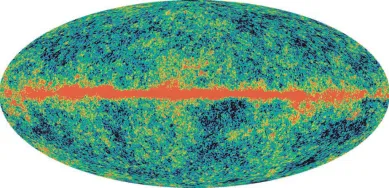
2. The beginning of the era of accurate cosmology. Thanks to the new tools, primarily the WMAP space observatory, it became possible to measure the heterogeneity of relict radiation with a fairly high accuracy and, therefore, check various hypotheses regarding the origin and evolution of our Universe.
3. Again, the decoding of the genomes of ancient creatures: not only Neanderthals, but also mammoths, determination of fragments of sequences of dinosaur collagen. However, with the latest discovery, published just in Science, not everyone is clear: many scientists consider it an artifact (a shelter wrote about this in No. 12 dated 09/16/2008 in an article “The Park of the Jurassic period: the opening is postponed?” And an interview with one of the skeptics, professor of the University of California San Diego Pavel Pevznzher, who are Recently became one of the winners of the "Megagran contest"). Thanks to these works, it becomes possible to find out those details of the ancient world that cannot be restored according to fossil residues ( www.scientific.ru/trv/12n.pdf ).
4. Search for water - and life - on Mars. Actually (add from ourselves), that there have been water on Mars, have been written for several decades not only foreign, but also our planetologists. However, we must pay tribute, precisely in 2001-2010. The results of the Martian missions made it possible not only to confirm the presence of water, but also to examine its spread in detail (in the form of underground ice), as well as the role that water played in the distant past of Mars. See, for example, a three-hobby: “Ancient hot sources were found on Mars?”, No. 22, 02/17/2009; “New interesting pictures of Mars”, No. 33, 07/21/2009; “The Last Island of Life on Mars”, No. 66, 11/09/2010 [4].
5. Cell reprogramming: the transformation of differentiated cells of various tissues into pluripotent, capable of developing again into any type of cell. In recent years, various techniques have been developed, and although their effectiveness is still small (only a small share of cells is converted into pluripotent ones), researchers hope that in the future, reprogramming will not only be better studied, but even find use for medical purposes.
6. The study of microorganisms and viruses in the human body (and organisms of other mammals). In the last decade, the approach to this phenomenon itself changed: the bacteria and viruses that inhabit us were considered unconditional pests, which began to be perceived as commenals, i.e., safe cohabitants (at least most of them), or even symbionts, the presence of which is necessary for the normal functioning of the body.
7. Explanet. At the end of 2010, there are already more than 500 of them, and the search continues, including on the Kepler Observatory (NASA, the launch of 2009) specially “sharpened” for this task. The methods of detecting are gradually developing and sensitivity improves: it is possible to detect more and less large planets. The results already obtained (in particular, a large number of “hot Jupiters” near the central star) force if the existing ideas about the formation of our solar system, then at least treat them with significantly great skepticism. A crv-hobby told about exoplanets, in particular: No. 49, 03/16/2010 “Explanets (modern facts)” and No. 51, 04/13/2010 “Is there life for ...?” [5].
8. The study of inflammatory processes: according to data obtained over the past decades, inflammation may be quite dangerous. In particular, evidence was found that inflammatory processes destroy neurons, and also contribute to the development of type II diabetes.
9. Development of metamaterials - complex materials, or rather, even devices that allow you to control the spread of electromagnetic waves. The possible use is the creation of a “superinz” with a resolution exceeding the diffraction limit. The journalists are more loved by another option to use “invisible caps” that make the object invisible (or rather, bending the trajectories of electromagnetic waves in a special way, so the receiver does not see the hidden object). Interestingly, the properties of such materials were theoretically developed in the USSR since the 40s, the review can be found in the article Veselgo (1967). ”
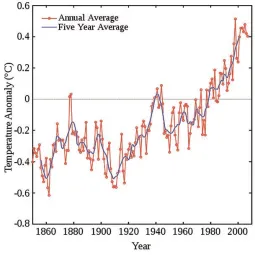
10. Climate studies: one of the main results of the decade is Science editors consider the fact that scientists managed to achieve consensus in matters of climate change. According to the editorial office, today the majority of climatologists agreed that global warming really takes place, its root is in anthropogenic activity and, apparently, it would not be possible to restrain this warming naturally. About the “climategate” and how the resulting consensus is justified, see, in particular, “Bondian of global warming”, the TRV-hobby No. 43, 12/08/2010 [6].
Prepared
Olga is a snack
1. Http://trv-science.ru/2010/05/25/ximery-krejga-ventera/
2. Http://trv-science.ru/2010/08/03/genom-drugogo-cheloveka/
3. Http://trv-science.ru/2009/09/15/antitela-protiv-byla-li-sensaciya/ ,http://trv-science.ru/2010/09/14/planirovanie-v-nauke-primer-iz-oblasti-vich-vakcin/
4. Http://trv.nauchnik.ru/22n.pdf , http://trv-science.ru/2009/07/21/novye-inteeresnye-snimki-marsa/ ,, http://trv-science.ru/2010/11/09/poslednij-strovok-zhizni-na-marse/
5. http://trv-science.ru/2010/03/16/ekzoplanety-sovremennye-fakty/ , http://trv-sciense.ru/2010/04/13/est-li-zhizn-na/ .
6. Http://trv-science.ru/2009/12/08/bondiana-globalnogo-potepleniya/