
Translated material
Another person
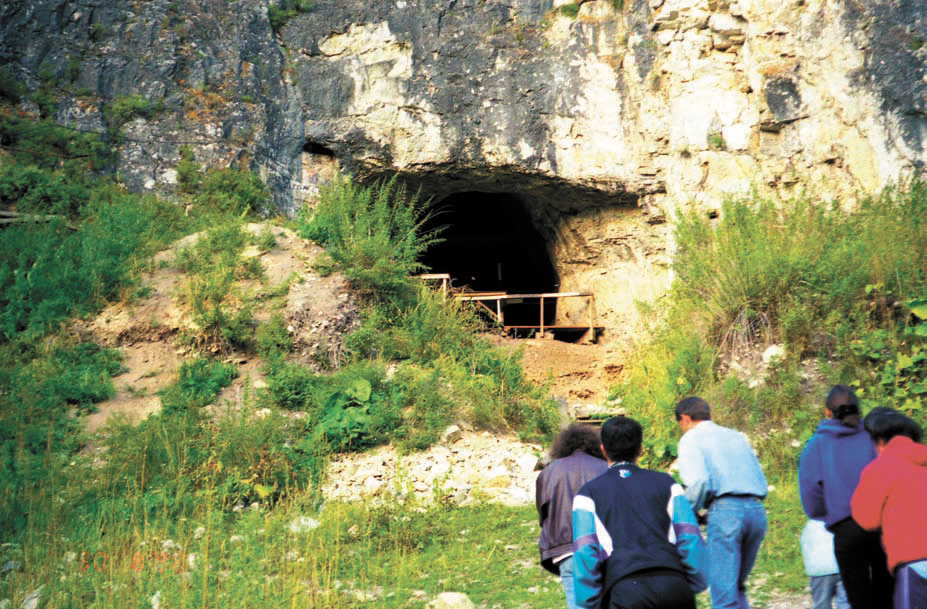
At the very end of last year, an article was published, which was supposed to get into all ratings of the best results of the year, but did not have time, because these ratings were compiled, of course, in advance. This is an article about the genome of man from the Denisa cave in Altai.
Already in the summer, after the publication of the mitochondrial genome of Denisovts, it became clear that if it was possible to determine the sequence of the nuclear genome, something very unusual should be expected. Here I must say that mitochondria is cellular organelles with its own, relatively short genome. Because of this, and due to the fact that in any organism the number of mitochondrial DNA molecules is many times more than nuclear DNA molecules, it is much easier to sequenate it (determining the sequence): so, now six complete and ten partial mitochondrial genomes of Neanderthals are already known. For further, it will also be significant that the mitochondrial genome, unlike nuclear, is transmitted strictly along the maternal line.
So, judging by the number of differences, the mitochondrial genome of the Denisovsa divorced the mitochondrial genome of Cro -Magnons (us) and Neanderthals about a million years ago. For comparison: the mitochondrial genomes of the Neanderthal and Cro -Magnon dispersed about 500 thousand years ago, the sequenced mitochondrial genomes of Neanderthals among themselves - 100 thousand years, mitochondrial genomes of the most distant Cro -domes - 200 thousand years (this is the age of the so -called “mitochondrial Eve”).
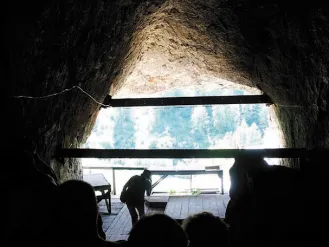
Sequencing of the Denisov’s nuclear genome became possible thanks to technical promotion, accurate work of archaeologists and, as always, luck. The authors came up with a modification of the method of sequencing of an ancient DNA, which made it possible to get rid of most errors associated with the degradation of the source material: previously changed nucleotides were read incorrectly, which led to errors, and now they were gaping DNA fragments, which is not so significant, since these fragments are already quite short. The level of sequencing errors was estimated by a comparison of the genomes of Denisovs and Cro -Magnon with the genome of chimpanzees: ideally, the number of differences should be the same. In fact, there were 1.7 times more differences in the Denisovs genome than in the Cro -Magnon genome, which is an order of magnitude better than in the Neanderthal genome published six months before. The excess itself, apparently, is connected not so much with chemical changes in DNA as with a smaller coating of the Denisov genome, each nucleotide of which is read on average only 1.9 times.
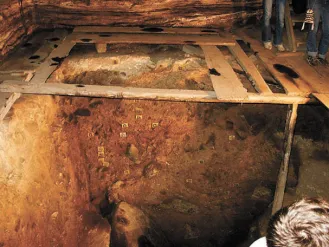
Correct work with a finger with a phalanx of the finger extracted from the ground, from which DNA subsequently stood out, both in the excavation and in the laboratory allowed to reduce the level of pollution of the DNA of a modern person to a level of less than 1%. This level was evaluated by the analysis of fragments of mitochondrial DNA, by the number of fragments of male Y chromosome (unlike most male researchers, Denisovets was a young woman, and there should not have been such fragments at all) and to compare data obtained by sequencing of two independently made libraries of fragments.
Finally, due to some features of the cave, the level of preservation of DNA was unusually high: 70% of the read fragments were read, while the share of human fragments when working with Neanderthal DNA was 1-5%, and the rest was a DNA of bacterial origin.
So what happened? The main results of the article fit into one maximum of three paragraphs.
Denisovites are a very early separated branch of Neanderthals. If the middle section of the Neanderthal and Cro-Magnon genome has a common ancestor 800 thousand years ago, and the populations of Neanderthals and Cro-Magnons parted 270-440 thousand years ago (there is no paradox, since even in the same population there are sections of genomes that have been dispersed hundreds of thousands of years ago), then the sequences of Denisovites and Neanderthals dispersed in an average of 640 thousand years. At the same time, about 140 thousand years ago, the population of Neanderthals, apparently, went through the bottleneck, which led to a sharp reduction in intraspecific diversity: all the well -known genomes of Neanderthals from Eurasia are similar to each other.
Unlike Neanderthals, who brought about 2.5 % of the material to the genomes of the inhabitants of Eurasia (but not Africa), the Denisovites did not add anything to our genome, but they introduced about 5 % to the genome of residents of melania (which, thereby, contains only 7.5 % of the Necromaneson sites).
And finally, the attentive reader had to notice the contradiction between the data of the mitochondrial genome, according to which the Denisovites are an external group relatively closer to each other Cro-Magnons and Neanderthals, and a news-nuclear nuclear genome, according to which the Denisovites are still closer to Neanderthals. There are no explanations for this, more precisely, there are several possible, including an exotic assumption that the Denisovites go back to another, earlier human line along the maternal line. One thing is clear: this is not the result of an experimental error, since in the same work the mitochondrial genome of another Denisis, a young man who practically coincided with the first was sequenced.
It is clear that for a complete clarification of the background of a person - if this is generally possible - a lot of genomes, both ancient and modern ones, will be required. Let's say it is very sorry that DNA is not preserved in the conditions of the tropics, and therefore there is no hope for sequencing the genome of small people from the island of Flores. But you can already clearly see how new sequencing techniques change the whole style of classes with anthropology and population genetics, giving the opportunity for a mass analysis of human genomes. So far, Russian scientists - those who are now available for modern sequencing devices - are not able to independently conduct research on this kind. But the good thing is that our archaeologists and population genetics participate in large international projects and, thanks to their works, Russia is present in the general field of work on the study of the origin and history of man.
Mikhail Gelfand