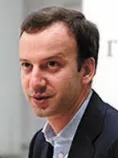
I will say an unpopular thing, but I think that this is correct: if we all believe that everything needs to be achieved by our labor, that it is necessary to work fashionable, we need to cancel standard scholarships from students, because this is the wrong signal, what the fact of your studies you get compensation. You can work after studying: at the department, in the library, in the cafe, transfers, not money transfers, of course. If a talented mathematician can work with his professor at the department, help to do research and receive money for it. And if this is a future manager-it can also work in the company for two to three hours a day. I agree that this is a two -sided process, such opportunities should be formed in each university, the company should have an interest in this. These are all the problems being solved. I believe that this is both more correct and cheaper for taxpayers than to pay standard scholarships.
I consider an absolutely correct system of educational loans. Moreover, part of the money can be considered precisely as a scholarship. But you must return this money after completing your studies. That is, earn.
From an interview with Gazeta.ru, January 19, 2010
January 21 A. Dvorkovich at a briefing in RIA Novosti clarified his position:
“95% of people comment on the title that appeared in many media, on Internet sites, which I proposed to deprive and take the scholarship from students. My idea is that ... you need to make sure that the system of scholarships, grants, and other students' rewards motivate them to gain knowledge and work skills in the volume in which this is necessary for subsequent work in a complex modern economy. Not just to go to lectures from case to case, or even constantly, and then cram to the session, this is not study, even if it lasts 10 hours a day, as many write. The fact that we have 10 hours a day for students to study at lectures and seminars means just poor quality universities, poor training programs, and bad teachers ... We should not have this .. There are many exceptions, there are many good teachers and departments, there are good universities, but if students do not have time for ... a real independent work, then, a poor learning program.
And scholarships or grants ... you need to pay those who do all this. The main thing is that they are not for the fact of being at the university and not even for the fact of obtaining good assessments, but for the serious work, which includes both study and practical activities at the university, not at the university.
In no case do I propose to cancel anything now or change before we give all these opportunities, including the possibility of obtaining interest-free or low percent loans, which will allow students to study. Not to pay for training, I'm not talking about paid training, but about what to live at the time you study. And this is the essence of the issue. And first, you need to determine how it will all be done, and then say that standard scholarships can be canceled by replacing them with another system more advanced, more motivating to study and work.
It is very easy to grab a simple phrase, and then criticize it, I sometimes do it myself, it is absolutely normal, but still, if we are serious people, and I hope that students consider themselves serious people, then we must discuss the topic seriously, and not fall into populism, sometimes frank rudeness. By the way, the discussion that is now going on, if we leave aside its obscene part, it is very interesting and allows us to draw a lot of conclusions, formulate ideas that can really be implemented in practice, even if you leave aside the issue of scholarships. It became clear how difficult the problems of our universities are and how many should do there. ”
On January 19, 2011, in his interview with Gazeta.ru, the assistant to the President of the Russian Federation Arkady Dvorkovich expressed his opinion on scholarships in universities, a day later at a briefing in RIA Novosti he explained and clarified his theses (see quotes in the insert). On this occasion, many comments have appeared in the media and blogosphere. A TRV-HOUSED TO NUSTROWER TO Russian scientists with a request to comment on the statement of A. Dvorkovich about the abolition of standard scholarships in universities. Our question was this: “Do you think the current state of affairs with scholarships in Russia is normal, or do you believe that the system of payment of scholarships needs to be changed? If you change, then what would you suggest: increase scholarships for everyone/leave only for those in need/leave for talented ones, etc.? ”
Another complex of questions was related to the student’s ability to work: “Is it possible, in your opinion, it is reasonable to combine study at a university and work? Do you think that the student should completely devote himself to study or do not see anything wrong with the student to have a part -time job? ” We publish the received responses.
Alexey Bobrovsky,Dok. chem. Sciences, S.N.S. Department of highly molecular weight compounds of the Faculty of Chemistry of Moscow State University, Associate Professor, Laureate of the President of the Russian Federation for young scientists in 2009.
1-2. I remember my student years: I entered the chemical faculty of Moscow State University in 1991. I was very lucky: scholarships grew at that time much faster than food prices. I remember that I even brought an excess of money to my parents (they just began the period of delays in salaries).
Therefore, all the time I devoted to my studies, science and music (already from the 1st year I began to work in the laboratory of chemical transformations of polymers and work with pleasure for this time). It is obvious what consequences would the absence of a scholarship and the need to "unload wagons at night."
Then, in the mid-1990s, the scholarships began to be catastrophically lacking. But again I was lucky: the Soros Foundation arose in Russia. Thanks to his student and then graduate scholarships, I did not think about additional earnings. It was, of course, not easy, there was money, but nevertheless ... I can hardly imagine how I would have to study now, in the 2000s ...
Summarizing the above: scholarships are needed, and not as beggarly as now. There can be no talk of any combination of study, scientific work and making money: do not forget about the deplorable situation in our science. Only very few laboratories are able to pay students decent money for the first steps in scientific work. And the state is not done at all to change this situation.
Funds of additional support for talented students who study “excellent” and are engaged in scientific work are needed. The proposal to cancel the scholarships at all looks like a mockery of common sense.
Alexey Kupriyanov,cand. Biol. Sciences, historian of science, associate professor of the St. Petersburg branch of the GU-SHE:
1. The current state of affairs with scholarships, of course, cannot be recognized as normal. In those universities where I teach, the scholarship does not exceed 1,500-2000 rubles per month, and not everyone gets it. During the years of my studies (1987-1992), the minimum scholarship (40 rubles, which all who studied without three) amounted to about 60% of the salary of an unskilled employee and even allowed to live, albeit starving, in the dormitory “for one scholarship”. In modern conditions, this would mean that the scholarship should be at least 10-12 thousand rubles. And this is subject to normal student canteens with inexpensive dinners and hostels in pedestrian accessibility from the place of study.
As we see, the “standard” scholarship should be increased by seven to ten times. Is it possible to do this at the expense of available resources even when reducing the number of scholarships? Not sure. If you dream about a near possible future, it makes sense to pay state scholarships only to needing students, only if you study “good” and “excellent”. I see no reason to maintain for our general account - the account of taxpayers - neither children of secured parents, nor those who negligent to study.
At the same time, it would be important to diversify the sources of scholarship payments. Charity funds and other organizations could well distinguish quite worthy scholarships for training at universities on a competitive basis, based on their principles. There are already such scholarships, but I would like them to be more, like their sources.
2. The experience of other countries suggests that there are no big troubles as such. However, specifically in the current Russian situation, I look at the possibility of combining work and study is quite skeptical.
First of all, in view of the fact that students are simply no time to combine work and study. They are overloaded with “contact” hours. At the same time, we are talking about both a significant nominal weekly load, and a large number of training weeks. I'm talking about the nominal load, because students always miss classes to one degree or another. However, if we compare Russian universities with universities, for example, Germany or England, then the difference in contact (auditorial) hours in some cases will be many times. As a result, students of German universities have more time in order to work without harm to study.
Secondly, due to the insufficient number of jobs with a flexible schedule and incomplete employment, for which students could get a job. In particular, the idea of employment “on a campus” is completely utopian. The vast majority of universities have no appropriate infrastructure. Neither the excess of the cafe that would be required by the waiters, nor libraries that would have a sufficient number of “student” jobs (I suspect that this pastoral idyll is drawn from films about American students, and not from the realities of Russian life). I believe that with the work “at the departments” in research projects during the poverty of our science, there are also enough problems.
An unsuccessful compromise was found in some magistrates where students study in the evening, working during the day (for example, this is done in the Higher School of Economics, where I teach). This, however, does not lead to anything good (unless the ideal conditions of employment at the departments are fulfilled or in the research units of the university), and the Higher School of Economics already makes efforts to rectify the situation.
Vladimir Yadov,Dokt. Philos. sciences, professor, dean of the faculty of sociology Gaugn:
1. In my opinion, A. Dvorkovich’s proposal has serious reasons. The system of training at college and the university in the European Union and the United States - payment - payment. But from what sources? a) at the expense of parents and/or earnings of students themselves; b) on the loan with payment for many (up to 10) years and with a preferential percentage; c) due to subsidies of local governments to the best graduates of schools; d) due to the manual for the poor.
I think that such a system is quite fair. It is adequate to society with developed civil structures. Will it take root with us? Rather, yes than not. Much depends on the endowment of municipalities by the rights of an autonomous disposal of their budget. Charitable donations, primarily state giant corporations, can play a small role.
The size of the scholarship should at least ensure food and payment of housing plus the minimum amount for the purchase of books. In England of the 60s, the scholarship of the British Council to a foreign student was scheduled for articles: housing and food, buying books, introductory trips to other universities and tourist warriors around the country.
2. Who is. I know from experience that the “freebies”, working or being quite wealthy, remain three -year -olds and tailings. Serious students combine their studies and try to “show themselves” to the future employer. The talented are busy in the projects of the departments and research units, receive little money from the grants of the collective project. Be sure to encourage the best increased scholarships by depriving the scholarship of the slopes.
Nikolai Kaverin,doct. honey. Sciences, professor, academician of the RAMS, head of the Laboratory of Physiology of viruses of the Research Institute of virology named after DI. Ivanovsky:
1-2. I am not enough to imagine a social slice of current student. Therefore, it is difficult for me to make a judgment about the importance of a scholarship for a modern student. One thing is obvious: if the student is talented, and at the same time in need, then he should pay a scholarship that allows you to learn without part -time jobs.
Valery Vinogradsky,Dok. Philos. sciences, professor of the department "Sociology" of the Saratov State Technical University:
1-2. The scholarship has always been and, probably, should remain a symbol, a sign, a tiny, but intelligible signal at least some independence and independence of a young man who has entered the path of knowledge of the world. The scholarship is strong precisely by its moral potential.
A scholarship is agitation for the educational mission of a person. This, of course, is not at all the economic and pragmatic view of the scholarship, which is read by the respected A. Dvorkovich. Generally speaking, the statement of Dvorkovich is a careless gaze flying over the circumstances of everyday life from above, it is a bureaucratic welding.
This, in addition, is a vivid evidence of the government’s efforts to push the drifts of the budget, saving on weak, dependent, timid and often silent. Having canceled the institution of scholarships itself, society (government) can bring down the picture of the feat of knowledge that lives in the archetypes of consciousness - that brief life of life, which is as much as possible to the face of a young man.
This cannot be done. But, if this government really wants, then it is possible. Be sure to come the time when the scholarship is returned. But these will be seeds flying on asphalt.
Alexander Shen,cand. physical mat. sciences, senior researcher at IPPI RAS, employee LIF CNRS (Marcel, France):
1. It seems to me that (as is usually the case with the authorities) the statement of Dvorkovich is such that the discussion becomes meaningless (since his statement comes from false presumptions).
Firstly, with the current size of scholarships, you can discuss the question of whether it is worth introducing scholarships, and not whether it is worth canceling them.
Secondly, the question of scholarships is (not the most important) part of the issue of the extent to what extent the training should be paid (the size of the training fee is significantly higher than the discussion of the scholarship).
2. About training and work is also a part of a common problem: for most students, most of the classes do not make sense - partly because the taught is too difficult (for this majority), partly because they teach a meaningless subject and bad, partly because it is really not interested in students, and you can pass the exam “for freebies”, etc. (as far as I can judge from Moscow universities, in particular the MH on the MHSMU MSU). On the practical question, whether it will become better if you begin to interfere with the work of students (demanding attendance, etc.), I would answer negatively, it seems to me quite obvious.
If there is a desire to support something, then there are a lot of ready options: you can recall the experience of the Soros programs or a prize of the Mobius-Deli-Delorushin Dynasty, etc., etc., in which, with minimal (in comparison with general meaningless expenses), there is a clear benefit.
Vladimir Volokhonsky,Senior Lecturer at the Faculty of Psychology of St. Petersburg State University:
1-2. I recall the joke:
- Vasily Ivanovich, and communism - his scientists invented or party members?
- Of course, Petka, party members! Scientists first checked the dogs!
Here is Dvorkovich - he is more likely a party than a scientist. I consider the idea of canceling general student scholarships completely wrong, although I understand that it is probably wrong to provide it with such a number of students, most of which will not work in a specialty. In addition, the excessive centralization of the issue of these very scholarships leads to the fact that federal universities have not many real possibilities for maneuver.
In the past fifteen years, our faculty has the lowest scholarship of all me known, it is always equal to this amount that the ministry voices. In other universities that are subordinated to the city or some other departments, students' scholarships are often noticeably more (the same problem with the salaries of teachers).
What needs to be done, and what is easier to do is to decentralize this very system of distribution of student scholarships, so that at each university the administration can establish its own rules based on agreements with student trade unions, the total amount in terms of one “budget” student at the same time without reducing it without reducing. Only after we look at the results of the work of different systems in different universities, can we try to offer some new federal standards in this area.
Boris Firsov,doct. Philos. Sciences, Honorary Rector of the European University in St. Petersburg:
1-2. It would be best if the question of whether it is necessary or not to cancel the scholarships, the students and teachers of higher education themselves answered. It would be nice to ask the Roaders. Organize work with experts, study the traditions and experience of solving a scholarship problem in foreign countries. The whole world (and not by illegitimate throwing of the problem “from above”) could find a decision to satisfy all interested parties. Вопрос затрагивает судьбы, иначе не скажешь, молодых поколений в нашей стране. Так давайте решать его современными демократическими способами.
* * *
Сказано раньше
Идею отмены стипендий в российский вузах для «Полит.ру» также прокомментировала психо- и нейролингвист, докт. Filol. наук, докт.биол. sciences, head. отделом общего языкознания и лабораторией когнитивных исследований ИФИ и профессор кафедры общего языкознания СПбГУ Татьяна Черниговская:
-Это абсолютно возмутительная идея. Во-первых, то, что им платили, было безобразно и унизительно. Страна, у которой такое количество газа и нефти, я думаю, может себе позволить платить стипендии студентам, тем более, что постоянно говорится об инновациях, позволить себе создать ситуацию, когда студенты будут не работать, зарабатывая себе на хлеб насущный, а учиться. Везде студенты учатся, пока они учатся. Пока мы учились в Университете, мы были всё время заняты, потому что, вообще-то говоря, учились, кроме лекций, дома, в библиотеках и т.д.
Тот аргумент, что всё равно студенты получают очень мало и можно это отнять, очень плохой аргумент. Мы вообще хотим, чтобы у людей было какое-то образование или нет? Я понимаю, что тысяча рублей никого не спасает. Но сам факт, что появилась идея отнять и эту тысячу, — странное дело. Тут остается только руками разводить.
—Как Вы думаете, студенты могли бы работать там, где учатся?
— Студенты должны тратить свое время на то, чтобы получить образование, а не на то, чтобы зарабатывать себе на проездной билет в транспорте, во-первых. Во-вторых, все эти разговоры о трудоустройстве в вузах вилами по воде писаны. Где эти места, где они должны работать? Предложить можно всё что угодно. А реальность-то какова? Эти рабочие места должны быть созданы, но сейчас их нет и не будет. Я не верю в то, что они появятся. Это очередная абсурдная идея. В общем я всем нам сочувствую.
Идею отмены стипендий в российских вузах «Полит.ру» также прокомментировал профессор Российской экономической школы Константин Сонин:
-Большинство ведущих вузов в мире, в том числе частные американские, перешло в последние годы к такой системе, при которой материальные трудности семьи не являются препятствием для обучения в вузе. То есть если у семьи нет денег, чтобы платить за обучение, то студент получает поддержку в таком объеме, чтобы ее хватало на оплату обучения, общежитие, питание и всё необходимое. Поступление в эти вузы никак не зависит от способности студента платить и размера поддержки, которую он получит. В ведущих аспирантурах то же самое: ежегодно сотни ребят из всех стран мира едут в американские аспирантуры, получая стипендии, которые покрывают все расходы.
Я думаю, что Дворкович имел в виду, что нам тоже необходимо двигаться в этом направлении. Для этого надо перестать платить огромной массе студентов мизерные стипендии (стипендия в 10003000 рублей мало меняет в жизни студента: если у него нет других источников доходов, ему всё равно нужно работать вместо учебы), а сэкономленные средства потратить на такие стипендии тем, кто без них не может, чтобы они могли целиком сконцентрироваться на учебе.
Фото: Н. Четверикова, «Полит.Ру» (Н. Каверин, А. Бобровский, К.Сонин), архив Б. Фирсова (Б. Фирсов), сайт МЦНМО (А. Шень), volohonsky.ru (В. Волохонский), sobaka.ru (Т. Черниговская), персональная страничка ВКонтакте (А. Куприянов), sstu.ru (В. Виноградский)