
Translated material
Mubarak resigned
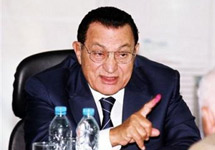
Egyptian President Hosni Mubarak, who ruled the country since 1981, resigned. According to RIA Novosti, this was stated by Vice President Omar Suleiman. "In these difficult conditions that the country faces, President Muhammad Hosni Mubarak decided to leave the president’s post and instructed the Higher Council of the Armed Forces to rule the country," he said in a brief speech on the Egyptian state channel. As expected, in the near future, the representative of the High Council of the Armed Forces will turn to the people from the TV screens.
The news of the president’s departure and the victory of the revolution caused joy in Tahrir Square, where hundreds of thousands of people gathered. “Freedom! Egypt is free!”, The audience chants. Cars with national flags drive through the streets, drivers are buzzing with klaxons. Shots are heard in the air and explosions of firecrackers. On the streets and squares, people hug and dance. Egypt plunged into the atmosphere of a general holiday.
Earlier, the Supreme Council of the Armed Forces of Egypt made an official statement dedicated to the crisis and ways of leaving it. The military promised to terminate the law on the emergency operating in the country for more than a quarter century. This law limits human rights and freedoms, gives additional powers to the law enforcement authorities and special services, and also allows censorship.
In addition, the army promised to maintain order and safety during the transition period to democracy, and also not to pursue people who went out into the streets to protect their rights. The statement says that the emergency will be removed immediately after the end of the unrest that lasted almost three weeks in the country. Removing the emergency mode is one of the main requirements of the protesting opponents of the current regime.
About the fate of President Hosni Mubarak, whose resignation is required by demonstrators, nothing is said in the military statement. Earlier, the leader of the opposition of Egypt and the ex-head of the IAEA Muhammad El Baradei called on the army "intervene in a crisis situation in order to save the country."
Last night, Mubarak made a television person to the nation, in which, contrary to expectations, he did not declare his departure. He vowed that he would not leave the post until the next election of the head of state. At the same time, he stated that he was transferring power to Vice President Omar Suleiman in accordance with the Constitution.
Mubarak’s television show caused indignation among the opponents of the president. After listening to the speech of the Egyptian leader, those present in Tahrir Square began to shake with boots and chant "leave, go!" And "Down with Mubarak." Up to two thousand demonstrators are located at the Presidential Palace in Cairo. For the first time, the protest is carried out at a strictly protected object. Almost ten thousand people are rallying at the Egyptian state television building.
In Egypt, from January 25, mass protests against the ruling regime, periodically growing into riots, have been continuing. During the unrest in the country, at least 300 people were killed, more than five thousand were injured.