
Translated material
Destroyers of the Fatherland
Why cleaned military intelligence
Destroyers of the Fatherland.
February 23 - Day of Defenders of the Fatherland. But after the terrorist attack in Domodedovo, who was preceded by explosions in the subway, on the railway, in the air, to say that the Russian state protects its citizens is simply ridiculous. Although it is this - protection against internal and external threats - and is the main function of the state, for which we pay taxes. There are many reasons for this. The first and main is corruption, which permeated the entire vertical of power from top to bottom, including the Ministry of Internal Affairs and Lubyanka (more on this in discussion on page 14). The explosives to Domodedovo were brought from the North Caucasus by bus, freely passing all possible posts and checks - exactly the same as bombs were brought to the Dubrovka theater 8 years ago. Price - hundreds of human lives. The second reason, closely linked to the first, is the inability of the authorities to formulate a clear, reasonable concept of national interests, to determine real challenges. The concept of national security, formulated by the Security Council, still sees the main enemy in NATO and the USA. Hence the complete chaos in organizations whose work is to obtain information about threats before they became the bloody facts of our lives.
A striking example of this is the situation with the institute, which was once the second important intelligence of the country: GRU, the main intelligence department of the General Staff of the Armed Forces. What is happening with our safety and those who are designed to protect it,-the New Times understood the headquarters of the GRU at Khodynka-a complex of buildings with an area of more than 70 thousand square meters. meters, the construction of which was completed in 2006 - almost depopulated. Round empty corridors and complete uncertainty. The destruction of the GRU was preceded by a campaign in the media, which few noticed. After the first arrest of GRU Colonel Vladimir Kvachkov in 2005, in connection with the attempt on Anatoly Chubais, rumors crawled that military terrorist groups were being formed inside the service (the last arrest of Kvachkov in December 2010 turned these rumors into real accusations). Films began to appear on the screens like the series “Spy Games”, exposing the traitors among the tops of the GRU, arranging endless conspiracies that make up lists to shoot oligarchs and politicians selling right and left by the military secrets of the homeland. Naturally, “close neighbors” exposed them (as in Soviet times they called the KGB, while the GRU was called the neighbors “distant”), that is, the Federal Security Service. And how could it be otherwise, if a native of this service has been ruled by the country for 10 years? Since all the main events took place “under the carpet”, citizens simply did not see that there was a powerful propaganda campaign to prepare the liquidation of GRU.
The collapse of GRU employees consider the destruction of the military intelligence system by an accomplished fact. A little over three months ago, on November 5, 2010, celebrating their professional holiday in the Crocus-City banquet hall, veterans and current service officers raised toasts for the “bright memory” of the intelligence body, with which their personal and professional fates were associated.
GRU - historically the most secret special service of the intelligence community, first of the USSR, and then Russia. That is why the most vulnerable. Even veterans can talk about her problems only when, as they say, it got out, and despair is stronger than the habit of living under the heading “secret”. The current situation is such that there seems to be already nothing to lose.
Lieutenant General Dmitry Gerasimov, the former head of the GRU department, who led all special forces brigades, said in an interview with The New Times: “I am deeply convinced that the breast specialization is completely consciously deceased. Of the 14 brigades and two GRU training regiments, no more than four brigades remained at best. At the same time, it must be understood that this is no longer a special forces, but ordinary military intelligence, which is part of the ground forces. One of the best brigades is liquidated - Berd. With great difficulty, it was possible to defend the 22nd brigade, which in peacetime received the high rank of “guards”. This is our most combat -ready connection, which constantly fought in the most acute areas in Afghanistan, Chechnya and other “hot spots”. I can say that the so -called “Osnaz” is also eliminated - parts of electronic intelligence. In fact, we are building the armed forces that do not see and do not hear anything. ”
According to approximate estimates of specialists, out of 7 thousand officers who served in the GRU in Soviet times, less than 2 thousand were left in the structure. According to the scouts, with whom the New Times talked, the GRU kept afloat, until he was left by the former chief of the army, Valentin Korubelnikov, after his compelled resignation at the end of summer 2009 and the final laundering of the GRU began.
A high -ranking GRU employee, who fired along with Korobelnikov from the central apparatus of military intelligence, on the basis of anonymity, told The New Times that he considers the collapse of the service a focused action: “The first attempts of a systemic weakening of the GRU were made under Paul Grachev
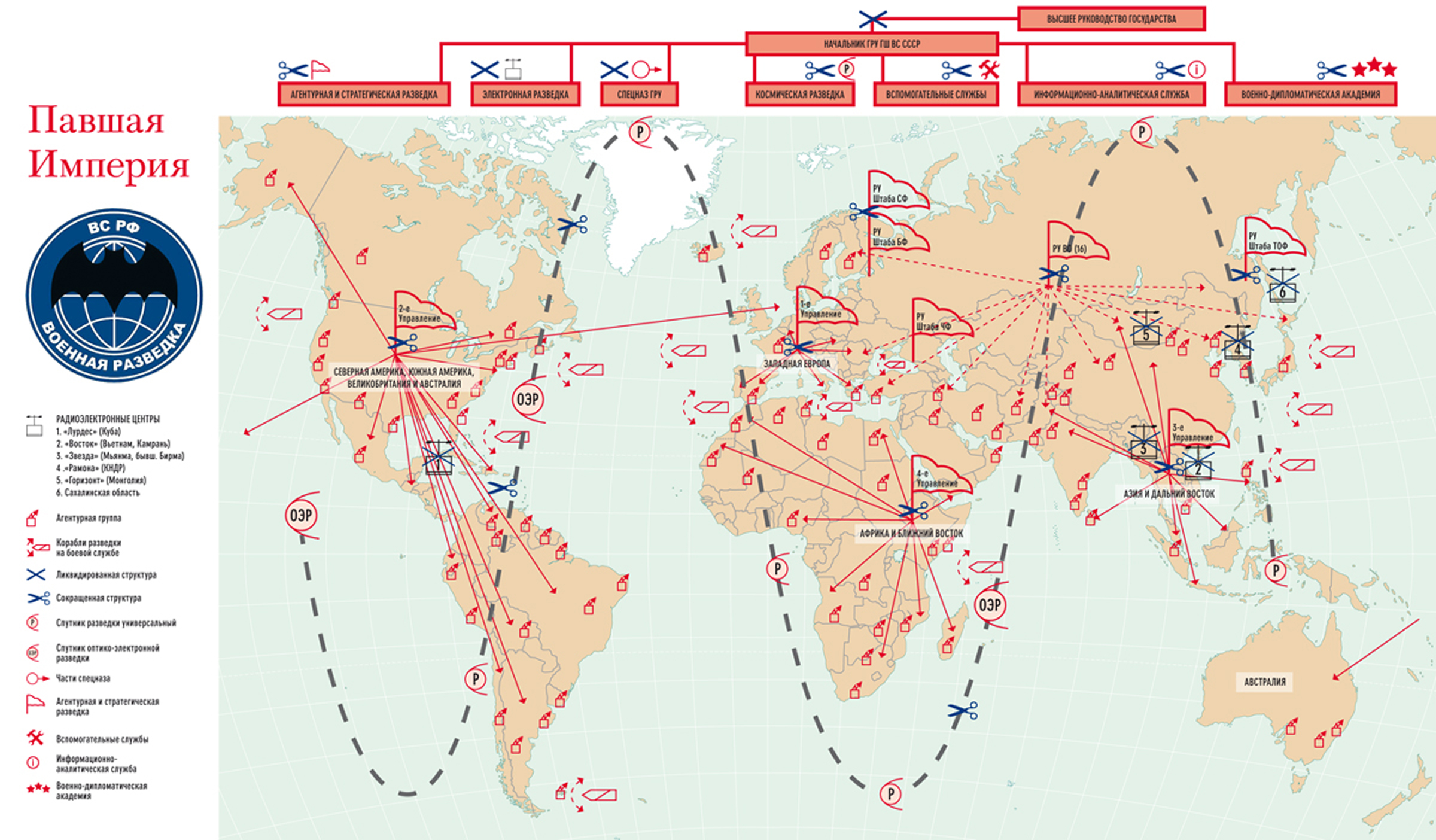
* * Pavel Grachev was the Minister of Defense of the Russian Federation in 1992-1996. . At the initial stage, the main blow was inflicted on Osnaz, as a result of which all the centers of electronic intelligence in the territory of our country, with the exception of the Transcaucasian direction and at the Russian military bases, were eliminated in the USSR.
* These are the “Lourdes” base in Cuba, “East” in Vietnam, “Star” in Burma, “Ramon” in the DPRK, “Horizon” in Mongolia. . Further, all the basic lines of the GRU from strategic and intelligence intelligence to auxiliary units and the military-diplomatic academy, which prepared scouts for both military attachments and illegal GRU residences, were subjected to gradual weakening and reduction.
It is known that in the specialized Research Institute of GRU, all development and research work (inspiration and nira) has been terminated. In the Military Diplomatic Academy (VDA), the reduction of teaching staff began. According to the interlocutor of The New Times, the number of “extracting divisions” of the GRU responsible for agent and strategic intelligence in foreign countries was reduced by 40%. Perhaps that the leadership of the Ministry of Defense has its own reasons, but it has been done so clumsy that today a huge number of scouts who perform official duties outside Russia already know that they actually have nowhere to return. This not only deprives them of any motivation for further work, but also turns into potential objects for recruitment by foreign special services.
"
The GRU fighting employees can today be found both in expensive offices and at the stations where they work as loaders
"

Mass abbreviations take place among the most experienced GRU officers who are dismissed on formal grounds in connection with the achievement of the liability established by the Law
* For all military personnel, this age occurs after 25 calendar years of service and on average it occurs for 42–45 years. . Unlike the SVR, which has a sufficient number of specialized educational institutions for recruiting and reconnaissance training of very young people, the specifics and traditions of the GRU require that only the most experienced military officers are selected in military intelligence, whose age at the time of entering the GRU is already at least 30–35 years old. The dismissal of such specialists is an obvious embezzlement of the “gold reserve” of the Russian intelligence community.
Aliens among their fighting employees of the GRU today can be found both in expensive offices and at stations, where they work as loaders, in stores, among repairmen or handymen. For the most part, they speak about the reform of their former service, but sometimes they squeeze out the correct definitions.
“The GRU Empire is dying,” says “professor”, an impressive middle -aged man in a stharged shirt, and seemingly typical representative of creative bohemia. - I have the same image in my eyes: a professional athlete, which amputated my legs, hands, knocked out an eye and damaged the drum membrane. He is still alive, understands everything, he sees something else, he can hardly hear, his heart still beats, but he will not be able to revive. ” "Professor" is an analyst with extensive experience of agent intelligence. Freely speaks several European languages and Arabic, traveled more than 50 countries of the world. Dismissed for unnecessary. Now unemployed.
“Furniture collector” is an space intelligence officer. About 40 years. Brought up, educated, a military heating, proper literary speech and non -unusual competence for workers are striking. He is working on in the Italian furniture salon. Collects imported furniture, mounts household appliances. “It is disgusting to watch our pathetic attempts to save at least something from the Soviet cosmonautics give out for the achievements of recent years,” he throws irritably. - Well, this is: Serdyukov (Minister of Defense) advertises the resource satellite! They are still Soviet assembly, they are stored in warehouses. And they did them not for the military, but for oil workers. There is no resolution, you can hardly distinguish the cruiser from an aircraft carrier, and he is completely confused in armored vehicles. ”
“We and military intelligence are two big differences, but the breast special forces were leaked into the ground forces,” says a tightly knocked man, about fifty years old. “But it was we who were the most effective: both Khattab and Basayev are our work.” The senior officer of the GRU special forces, awarded four combat orders. An extensive experience in participation in special events around the world. He performed special tasks in Yugoslavia, fought for many years in the North Caucasus. No longer needed.
But the strongest blow fell on the GRU agents. Against the backdrop of public support from the SVR, after the failure of an illegal foreign intelligence network associated today with the name of Anna Chapman, to protect the GRU agents captured in Georgia and other Transcaucasian states, nothing is defiantly done. All the latest failures of military intelligence are used only to justify the ineffectiveness of the GRU. According to the interlocutors of The New Times, as a result of this approach, a number of agents recruited in the territory of the South-West Asian states have already been executed.
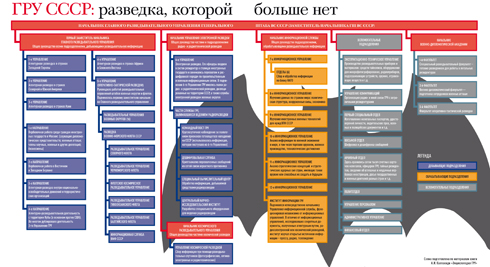
Increase the image (1.3 MB, 2400x1300, will open in the new window)
The scheme was prepared based on the materials of the book by A.I. Kolpakidi "Encyclopedia GRU"

A formal reason for a systemic attack on the GRU was the unpreparedness of the army to an armed conflict with Georgia. So, according to the deputy chief of the General Staff, Colonel General Anatoly Nogovitsyn, who commanded the group of Russian troops during the Russian-Georgian armed conflict in August 2008, the surprise for the General Staff was the presence of the Soviet side of the air defense systems such as the ZRK Buk * * * self-propelled anti-aircraft missile to combat air targets for small and medium heights. and modern Western airspace monitoring systems that allowed to cause serious damage to the Russian Air Force. According to the current officers of the central apparatus of the GRU, at a meeting of the leadership based on the results of the war, not embarrassed in expressions, the Minister of Defense accused military intelligence of not owning the necessary intelligence. Meanwhile, the scouts themselves argue that their information was simply not considered when assessing the operational situation and making decisions by the highest leadership of the country. According to them, military intelligence directed all the necessary information, including information about the supply of Ukrainian modernized systems "Buk". So the Ministry of Defense and the country's highest state leadership were at least aware of the situation. Or could it be aware if it were concerned about the information of the GRU. But: the head of military intelligence lost the right to a direct personal report to the president, and the information sent to him passes after at least two filters - through the head of the General Staff and the Minister of Defense. In the conditions of military reform, when there is a redistribution of resources and money, when generals of different military branches fight for maintaining their posts and feeders, the one who has direct access to the “ear” wins. GRU, an always and long -standing competitor of the KGB and those who inherited the Committee, was deprived of this access.
Don't ask - why
According to the former high-ranking officer of the central apparatus of the GRU, “even very large people”, trying to answer the question, what is the point of destroying the Institute of Military Intelligence, at best, in the worst, they die under unclear circumstances, as happened with Major General Yuri Ivanov, who was responsible for organizing military intelligence in the entire Caucasian region. The corpse of the 53-year-old General Ivanov, the most important secretary of the country, who, according to the official version, on vacation in Syria, was strangely discovered in the coastal waters of Turkey in August 2010.
As the interlocutor of The New Times said, the veterans of the service call three reasons that explain not only the death of the general, but in general the entire amount of measures to eliminate military intelligence.
First: the main business of customers of the so -called GRU reform is associated with washing money and offshore. And only strategic intelligence of the GRU could pose a threat to this business, as it had the possibilities of monitoring and tracking such promotions. And at the same time did not belong to the CGB -FSB -SVR corporation.
The second: a certain informal “special service” has already been formed in Russia, serving the interests of a narrow group of people who really govern the country. People working on this structure are not gathered together, but serve in various departments of various special services of the Russian Federation. For the successful functioning of such a “network system of the elected”, it is important to solve one difficult task: to destroy all alternative sources of intelligence information capable of an independent comparative analysis.
Third: competition. The positions of the FSB and the SVR can protect the top leadership of the country close to these special services. The interests of the GRU are alien to these people. An example of the United States, where there are more than one and a half dozen different independent intelligence, is not accepted as an argument. The ability to provide a competitive advantage “your own” is more important than the solution of real intelligence problems. 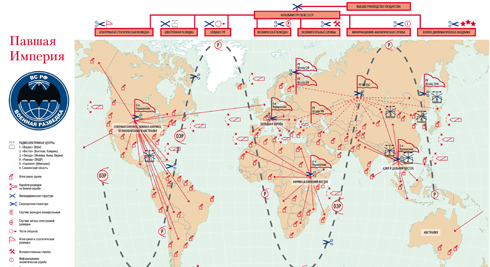
Increase the image (1.4 MB, 2400x1400, will open in the new window)
The interlocutors of The New Times see another problem solved by destroying the GRU. She is closely by the SV Yazan with the interests of influential non -military groups related to non -healing foci of tension, for example, in the Caucasus. The fact is that there is a certain specificity of the actions of special -purpose groups and their fundamental difference from the tactics of military intelligence officers. The main advantage of the special forces of the GRU is the combination of operational work skills to obtain information with the fighting, including the use of special tools. Spacers of special forces, unlike military intelligence officers, are able to act both in the city - as illegal underground and in the forest - as a classic sabotage unit. Employees of such a unit as a by -product of their activities can access very confidential information about real channels and sources of financing, about federal contacts of their “wards”, etc. And competitors from the Lubyanka have no guarantees of the loyalty of the GEREURY scouts.
Fools and agents
“All this is an ultrasound and conspiracyology,” said Colonel Vitaly Shlykov, a former GRU employee, a member of the Council on Foreign and Defense Policy, who set out the arguments of his former colleagues, military intelligence officers. The main problem, Schlykov is convinced, is “a cowardly sabotage of the reform of the Armed Forces carried out by Minister Serdyukov, from the side of individual“ cheat generals ”. According to Shlykov, the situation that has developed in military intelligence cannot be qualified as a collapse, since nothing terrible happens there. Highly professional special forces, the expert is responsible for General Gerasimov, in general, in his opinion, should not obey military intelligence: it should be created an independent body, which should be entrusted with command of special forces, as is adopted in most of the most developed countries of the world, Schlykov believes. As for the actually destroyed global network of electronic intelligence of the GRU, then, according to the expert, today Russia, with all the desire, cannot play the geopolitical role that belonged to the USSR during the Cold War, as there is no global confrontation of the two camps. So why spend huge funds on it?
Schlykov’s opinion, strategic and intelligence intelligence. This resource of Russia cannot be lost. But he is convinced that a situation has developed in the GRU when the agent’s value was leveled by unskilled analytics: “Agents - yes, value, but fools were sitting over them!” Признанный эксперт в области военного строительства считает, что ГРУ, обладавшее огромной информационно-аналитической службой (в ее состав входили 6 тематических управлений и 6 отделов в структуре 7-го управления, работавших только по линии НАТО), длительное время злоупотребляло эксклюзивным правом на анализ и интерпретацию добываемых сведений, не давая возможности работать в этой области другим аналитическим группам, например, таким как центр, возглавляемый бывшим руководителем СВР и бывшим министром иностранных дел академиком Евгением Примаковым (комментарий Примакова The New Times получить не удалось). «Давно пора было демонополизировать добываемую информацию», — утверждает полковник Шлыков.
Демонополизировали. Вместе со всей системой ГРУ.
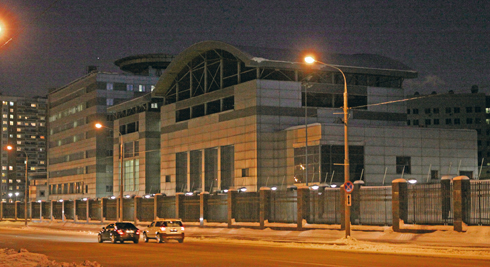
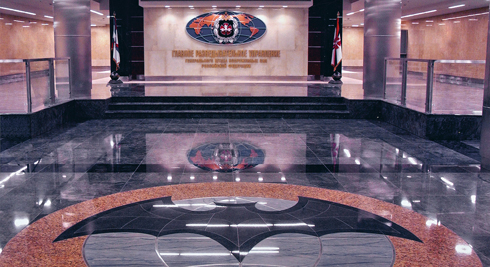
Новый комплекс зданий ГРУ на Ходынском поле в Москве: теперь в его коридорах — гулкая пустота
Провалы российской военной разведки с 2000-го по 2011 год
2000 год, Япония
7 сентября 2000 года представители контрразведки Японии арестовали капитана 3 ранга Сигэхиро Хагисаки во время ужина в одном из токийских ресторанов с военным атташе России Виктором Богатенковым.
Японский офицер длительное время передавал представителю военной разведки России сведения о частях и соединениях ВМС США, дислоцированных на территории его страны. После ареста Сигэхиро Хагисаки российский разведчик был выдворен из страны.
2001 год, Болгария
В конце марта 2001 года из Болгарии были высланы три сотрудника ГРУ: военный атташе капитан 1 ранга Владимир Ломакин, его заместитель полковник Сергей Власенко и советник посольства Борис Смирнов.
Этому событию предшествовало задержание контрразведывательными органами бывшего главы аналитического отдела службы военной разведки Болгарии, а также директора секретной архивной службы министерства обороны страны. По сообщениям местной прессы, именно эти сотрудники спецслужб Болгарии передавали российским разведчикам информацию о ситуации на Балканах. Кроме того, они могли передавать сведения, касающиеся законсервированной агентурной сети болгарских специальных служб, данные о злоупотреблении влиятельных лиц и политиков, сведения о разыскиваемых документах, лицах и т.п. Советник посольства Борис Смирнов обвинялся также в попытке провести в национальный парламент Болгарии людей, доброжелательно настроенных в отношении России.
2004 год, ФРГ
В конце 2004 года в городе Аморбах контрразведывательные органы ФРГ задержали генконсула РФ в Гамбурге Александра Кузьмина.
Информацию о системах военного назначения, о новейшем немецком вооружении, а также руководящие документы бундесвера ему предоставлял агент, оказавшийся впоследствии двойным. После задержания и передачи российской стороне Александр Кузьмин покинул ФРГ.
2004 год, Катар
13 февраля 2004 года в столице Катара городе Доха была подорвана машина экс-президента непризнанной республики Ичкерия Зелимхана Яндарбиева. Два телохранителя погибли на месте, 13-летний сын Яндарбиева Дауд был ранен, а сам лидер сепаратистов был доставлен с тяжелыми ранениями в реанимационное отделение одной из городских больниц, где позже и скончался на операционном столе. 18 февраля 2004 года местными органами правопорядка по подозрению в организации террористического акта были задержаны трое сотрудников российской дипломатической миссии в Катаре: секретарь посольства России в Катаре Александр Фетисов (позднее был отпущен местными властями), Анатолий Белашков и Василий Богачев. Последние два вернулись на Родину только в декабре 2004 года после долгих переговоров с катарской стороной.
2005 год, ФРГ
Российский военный разведчик Александр Парфентьев, занимавший должность сотрудника при военном атташе в российском посольстве в Берлине, был задержан весной 2005 года. Германская сторона утверждала, что Парфентьеву удалось завербовать офицера бундесвера и наладить сбор информации. Но позднее немецкий военнослужащий решил явиться в органы контрразведки с повинной. 10 марта 2005 года перед встречей с агентом российский дипломат был задержан органами контрразведки ФРГ. После задержания и передачи российской стороне сотрудник ГРУ Парфентьев покинул Германию.
2007 год, Австрия
В июне 2007 года контрразведывательными органами Австрии был задержан заместитель начальника управления международного сотрудничества «Роскосмоса» Владимир Вожжов. В Вене он находился в качестве члена российской делегации, прибывшей на заседание сессии Комитета ООН по космосу. После жесткой реакции МИД России (Владимир Вожжов обладал дипломатическим иммунитетом, однако австрийская сторона потребовала от Москвы лишить его данного статуса и передать его местному правосудию) представитель «Роскосмоса» был выслан из Австрии.
По сообщениям австрийской прессы, источником сотрудника российской разведки являлся унтер-офицер ВВС Австрии Харальд З., который проходил службу в вертолетной эскадрилье. Сотрудничать с российской военной разведкой он начал еще в 1995 году. По одной из версий местных СМИ, Харальд располагал информацией о боеготовности авиационного парка ВВС страны, наличии топлива и боеприпасов на военных складах, информацией о системе распознавания «свой-чужой», а также об используемых в австрийских ВВС радиочастотах. По другой версии, Харальд передавал российскому разведчику техническую документацию нового боевого вертолета «Тигр», который состоит на вооружении ряда европейских стран. Другим источником информации для Вожжова мог быть владелец инженерно-консалтинговой компании Вернер Франц Г. (гражданин ФРГ), который в период с 1992-го по 2007 год был менеджером одной из крупнейших в мире авиастроительных компаний Eurocopter.

История Главного разведывательного управления
История Главного разведывательного управления Вооруженных Сил начинается 1 ноября 1918 года, когда секретным приказом Революционного военного совета республики (РВСР) был утвержден штат Полевого штаба, состоявший из шести управлений, в том числе и Регистрационного управления (Региструпр). Это был первый централизованный и полноценный разведывательный орган cоветской республики. Поскольку объявлен приказ был 5 ноября, то именно эта дата и празднуется как День военной разведки.
4 апреля 1921 года Региструпр приказом РВСР № 785/141 был преобразован в Разведывательное управление штаба РККА (Разведупр). Принято считать, что именно период с 1921-го по 1924 год является фактическим началом истории Главного разведывательного управления.
В этот же период произошло объединение резидентур Разведывательного управления штаба РККА и Иностранного отдела ГПУ (прообраз будущей Службы внешней разведки — главного источника политической информации для руководства страны). Однако результативность объединенной резидентуры была низкая, поэтому впоследствии все вернулось на свои места, и у военно-политического руководства страны вновь появилось два независимых источника информации.
В ноябре 1922 года Разведывательное управление штаба РККА было преобразовано в Разведывательный отдел. Однако проведенная реорганизация себя не оправдала, так как новое структурное подразделение не отвечало ни реальным объемам, ни характеру поставленных разведывательных задач. В связи с чем в 1924 году было вновь образовано Разведывательное управление. В 1926 году, когда все управления штаба РККА стали номерными, Разведывательному управлению был присвоен номер. Так появилось Четвертое управление.
Then there was a war. В апреле 1943 года руководство страны приняло решение о создании Разведывательного управления Генерального штаба РККА и Главного разведывательного управления, находившегося в прямом подчинении народного комиссара обороны.
Такое разделение военной разведки сохранялось вплоть до конца Великой Отечественной. В июне 1945 года было принято решение провести реорганизацию системы военной разведки и создать Главное разведывательное управление ГШ Красной Армии.
С середины 1960-х годов и вплоть до 1990-х — лучший период в истории ГРУ. Штаты управления разрастаются, материально-техническое обеспечение — приоритетное. Особое внимание стало уделяться военно-технической разведке, создаются первые орбитальные группировки, строятся пояса из радиолокационных станций, вырастают огромные площади антенных полей, строятся уникальные объекты контроля космического пространства, на каждый флот поступают новейшие корабли радио- и радиотехнической разведки.
С приходом 1990-х начинается сокращение ГРУ.