
Translated material
Berlin festival as it is
What is worth watching - Tips from the film critic The New Times
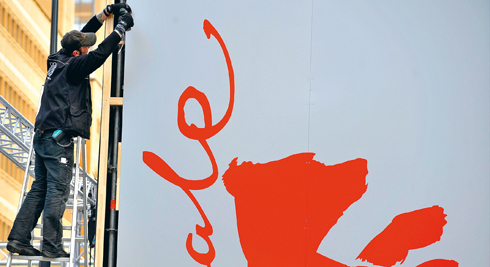
Berlin film station. Despite the fact that world cinema is experiencing not the best times, the 61st Berlin Film Festival, which announced its winners last Sunday, showed many interesting and relevant films. And the most important achievement of Berlinale - he, like no one knows how to penetrate the audience in the cinema
It is a pity that Alexander Zeldovich - anti -utopia, which is unfolding in Russia in 2020, which became half China, did not get into the Berlinal competitive program, and on the second half - by the road appendage of the big world, an autobahn from China to Europe and vice versa. This film was shown in the Berlin Panorama. Get a “target” into the competition, we would have more chances for prizes. But in the end, not prizes determine the level of the festival.
The plot of Mindadze
The film of the famous screenwriter, and now director Alexander Mindadze “On Saturday” turned out to be only our third (after the Sokurovsky “Sun” and the film by Alexei Popogrebsky “How I spent this summer”), included in the Berlinal competitive program over the past ten years. In mid-2001, the director of Berlinale was found by Dieter Cossle. When the Kosslik settled in his post, for some reason they reality that Berlinale was reoriented in our cinema in Russian cinema. Nothing of the kind. The former director of Berlinale Moritz de Hadeln was guided by the Russian, and even before Soviet cinema. And the Cossler as a new generation’s cunning manager supports the interests of the National film industry. First of all, those films (no matter what country), in which German money are invested, fall into the competition. 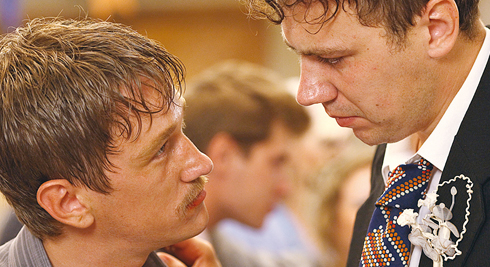
Therefore, it is reasonable to assume that the film Mindadze was taken to the contest of the current Berlinal not only because of its quality, but also because one of its manufacturers was the large German company Bavaria Film. There are two problems, and both, unfortunately, are insoluble to this moment.
1) PR error. In Berlin, the film Mindadze was served as the first feature movie about the Chernobyl tragedy. And in the film there is a very little burning reactor, but there is a rushing camera in the spirit of von Trier of the zero line, which is trying to catch and fix the face of the protagonist, a young party worker. He is one of the first to learn about the Chernobyl disaster and does not understand what to do with this knowledge. The audience is lost during viewing, because she expected something else.
2) Criticism error. We have a film of Mindazes on the moves, we were declared not just brilliant, but supergeal, accessible to understanding only a particularly advanced audience. And Russian. The west of the de does not understand the film, since it, in particular, is that only the heroism and proximity of death made Soviet people free.
The explanation is excellent. The only trouble is that “on Saturday” is one of those films that are more interesting to talk about than watch. The interpretations of which are more interesting than the plan. At the same time, the film does not fit into the declared plan. The author of these lines, for example, is inclined to interpret the madness of the protagonist, who for some reason does not run from the infected city of Pripyat on the first day after the accident, not his craving for heroism, but exclusively his despair. He already realized that he had gotten such a dose of radiation that he was actually died. Therefore, all his frenzy-fights, drunkenness, attempts to get an almost random girl with him from the city, to clarify relations with the restaurant VIA, in which he once played and who later, like a partyboat, was ideologically betrayed (in 1984, under Chernenko, about which the young generation did not know about, there were attacks on rock music and the most stupid VIA, no, and there are stupid VIAs. Vocal-instrumental ensembles) is a madness of a person who realized that he had a khan and his whole life have passed mediocre. And he himself is also mediocre.
Iranian plot
For all that, the film Mindadze is one of the three most significant in the current Berlin competition. The second, without a doubt, is the Iranian “Divorce of the Podadar and Simin” director Asgar Faraji. After watching this picture, you think that Iran is a very strange country. Because there are directors for opposition (as Jafar Panahi was put, who is symbolically included in the jury list of this Berlinal - see The New Times No. 5 of February 14, 2011), but at the same time they are allowed to make a very free movie, completely unacceptable, say, in the USSR. After all, the tie of the film is that the wife requires a divorce, because he does not see the prospects for living in Iran (wow!), And the husband opposes, but only because he cannot abandon his father, who has Alzheimer's disease. At the same time, the family is very secured. You look at the screen - we would live like that! By the standards of Europe, the upper middle class. The content of the film is very twisted: such a psychological thriller, to which the Berlin hall made a multi -media ovation. One thing seems obvious: Iranian cinema greatly influenced the modern European and even partially American. It used to develop that pseudo -order style, which then began to use the entire cinema. 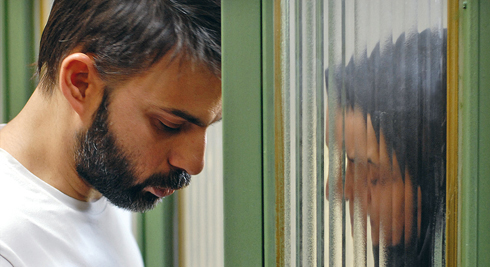
Iranian cinema has remained unchanged for fifteen years - in his corporate spirit, “Divorce of Podar and Simin” has been made. No special effects, not beating on the emotions of sunsid music, everything looks like this is a spilled real life. Actors seem to not play - these are living real people. Without Iranian cinema, there would not be a Danish “dogma” (Lars von Trier, Thomas Winterberg, etc.), nor Belgian celebrities of the Dardenov brothers, by the way, the film “On Saturday”, who is the heir to the same tradition.
The plot of Bela Tarra
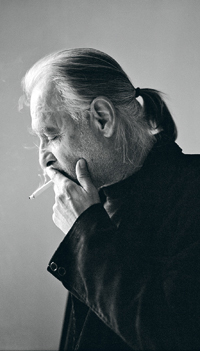 |
| Bela Tarra in the film "Turin horse" parodies Nietzsche's philosophy |
But if the Iranian film is just good, then another competitive film "Turin Horse" of the Hungarian cult director of Bela Tarra ... It is scary to pronounce this rare word ... General. He deceives with a synopsis published in the festival catalog, which (in the form of a ordered story) precedes the film itself. Speak, they say, about the story with Frederick Nitsche, in the eyes of which, when he was in Turin, the cab was beaten by a stopped horse. After which Nietzsche sobbed, hugged the horse behind his head, fell silent forever and ended his life in the hospital for the mentally ill.
But there is no Nietzsche in the film. A horse is and “played” by a certain anonymous horse is amazing: in her eyes there is such hopelessness that I don’t even want to sob. I would like to simply lie down and forget myself. Because the black and white film Tarra, in the center of which the poor peasants, the owner of a horse with a dried-up right hand and his daughter, as well as their incomprehensible (if you try to understand the time) a house and a yard, where an embraced autumn wind always drives dark fallen leaves, this is a film about death, about the final death of the world, after which nothing will follow. The film is divided by six days. There were six days of creation - there are six days of dying. People still hope, but the future is no longer there, and the first one feels the horse that stops drinking, eating, moving, and only drearyly looks in the stall with eyes chained in the show. At the same time, there are almost no words in the film. And only two explosions of dialogues parody of Nietzsche's philosophy and mean approximately the following: philosophers with their cruelty to life themselves. And cruel life is by itself.
The film of Beli Tarra recalls once of Sokurov, Eisenstein, Hanek, Herzog, already mentioned by the Dardenes. He is one of those rare, from which I really want to escape in the first half an hour, but it is completely impossible to leave after an hour of viewing (and the film lasts two and a half). Fascinating.
The plot of the city
With all the disadvantages of the Berlin festival (and they primarily include its orientation for politics and political correctness), this is the best festival in the world, if we keep in mind how it interacts with its own public and its own city. The Moscow festival was blown away (for the public) to a single cinema center October, where most halls are not even two hundred chairs, and the main hall where competitive views are going on is three quarters empty.
The Berlin festival has approximately twenty cinemas, many of which multiplexes, including halls for thousands of seats. And everywhere the queues are for tickets. Everywhere there are a full house. This time in Berlin came up with exit red carpets: the stars, including Hollywood, visited on different days the four outskirts of cinema, which have not had the slightest attitude to the festival. So the real festival conquers the city and the public. So Berlin annually brings the city about € 30 million (due to the sale of tickets and places in hotels). For the Moscow festival, this, alas, is not a lesson. It is beneficial to Moscow to be budget and unprofitable. It is easier to saw and share what falls on top. Film Festival as a way to fill your own pockets. So we live - and we will.
What else is worth watching from Berlinale-61 films
The Black Power Mixtape 1967–1975 (approximately translated as “Black Strength, mixture of 1967–1975”; section “Panorama”)
Interesting documentary cinema, indicating that Angela Davis (if anyone else remembers) was not an invention of Soviet propaganda. She really fought for the rights of black citizens of America, like two other heroes of this film, which are also black American sprinters Tommy Smith and John Carlos. It was they who, having won the Olympics in Mexico City in 1968, legendarly raised a fist of protest against the American flag and the anthem in honor of their victory.
KHODORKOVSKY ("Khodorkovsky", "Panorama")
This film is German Cyril Times (The New Times wrote about him in the previous issue), shot after Khodorkovsky and against Putin, amazingly fascinating. Do not break away from him. A giant contrast with most films of this kind (with “talking heads”, that is, a lot of witnesses), even taken on the hottest political and economic topics.
The Devil's Double ("Devil's Double", "Panorama")
A funny thriller from the creator of one of the films about James Bond Lee Tamahori dedicated to the outrages that the son of Saddam Hussein is creating in his native country at the turn of the 1990s. Satire is mixed with terrible naturalism. The focus is that both Saddam and his son have doubles. As the film says, "So it was with Stalin."
Pina ("Pina"; official show outside the competition)
The Berlin festival proved this year that the 3D format, which was previously considered exclusively popcorn and commercial, can also be clearly used by serious cinema. The film about Pina Bausch, Mozart of modern dance, was shot not by anyone, but by the classic of the movie Wim Wenders. 3D allowed him to convey the depth of the dances that Ping Bausch thought with his troupe.
Margin Call ("Marjin-Call" does not need to translate, this is the stock term; the main competition)
A rare competitive film that received good assessments from the international press. The film with Kevin Spacey, Jeremy Irons, Demi Moore and other stars-about 24 hours of life of the top managers of the New York Investment Bank, which suddenly understand in September 2008 that the economic collapse will begin tomorrow.
Coriolanus ("Coriolan"; main competition)
Cinema continues to modernize Shakespeare. Today's costumes have already worn on the screen the characters of Hamlet, Romeo and Juliet, Richard III, Tita Andronika, etc. Now the heroes of Coriolan run with machine guns and in helmets. This is the director's debut of the Rhey Fins. They play - he himself, Gerard Butler, Vanessa Redgrave.
Cave of Forgotten Dreams.
The film in the 3D format of another German classic directer of Werner Herzog. He was launched with a film crew in a cave in the south of France, where in 1994 the most ancient in history of cave paintings were discovered, which are about 30 thousand years old. Drawings are amazing. 3D was necessary: conveys volume of both drawings and caves.
ODEM/Lipstikka ("lipstick"; main competition)
A sad film about the difficult fate of Palestinian lesbians in a collision with the Israeli military. Those who do not know that Palestine also has lesbians, recall - this is the Berlin festival with its superpolite correctness. He will find what you want.