
Translated material
Moscow before the modernization dilemma
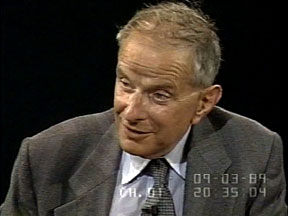
Over the past year, Russia's relations with the West have reached a new level: a contract for a reduction in nuclear weapons has been signed with the United States, negotiations on the supply of warships began with France, and the European Union was proposed to sign an agreement on joint measures to overcome the crisis. With the new policy of reconciliation, Moscow lies the hopes of economic and, above all, technological modernization. Polit.ru publishes an article by an American historian and political scientist Walter Lacker , in which it will be a question of how far changes in Russian foreign policy can go, and what the United States and Europe win, helping Russia in the implementation of modernization. The article was published in the journal "Russia in Global Policy" (2010. No. 6).
Over the past year, we have witnessed significant changes in relations between the United States and Russia, or at least the desire for changes and the promise to implement them. In Washington, the Obama administration speaks of “rebooting”, and the phrase “seismic shift” is mentioned in the unofficial publication of the Ministry of Foreign Affairs in Moscow. However, the prospects of relations between the United States and Russia cannot be discussed outside the wider context. In what direction is Russia moving? What will it be in 10 or 20 years?
The discussions about the future of different countries are based on the fact that it should almost certainly occur in the near future, and on elusive matters, which cannot be accurately measured, and even more so predict. The demography of Russia is that it is practically no doubt: over the past two decades, more than 20 thousand villages and small cities ceased to exist. The immigration of workers from Central Asia and merchants from China continues, and the birth rate in Russia at the level of 1.5 children per woman is significantly lower than the necessary level of population substitution - 2.1 children per woman. It is unlikely that these demographic trends will change dramatically. Without a doubt, in Russia the future will be fewer Russians. There is no clarity even in whether Moscow will be able to restrain the Far Eastern territories and the entire space of Siberia beyond the Urals.
As for elusive matters, the Soviet system, although it was doomed, could hold out for another or two decades, Mikhail Gorbachev and Boris Yeltsin did not appear. From 1972 to 2008 Oil prices rose from two to almost 150 dollars per barrel (in the summer of 2010, oil cost more than two times less than this historical maximum). In other words, if Russia was still the Soviet Union, then the tremendous luck that accompanied Moscow in the past decade would not be explained by the wise and energetic leadership of Vladimir Putin, but by the ideology of Leninism and the perspicacity of the successors of the Soviet leader Yuri Andropov.
To a large extent, Russia's prospects are still dependent on oil prices. Thus, the Kremlin needs to thank fate for the fact that the West seems to have no single strategy for reducing dependence on oil and gas imports. And if the most heartbreaking forecast of global warming is true, Russia will soon gain access to significant volumes of rare and important minerals, now “locked” in the permafrost zone. Thus, even if economic modernization plans to crash, Russia does not expect a sharp economic recession and the corresponding political crisis.
The Russian people always believed in their special purpose. In different periods of history, this was manifested as the belief that Moscow was destined for the role of the Third Rome or the mission of the Petrel of the World Revolution (or the construction of “socialism in one individual country”), or as modern theories about the “Russian idea” and neo -degree.
In the past few decades, anti -Americanism has become another unchanging attribute of Russian politics and culture and the power that Washington will have to fight. In his little -known essay, John Tanner, Alexander Pushkin, ridiculed democracy in the United States and democracy in general. This variety of Russian anti -Americanism was removed to the light of God under Stalin and is remembered even in our days, when the concepts of “democrats” and “democracy” themselves cause a storm of indignation and indignation in the wide layers of Russian society. However, there are important differences in motivation. Pushkin despised the “equalization” inherent in American democracy, while the current anti -democratic sentiments in Russia are largely the result of the actions of several high -ranking persons in the era of Yeltsin’s democratization and subsequent years that used their position for personal enrichment. In the late nineties, “democracy” became the synonym for “kleptocracy” and “oligarchy”.
Today's trends
After the Second World War, Germany needed 15 years to revive as a large power. Russia took even less time after the collapse of the USSR and the end of the Cold War. Unexpected luck in the form of oil and gas superprofits improved the economic situation and strengthened the Kremlin - this process reached its climax in 2006-2007, when the then former President Vladimir Putin made a number of memorable speeches. He called his internal political opponents the jackals, whom the West finances, and accused them of, like their sponsors, they want to see weak Russia, immersed in chaos. In the 2007 Munich speech, Putin spoke of decisive changes in the world situation of forces and the sunset of the United States and Europe. In another speech, Putin predicted that by 2020, Russia will not only be among the richest and most powerful states, but will also be one of the most progressive and dynamic countries (currently Russia's GDP is approximately equal to the GDP of France and is $ 2.1 trillion). One of Putin's advisers said that the whole world should be grateful to Russia for the fact that it is a counterweight to US hegemony.
However, the world economic recession, from which Russia suffered no less, if not more than America and Europe, changed the general mood inside Russia and cooled the hottest heads. Not so long ago, this rethinking occurred in the Russian foreign policy. Different questions began to arise: perhaps Moscow overestimated the prospects of the so -called alliance BRIC in Brazil, Russia, India and China? The internal socio-political tension in these rapidly developing countries turned out to be difficult to say, and the interests of states such as China and India are largely diverge. And how can Russia benefit from strengthening the PRC and weakening of the United States and Europe? Perhaps the disadvantages of this scenario outweigh the pluses? In the end, the United States is far away, and China is close, especially if we talk about the Russian Far East and Siberia.
Finally, what will happen to Afghanistan after leaving this country in the United States and NATO? Moscow considers Central Asia as an integral part of its “zone of special interests”, for which it brings a certain burden of responsibility.
Islamic groups would immediately begin to threaten the republics of Central Asia, even if the Taliban currently claims that he has no such intentions. According to Russian officials, the growing drug trafficking mainly from the territory of Afghanistan is even a more serious danger to Russia than terrorism.
It seems that at least some Russian strategists began to reach that NATO in its current form does not pose a serious threat to Russia or other countries (according to the Russian Foreign Minister Sergei Lavrov, the North Atlantic Alliance is not a threat, but “danger”, that is, something less serious than the threat). The member states of the Alliance abandoned the idea of providing it with Georgian membership and Ukraine. At the same time, Washington, following the example of European partners, weakened the criticism of the provision of human rights in Russia, as well as the support of opposition groups within Russia and in neighboring countries gravitating to the West, such as Georgia, since Moscow considers similar actions hostile to it. From the point of view of Russia, the West as a whole agreed with its claims to the zone of special interests. Whatever fears this causes countries neighboring with Russia, the West can help them little.
In short, the relative weight of the West decreases, but the same thing happens with Russia's weight, which makes the rapprochement policy attractive to both sides. With the new policy of reconciliation, Moscow lies the hopes of economic and, above all, technological modernization. The memorandum prepared by the Russian Foreign Ministry and published by the Russian publication of Newsweek in May 2010 (the publication was unofficial. - Ed.), Persles almost all attention. It refers to how Moscow should improve relations with more than 60 countries, from Brunei to Mongolia, with the help of measures such as interstate agreements and agreements between research institutions.
This document and the new policy seems to be based on a compromise between various groups in the Russian leadership. The faction of Dmitry Medvedev, which is probably behind this memorandum, is clearly ready to take even greater risk; It is also possible that Medvedev’s supporters use the argument in favor of modernization to popularize a wider discharge policy among different layers of the Russian electorate.
Modern conservatives, such as Prime Minister Vladimir Putin, First Deputy Head of the Presidential Administration Vladislav Surkov, Deputy Prime Minister Igor Sechin and adviser to the head of government on foreign policy Yuri Ushakov understand that Russia's dependence on oil and gas exports must be reduced, and the modernization will inevitably have to pay a political price. However, they fear that the price may be too high. At the same time, both right (Russian ultranationalists) and left -wing (communists), in principle, are not against modernization, but they do not want to pay a political price for it at all.
The new discharge is manifested in a number of decisions. Russia supported the sanctions against Iran, expressed regret on the massacre in Katyn, agreed with the United States to reduce nuclear weapons. Soldiers from NATO countries received an invitation to take part in the Red Square parade in honor of Victory Day, negotiations began on the supply of French warships, and the European Union was proposed to sign an agreement on joint measures to overcome the crisis. But it will not be easy to overcome the former suspicion and new conflicts of interest. They can pose a serious threat to a new course, just as the discharge of the 1970s. She stopped, despite his goodwill on both sides. In August, Vladimir Putin said that his anti -Western speech in Munich, uttered three years ago, served a good service. In this case, how far can changes in Russian foreign policy go?
Syndrome of strong lungs
From his London exile of the mid -19th century, Alexander Herzen, the most respected and influential critic of the tsarist regime, wrote that if tyranny in Russia lasts too long, then there is an possibility and even likelihood that the ridge of the people will be broken. The damage will thereby become irreparable.
However, in another case, he also said: “Our lungs are stronger”, bearing in mind that the Russian people can better survive repression and dictatorship. Modern Russia is a conservative country. Over the past hundred years, the Russian people have experienced too many changes for the worst. They say that Putin is a liberal in comparison with most Russians. According to public opinion polls, citizens of the country are satisfied with their political leadership (only in recent months, the number of complaints about living conditions has increased, and they were directed mainly against local officials).
This is the power of Putin - Russians prefer the stability of democracy. Putin and Medvedev have a higher level of electorate support than almost any of the Western leaders. And this level of support, perhaps, would remain equally high, even if there were free elections, free media and an independent judicial system in Russia. That is why it is highly likely that the tandem of Putin and Medvedev (or another duet of similar political orientation) will continue to lead Russia after the 2012 presidential election. One or another variety of the fact that Russian observers dubbed a capacious word “tandemocracy” can last a whole decade after these elections.
Given the durability of the current political regime, it is worthwhile to ask the question of what modernization the Kremlin strives for and what reforms can be successfully carried out.
This topic has been discussed in Russia since the time of Peter the Great. In recent years, numerous conferences, speeches, memorandums, projects and plans are devoted to various methods of reform. Regarding the need to modernize special disagreements - economic and municipal infrastructure in Russia does not withstand criticism, dependence on oil, gas and other raw materials is undesirable, and in the long term is dangerous.
The lack of economic diversification will more compare to Russia the task of competing in world markets and maintain the status of a great power.
Disputes are mainly carried out about the methods. Supporters of modernization from top to bottom argue that the state should be the main conductor of changes with minimal political changes.
Offering their variety of authoritarian modernization, Putinists talk about the support on the "state vertical". Champions of this direction, of course, are aware that Russia has acquired nuclear technologies without democratization, and this is only one example. In their opinion, Russian traditions differ from the Western ones, and with the current labile state of the country, excessive democracy would be harmful, and, possibly, fatal. They argue that in many Western countries the state played a key role in the modernization process - Putin Surkov recently recalled this. This camp is not against obtaining new technologies from the West, on the contrary, warmly supports such an idea. However, their argument is that new knowledge, such as advanced information technology, should first be tested in the army, which, in their opinion, is better prepared for their perception and implementation than a private or half -privatized sector. As for Western investments, Putin and his followers believe that in any case they will come to Russia, given the shaky position of the Western economies and their persistent search for profitable undertakings. In any case, Western investors want primarily political stability, which in Russia is better provided with an authoritarian regime than a democratic chaos.
In addition, a conservative, state -owned camp claims that although modernization is necessary, it should occur gradually. As Putin noticed in September, speaking of reforms, "we do not need any sharp body movements." There are many potential victims of modernization in Russia: the state bureaucracy, ineffective enterprises and many of those who warm the hands on this, numerous monopolies and a considerable part of the society, which instinctively resists innovations, not to mention the political elite personally interested in maintaining the status quo. Of course, the situation would be different if Russia had little minerals and had no oil and gas export potential. But, since in the upcoming years of Russia a stable income is guaranteed even without risky experiments with modernization, why rush to transformations?
Most of those who are in a daring camp who demonstrates more extensive ambitions and welcomes deep modernization (this camp consists of liberal economists and professional managers), do not foresee political democratization according to the European model, but want some steps to be taken in this direction. Their argument lies in the fact that the modernization of recent years has not been partly because it was limited only to individual projects or sectors of the economy, and was also carried out on a competitive basis. Advanced technologies can be bought, borrowed or steal; But most often, Russian industry is not able to learn new technologies and force them to work. State bureaucracy is not able to allocate funds for innovation, and Russian financial markets do not show great interest in investing in innovative technologies. In June, Vladimir Putin punished members of the Russian Academy of Sciences to make a more significant contribution to the modernization of the country, but this will not be easy given that the budget of the Academy is cut, and many scientists protest against the depressing working conditions. This camp also claims that we should not expect a mass arrival of foreign investors to Russia until they are sure that the law is on guard of their interests.
To begin with, Russian courts should become politically non -angidized, and security authorities should not shamefully interfere in commercial activities. In a broader sense, a favorable business climate in Russia will require the elimination of significant friction between Russia and the outside world, that is, a kind of discharge. The Andropov model of bureaucratic reform can be useful in the fight against hooligans on the streets, but it is not able to stimulate creative thinking, without which the creation of a modern information society is not possible.
The Kremlin proclaimed plans to create Skolkovo - this small territory in the Moscow region has the role of the Russian analogue of Silicon Valley. Roger Cornberg, the American Nobel laureate, and some multinational companies, such as Nokia and Siemens, expressed their readiness and desire to cooperate. However, so far Skolkovo remained exclusively a state project.
Whatever the camp he has prevailed - a more conservative led by Putin or more progressive and aimed at reforms led by Medvedev - in a long -term perspective, modernization is probably inevitable. However, in the short term, its future is vague, since this should change not so much a policy as the mentality of the rulers and their subordinates. Such social shifts happen, but, as a rule, they are spurred by urgent necessity and an unambiguous danger overhanging over the country. There is neither one nor the other in modern Russia. That is why Russian politicians cannot overcome the temptation to supplement economic modernization only by minimal political liberalization.
Crisis of self -determination
Throughout its history, Russia, like many other countries, was subject to different minds, often diametrically opposite, but reaching the same era. This is especially evident in relation to the West: is Russia part of Western civilization? If not, what culture does it belong? Currently, faith in the special path of Russia seems to be much stronger than a sense of solidarity or friendship with the West. In fact, a negative attitude towards the West is rooted in the 19th century, if not deeper. At first it spread to Europe, and subsequently spread to the United States. 100 years before the appearance of NATO, not so few Russians believed that the West would do everything possible to harm Russia. In the era of the board of the Communists, official ideology inspired people that aggressive capital robbers are preparing an invasion of the Soviet paradise for workers.
The innate tendency of the Russian people is applied to this historical background in different conspiracies; The more absurd these theories, the more popular they are. An organization such as a KGB, in the system of which Putin and other key figures of modern Russia were formed, is inclined, due to its very nature, to believe that events in the outside world will develop according to the worst scenario. She is convinced that if not for her presence and activity, internal enemies would cause Russia irreparable damage.
Also, according to Putin, the collapse of the Soviet Union is the greatest catastrophe of the twentieth century, and Russia, as Alexander III said, has never and cannot have real friends and allies, with the exception of its own army and navy. The reality that the Russian elite observes in the outside world can lead to a softening of this irreconcilable position - it is difficult to simultaneously say that the West quickly falls into decay and that it nevertheless remains the most serious threat.
Russian extreme right is desperately looking for alternatives to closer cooperation with the West. Many admire China and its economic achievements, but Chinese power also inspires fear. Neither Japan nor India appear in the calculations (although trade with India attracts some attention). Some of the extremely right -wing politicians are supporters of the alliance with Muslim countries - primarily with former enemies, such as Türkiye. They argue that two sides have not only a common enemy - the West, but also cultural and even religious kinship, since Islam is supposedly closer to Orthodoxy than Western Christianity. At the same time, other Russian experts warn against the “Islamization” of Russia in view of the presence of a strong Muslim minority in it, not to mention the incessant violence and riots in the North Caucasus. In short, such geopolitical games do not lead to realistic alternatives. Eurasia is a fantasy, and although normal relations with Muslim countries are desirable, the expectations of something more in the best case will not bring anywhere.
New overcoat
How far can the current foreign policy go, whether it is a “reboot” or a “seismic shift?” Everything indicates that the situation will not change sharply: further Sovietization seems unlikely, as well as radical democratization. Internal discontent can exist, but not to such an extent that it becomes a significant political factor in the near future. Although the Kremlin wants to strengthen and, possibly, to expand the sphere of influence in the former Soviet republics and Eastern Europe, the attempt of force capture is seen by a very unlikely script.
The Kremlin will not be easy to combine different goals. On the one hand, Moscow understands that it has some common interests with the West. Russia prefers to deal with each European country separately, and not with the entire European community as a whole. Probably, Russia will also seek entry into the WTO and the abolition of visas for trips to Europe. For his part, the EU proposed creating a joint security forum to resolve crisis situations. However, past experience with similar commissions (namely, the Russian Council) was not too encouraging.
On the other hand, Russia wants to maintain normal ties with the rest of the world and avoid deterioration of relations with recently acquired allies, such as the President of Venezuela Hugo Chavez and President Iran Mahmud Ahmadinejad. Despite the oil and gas superprofits and the return of the great powers to the club, Russia remains a relatively weak country - if you use a football metaphor, it plays a very slippery field. However, Vladimir Putin radiates incredible confidence, believing that in the current situation in the world of Russia there is nothing to fear: Europe is experiencing a decline, the United States is weakened by the financial crisis, absorbed by the solution of internal problems and, according to the Kremlin, they have a weak political leadership. As for the threats that Russia faces, Putin (in many ways sharing the views of the extreme right) is still too preoccupied with the expansion of NATO, not paying much attention to the lengthening shadow of China and the growth of aggressive Islamism. Perhaps these ideas are changing, but it should be repeated that it is the weakness of the West that makes the discharge with the USA and Europe more realistic and attractive. Russia needs Western capital and Western technological know-how.
And what can the United States and Europe have to cherish, helping Russia in the implementation of modernization? Foreign Minister Sergei Lavrov said that it is inappropriate to talk about the exchange, but this will still be about. The weakening of international tension is desirable, but oil and gas prices will still not significantly decrease. Recently, the Russian political climate has changed for the better: there have been fewer anti -Western speeches, articles, books and films. But, since the majority of the residents of the West were not aware of these manifestations of anti -Westernity, the shift may go unnoticed.
Some Europeans believe that although Europe should take an active part in the modernization of Russia, the United States should play a leading role, which, for a number of reasons, are in the best position to fulfill this mission. Washington, of course, should take an extended hand in the interests of the world around the world. If he does not, critics will blame him for the lost unique capabilities for more than a decade. It remains only to explore these possibilities. At the moment, far -reaching political democratization does not stand in Russia on the agenda; So far, taking into account Russian history, it seems to be an insoluble task. Perhaps the West should not even persistently achieve it too persistently, since most of the Russian society and leadership do not approve of this. But is it possible to provide fair courts and judicial legal protection exclusively for foreign enterprises-like China 100 years ago provided foreigners with a concession? This is only one of the possible questions. Russian leaders who believe in authoritarian modernization can be disappointed when they realize that their new methods do not work without genuine competition. Only foreign capital will not be able to help.
The current position of Russia is somewhat reminiscent of the dilemma of Akaki Akakievich from the Overcoat, written by Nikolai Gogol in 1842 (this story is one of the important milestones in the development of Russian literature: as Fedor Dostoevsky once said, “we all left the Gogol“ overcoat ””). Akaki Akakievich, the owner of a dilapidated and shabby overcoat, because of which he was an object of numerous jokes, decides to buy a new overcoat, although it is clearly not for him to afford. Almost immediately after this, a new overcoat was stolen from him, which becomes the beginning of his countless misfortunes and the cause of premature death.
Today, most Russians, like Akakia Akakievich, seem to agree that they need to buy a new overcoat, but argue about its size, length, color, place and time of acquisition, as well as price. There is no consensus on whether it is necessary to purchase it immediately or postpone the purchase for an indefinite time.