
Translated material
RetWeet revolution
Arab dictators fell into social networks
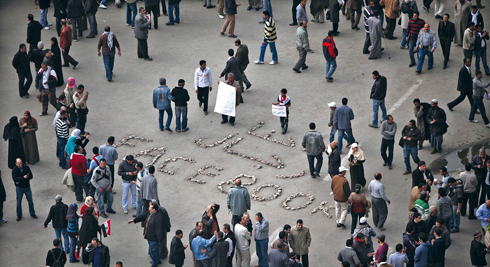
Demonstrators in Tahrir Square, Cairo. Facebook has become one of the methods of mobilizing people
At first there was a word ... and the word was Retweet.
A wave of protest rally covered the countries of the Middle East and North Africa. Following the revolutions in Tunisia and Egypt, Algeria, Iran, Bahrain, Libya exploded - there the authorities began to shoot, and at least 50 people were killed. Everywhere demonstrators coordinate their actions using social networks Facebook and Twitter. Vail is persecuted, which became a symbol of the Egyptian revolution, wrote in his microblog: "This is a revolution 2.0: no one was a hero, because everyone was a hero." The New Times recommends
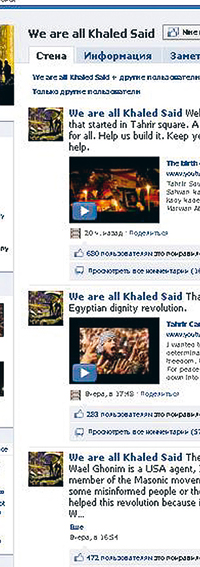 |
| Page of the Community "We are all Khalid Said" on Facebook |
When on June 6, 2010 in Alexandria, the police killed 28-year-old entrepreneur Khalid Said, on the social network Facebook in memory of him, the page “We are all, Khalid Said”, which was created and modified by the user under the name El Shaheed. As it turned out later, Vail was persecuted - the Google marketing manager in the countries of the Middle East and North Africa. He published photos of the deceased Said on Facebook and registered an account on YouTube , where he posted a video with the stories of the witnesses of the murder. Within a month, more than 85 thousand people entered the Facebook community “We are all Khalid Said”. By the end of 2010, this page was already visited by about half a million users daily, and in December the first calls appeared to reach the anti -government protest. A similar page on Facebook- Syrian Revolution 2011- appeared in early February this year: on it the Syrians post video and photographs about the beatings and torture of people by police. More than 20 thousand people have already joined this community.
An attempt to build a wall
On January 25, on the day of the beginning of the Egyptian demonstrations, Vail, we drive through his account on Twitter - @Ghonim - began his micro -portraits from Tahrir Square in Cairo with calls to go out: “I pray for #egypt. I am very worried, as it seems that the government plans to commit a war crime tomorrow against its citizens. We are all ready to die #Jan25. " “I'm going to Tahrir now. I sleep on the streets of Cairo, trying to feel the pain of millions of my Egyptian comrades. #Jan25 ".
The next day, January 26, we wrote in his microblog: “1 year ago I said that the Internet will change the political regime in #egypt, and some friends laughed at me #Jan25.”
And already on January 28, by order of the government, the work of four Egyptian providers Link Egypt, Vodafone/Raya, Telecom Egypt and Etisalat Misr was completely blocked. Then interruptions in mobile communications began. On the evening of the next day, Noor Group, a provider that served government organizations and a number of stock exchanges, ceased to operate. For protesters, the disconnected Internet was not a surprise: the first malfunctions in the work of Twitter and Facebook began to occur on January 26, however, only in the area of Tahrir Square. “They blocked #twitter and many other sites. There is no network on Tahrir, so that protesters cannot communicate with people. #Jan25 "," Facebook works poorly in Egypt. It seems that he will be blocked soon, ”Vail reported.
“There are several options for blocking sites,” says Yandex Director, as well as one of its founders and co -owner Ilya Segalovich. -Firstly, servers on which the content of the site lies and confiscated; Secondly, the state can select the domain name by court decision, in the jurisdiction of which there is a domain zone. ” In the case of Egypt, since the hosting and the domain of “enemy” sites were out of reach, the state simply used the switch - turned off the providers. However, the effect was rather the opposite. “The fussy attempts of the Egyptian authorities to block the Internet and the railway played their fatal role, showing the public that the authorities are afraid,” said Anton Nosik, the famous Internet department. Approximately from his own experience, Vail was persuaded: “Suppressing people, controlling the media, censoring the Internet, using force against demonstrators, they can achieve only one - revolution.”
... and destruction of the wall
 |
The Egyptians quickly overcome the ban on the Internet. In this they were helped by the united giants of Google, Twitter and the small company Saynow, which offered a fundamentally new way to convey their message to the world. On February 1, they launched the Speak-2-Tweet service. Now, in order for the Twitter microblog to appear with the hashtag * * the hashtag is a keyword, according to which a stream of messages is quickly and spontaneously formed. It is this feature of the Twitter microblog can attract mass attention of users to a specific problem and help them coordinate their actions. #EGYPT, no longer had to have access to the network: just send SMS or voice communication to the phone numbers with international codes +16504194196, +39062207294 or +97316199855.
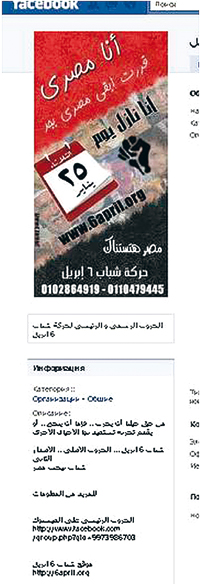 |
| Page "Movement April 6" on Facebook |
“We hope that this function will allow the Egyptians to stay on the network and transfer data to these times difficult for them,” said Abdel Karim Mardini, Google products manager in the Middle East and North Africa. A few days later, Twitter added a new Translate option, which allows you to automatically translate texts from a number of languages, including Arabic, into English (you can soon translate from Russian, Chinese and Hindi), it is enough to press only one button: “Our goal is to connect people among themselves according to the most important problems for them. To happen, freedom of expression is necessary. Some micro -reporting can cause positive changes in countries with repressive modes, ”the Twitter leaders Biza Stone and Alexander McGillivara said in a joint statement.
The YouTube video hosting did not stand aside during Egyptian events, which created a special site - Citizentube (Civil Channel), where videos from Tahrir Square were pumped as quickly as possible. At the same time, the Bambuser service also appeared, which allows you to broadcast streaming videos from the scene directly on Facebook or email. By the way, when Tunisia’s special services, using a special virus, took out the opposition pages of the social network, Facebook immediately redirected, as the New York Times, Tunisian traffic through a third country, said a lot later, and then made a security system for all more than 550 million accounts registered in this network. And so for a while seriously complicated the life of the special services of many countries of the world. 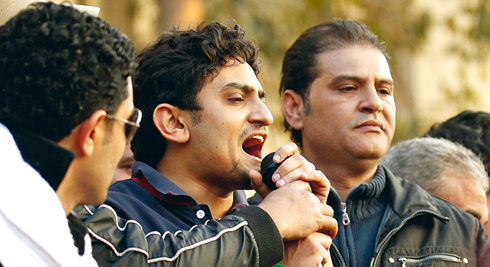
We drive the authorities
Now the Ghonim user has 86 thousand regular readers on Twitter. January 28, on the day of blocking access to the network, Vail, we are chasing suddenly. After 12 days, it turned out that the Egyptian special services were stolen. He spent almost two weeks in custody. According to Perepolim himself, the employees of the Egyptian special services treated him as a whole well, and only one question was interested in them: who is behind the persecution?
On February 7, we finally were released and immediately became one of the main media heroes. In an interview with the independent Arab television channel Dream TV, he openly stated that he created a page on Facebook and called for overthrowing Mubarak’s mode: “I would be a traitor if I had stayed at home at the Arab Emirates,” said the persecution. He said that more than 300 fake Facebook accounts were created supporters of Mubarak, who constantly wrote "negative comments that we were all paid." We drive any personal benefit, as well as the help of third-political-forces-forces in organizing protest, we are persuading: “We are just dreamers. There were no participation of the opposition movement “brothers-Muslims” in the organization of these protests. Everything was spontaneously, voluntarily. Even when the “Muslim brothers” decided to take part in the demonstrations-it was their choice, ”Wail wrote on his Twitter. He left a similar message after the overthrow of President Hosni Mubarak: “A small explanation for all the Egyptians: I do not belong to any political force. I do not support a presidential candidate. This is not my role. "
Exactly the same technology - Facebook and Twitter - used the Egyptian youth opposition “April 6”. They coordinated their actions with the help of the same hashtags #EGYPT and #Jan25, wrote in this stream and persecuted: “Thousands of people are now going to Tahrir. There are already more than 20 thousand of us. There is no police #Jan25 ”,“ Tahrir Square is blocked. We are trying to get there. The Egyptians have a story. #Jan25 ”,“ Thousands of people are now located on Tahrir #Jan25 - Come. ” 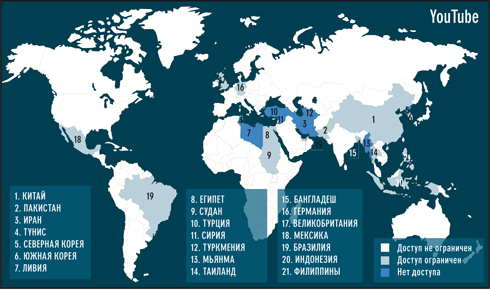
Revolution 2.0
The experience of the regime against the Egyptian activists through Facebook was shared by their colleagues in the revolution from Tunisia, from where, in fact, the Muslim revolution began. A month before the start of the protests, WikiLeaks published the correspondence of American diplomats: “The problem is obvious: the same president has been ruled by Tunisia for 22 years. He does not have a successor ... to everything else, the level of corruption surrounded by the president is growing. Even ordinary Tunisians know about this, and their discontent is increasingly heard. They strongly dislike, even hate, the first lady Leila Trabels and her family ... risks increase for the stability of the regime in the long term. ” This has become the subject of discussion on the Tunisian Internet forums. Dissatisfaction could have come to naught if the government had not decided to block the WikiLeaks website and began to catch dissidents on the network.
 |
On December 17, 2010, a street merchant after the police beaten self-immolation on the Sidi-Buzid Tunisian town Square. This day was the beginning of the Jasmine Revolution. And again the elements were organized through Twitter and Facebook. And again, the government tried to prevent the demonstrators, arresting active bloggers and cleaning users' accounts from unwanted information, which only multiplied the number of young people on the streets of the country. In the end, the dictator Ben Ali fled.
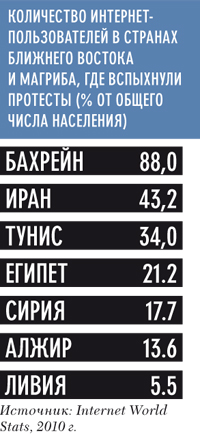
The modes in Tunisia and Egypt were not the first to fall under the pressure of Twitter revolutions. Microblogs were actively used in the course of protests in Kyrgyzstan (Internet users from the total population-39.8%; for comparison in Russia-42.8%): April 7, 2010 at 12.20 appeared from the user Otunbayeva: Trebuem Nemedlennogo vsex Liderov Oppozicii! The account belonged to the current president of Rose Otunbaeva. In the same way, Twitter and SMS messages gathered 15,000th square in Chisinau (Internet users from the total population of Moldova-30%) a year before, in April 2009. “The Internet multiplied on mobile telephony has now become the most important tool that has allowed the hierarchical structure of the cleared media into a network,” says the dean of the Faculty of Journalism of the Moscow State University named after M.V. Lomonosova Elena Vartanova - through the network it is easy to find like -minded people and go outside. ”
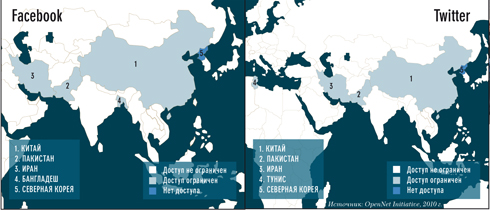
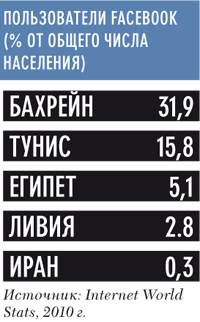
Now microblogs are actively using manifestants in Iran (though, access to Facebook is limited here), Algeria and Bahrain. Oddly enough, in Syria, during recent protests, access to Facebook, on the contrary, was open. One of the hypotheses: the special services actively began to work with Twitter and Facebook, tracking the information flow running through the networks. What will Revolution 2.0 answer this?