
Translated material
For nine months in Russia there were twice as many dissatisfied - they are ready to go to the streets
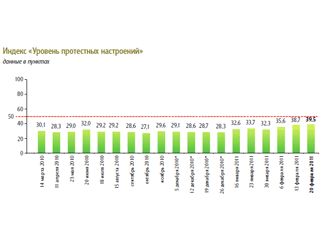
Sociologists fix the growth of protest moods in Russia. At the same time, citizens are particularly concerned about the rapid increase in prices in the country, research shows.
According to Interfax , 38% of Russians interviewed on February 19-20 by sociologists of the Public Opinion Foundation (FOM) stated the growth of protest moods in the country, while a month ago there were 31%.
At the same time, 49% of citizens have currently announced the readiness to personally take part in mass protests, 45% refuse (in mid -January - 38% and 53%, respectively). In June 2010, only almost a quarter of the population (24%) was ready to go to protest.
To the question of sociologists, FOM about readiness on the next Sunday, 24% of respondents responded in the affirmative of their rights in the next Sunday, 64% - negatively (21% and 67%).
The greatest discontent of Russians, according to sociologists' studies, cause a poor financial situation and rising prices. According to the FOM, in February a third of Russians (32%) announced a deterioration in the financial situation recently, while in early January there were 21%.
The fact that nothing has changed in their financial situation is now being said by 61% of the surveyed against 66% in January. The improvement was indicated by 6% of respondents (8%).
Meanwhile, 17% of respondents see the prospects for improving the financial situation, 26% of respondents counted on this.
In the next year, 19% of respondents awaits deteriorations (8% growth). At the same time, 42% of Russians, as before, believe that after 12 months their financial situation will not change.
Against the background of a deterioration in the financial situation, almost all Russians (96%) state the increase in prices for products, goods and services as a whole. Respondents note intensive prices primarily for food: cereals and pasta (70%), sugar (67%), dairy products (65%), meat and poultry (61%), bakery products (59%).
The most, according to consumers, the housing and communal services tariffs increased - 73% of sociologists surveyed in 100 settlements in 43 constituent entities of the Russian Federation talked about this.