
Translated material
According to the covenants of Karl Marx
What Igor Sechin did not say in his interview
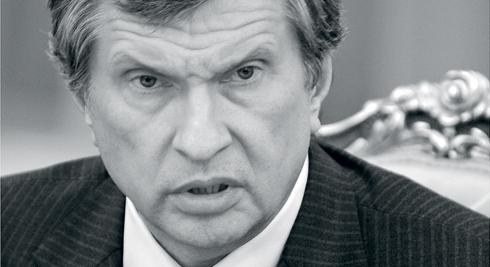
According to the testaments of Marx. On February 21, Deputy Prime Minister of the Russian Government Igor Sechin gave an interview to The Wall Street Journal, in which he spoke out on many topical issues: about the “Yukos case”, about the BP and “Rosneft”, about the closure of entry into Russia for William Brauder ... The New Times appreciated with the help of experts with the help of experts Statements Sechin
About Yukos
Sechin: Tax claims were presented not only to Yukos, but also to other companies ... Some companies resolved their tax disputes through the corresponding payments to the budget, while others preferred court decisions. And I remind you that all decisions of the tax authorities were assigned in the courts. No expropriations were made! I believe that the approach was equal to everyone.
Vadim Kluvgan, lawyer Mikhail Khodorkovsky: the prosecution and sentence in the second case of Khodorkovsky and Lebedev completely contradict the first prosecution and sentence. In accordance with the first sentence, Yukos was the owner of the oil that his “daughters” produced: he sold this oil, received revenues from sales, underpaid taxes from these income. According to the second hamovnic sentence, Yukos did not have any oil at all: all Khodorkovsky and Lebedev were immediately stolen by “daughters” produced by “daughters”. Therefore, two sentences are mutually exclusive. And Sechin, in the part associated with the weaning of Yukos, formulated not so much claims as he tried to make excuses. Everything related to the withdrawal, tax claims, bankruptcy, procedures for the sale of Yukos assets have already received an assessment in many decisions of foreign and international courts. And not a single petition of the Russian Federation on legal assistance or extradition related to Yukos was satisfied in any country in the world. Everywhere they refused on the basis that this is a clearly expressed political persecution with violation of the fundamental norms regulating fair justice and the protection of property rights.
From the editorial office: January 7, 2011, the Netherlands Supreme Court returned $ 1.2 billion to former top managers of Yukos, proceeds from the sale of the Mazeikiu Nafta Lithuanian oil refinery. The company was sold in May 2006 to the Polish concern PKN Orlen. A year later, LLC Promneftstroy, created by Rosneft, bought a Dutch company, on the accounts of which there was revenue from the sale of Mazeikiu Nafta. Then Promneftstroy achieved in court the arrest of these funds. In April 2009, former top managers of Yukos already sued 12.9 billion rubles from Rosneft. The plaintiffs promised to distribute the money received by the minority shareholders of the Yukos.
Sechin: Let me remind you that the train behind the Yukos is not just violations, but the grave criminal offenses - murders, torture, and blackmail. These cases are investigated, the motives of murders are proven, and instruments of crimes are presented. The guilty are exposed and punished by court. For example, the head of the internal economic security department of Yukos Pichugin, who has his hands on the elbow in the blood (...), was received by the head of the internal economic security department.
Is it possible to forget the murdered mayor of Nefteyugansk, Vladimir Petukhov, who was shot on the birthday of Khodorkovsky in broad daylight on a crowded street when he went to work? And remember the murder of the entrepreneur Valentina Korneeva, shot by killer at the door of her apartment in front of her own husband! (...) Remember the story with Evgeny Rybin (manager of East Petroleum Handelsgez Mbh. - The New Times): he survived two assassination attempts, he was blown up and shot ... And the demolition of the mother of the journalist Olga Kostina, who, working in Yukos, dared to have her own opinion? (...) On all these episodes, court decisions were made, their specific executors were convicted. And what, the leadership of Yukos is not related to the fact that his security service was organized?
Ksenia Kostromina, lawyer Alexei Pichugina: As for the journalist Olga Kostina: the explosive device was blown up near the vestibule door that separated the apartment of her parents from the total stairwell. Neither the door of the neighbors, nor the door of Kostina was injured. For this crime, people from Tambov were convicted, not for attempted murder, but for intentional damage to other people's property. When Pichugina began to be prosecuted, he was added to Kostin’s attempt on Kostin (allegedly he organized him). Following this, a second criminal case appeared with accusations on Petukhov, Korneeva and two attempts on Rybin.
There are no material evidence of Pichugin’s guilt-documents, pistols with fingerprints or at least money transferred to anyone-in the materials of these cases. There are only the testimonies of the convicted person to the life imprisonment of Korovnikov (who claimed that Pichugin allegedly ordered him the murder of Kostina), Reshetnikov and Tsigelnik, who claimed that he allegedly committed all these crimes and that orders for them came from non -Zellin to Pichugin. However, the same Tsigelnik, who had already received his 18 years in prison, in the absentee process in relation to Leonid Nevzlin, told the court that in fact, the investigator Bourdova punished him to add to all the episodes of the crimes allegedly committed to him. The court, unfortunately, did not consider it possible to believe these testimony of Tsigelnik, although for some reason he believed all his other testimonies.
During the trial, it was also mentioned that the mayor of Petukhov was killed on Khodorkovsky’s birthday. But if we consider this evidence of the prosecution, I can recall that Anna Politkovskaya was killed on Putin's birthday. And what follows from this?
Pichugin never pleaded guilty. From the very beginning, he said that he had nothing to do with the commission of these crimes, despite the fact that he was pressure. He was repeatedly hinted: if he “admits” that the crimes were ordered by the leading employees of the company Yukos - Nevzlin, Khodorkovsky, then he will “become better for him”. But Pichugin did not give such testimony and received a life sentence, which is now leaving.
About browner
Sechin: You know, Mr. is often mentioned by Mr. Brauder (William Browner, Great Director of Hermitage Capital Management.-The New Times), in connection with this name you can discuss everything, but not the economic result of his work. I think, from the point of view of profit from cooperation with Russian assets, he is a happy person. Efficiency is simply the highest! Thousands of percent on invested capital!
WSJ: But then he was closed to the entrance, and his poor lawyer (Sergey Magnitsky. - The New Times) died in a pre -trial detention center.
Sechin: Any human death is a tragedy. In such cases, you should always act according to the law. A criminal case was instituted on the fact of death, an investigation is underway, and I am sure that the court will figure it out.
As for Brauder, I honestly do not know what kind of visa problems he has. I admit that there are some other reasons for the ban on its entry, but definitely not the economy ...
William Brauder, Great Director of Hermitage Capital Management: Yes, Hermitage Foundation investments in Russia were successful, and investors who entrusted the money to the fund earned enough. However, this is not about money, but about the price of human life in today's Russia. After the ban on entry into Russia in 2005, my colleagues and I experienced the horror of a corrupt bureaucratic machine created here, working together with criminals: it not only destroyed the business and forced many colleagues to leave their homeland, but also led to the death of an honest person. It was the officials convicted by the uncontrolled power that arrested, tortured, tortured and killed the lawyer Sergei Magnitsky hired and killed, who discovered that the criminal group, which included senior state departments, was engaged in a systematic theft of billions of rubles from the budget of the Russian Federation.
"
Investors investing in Russia should be aware of not only the risk of loss of their capital, but also the danger to the life of their employees
"Yes, Hermitage investors have not lost anything, since we were able to take measures to maintain their funds before the employees of the Russian law enforcement agencies with criminal elements were stolen by investment companies of the Hermitage Foundation. Later, these same “law enforcement officers” abducted 5.4 billion rubles from the state and their fellow citizens, a year previously paid by these companies in the form of taxes. * * On the investigation that is conducting Austria’s criminal investigation against the Raiffeisen Bank, related to the abduction of these funds, The New Times told No. 29 of September 13, 2010 therefore, investors investing in Russia should be aware of not only the risk of losing their capital (which may simply be one of the groups of “werewolves” in the uniforms), but And the danger to the life of their employees.
About BP and Rosneft
WSJ: Whether the conflict between the BP and the Russian shareholders of TNK-BP have become-lawsuits have already gone! - A surprise for Rosneft and the Russian authorities?
Sechin: For me it was definitely a surprise. I think that for Rosneft too. I met with Khan (Executive Director of TNK-BP) and said that we are discussing the possibility of such a deal. I asked him to assist in working with BP English shareholders.
I hope that all the misunderstandings will be removed and the question will be settled in a civilized way: we will observe this. And we would not want Rosneft to take action in defense of their interests in connection with a subjective approach aimed at delaying a large project of its cooperation with BP. If such a subjective approach will be allowed any of the parties, we do not care someone-BP or AAR (Alfa-Group, Access and Renova.-The New Times)-then Rosneft will calculate its losses from an unrealized transaction and require compensation from all who have inflicted these losses.
Herman Khan, Executive Director of TNK-BP: without comment.
From the editorial office: In early February, the London court suspended the deal between the Russian State “Rosneft” and the British BP until the beginning of March, when the arbitration in Stockholm should take place. Such a decision was made as a result of consideration of the claim filed by the Russian shareholders of the TNK-BP AAR (Alfa-Group Mikhail Friedman, Leonard Blavatnik and Renova Viktor Vekselberg), in which it requires the course of transactions between BP and Rosneft for the exchange of assets and the creation Arctic shelf. We are talking about agreements signed on January 21, which should form the basis of the strategic partnership of BP and Rosneft, supported by the Russian authorities. The companies agreed on the exchange of shares: for 9.5% Rosneft, BP will give 5% of its own (packages are estimated at $ 7.8 billion). Partners will jointly develop the East Prinno Earth lands on the shelf of the Kara Sea.
However, the deal caused the indignation of the current Russian partner of the BP-the AAR consortium (companies are owned by TNK-BP on a parity basis). It immediately stated that the agreements of BP and Rosneft could be contrary to the agreement of the shareholders of TNK-BP. According to the head of Aar Stan Polovtsa, the agreement states that partners implement all projects in Russia and Ukraine only through TNK-BP. All exceptions should be approved by the board of directors of the company. The deal with Rosneft was not submitted to the Council.
The press service of BP: “The Arbitration Court ruled that the final hearing for a number of moments requiring coordination will be held in the week, from March 7, 2011. The court decision on the suspension of the transaction with Rosneft was extended before receiving the results of this hearing. ”
WSJ: But do Fridman (Chairman of the Board of Directors of TNK-BP) with a khan do not understand that you can not stand on the historical path of the industry?
Sechin: Karl Marx said that the capitalist in pursuit of additional value can go to any crime - I remind you as a joke. It is important that Aar shareholders understand the need to maintain a balance of interests and responsibility.
Boris Nemtsov, a politician, the former first deputy prime minister of the Government of the Russian Federation, who was responsible for the fuel and energy complex: that Sechin is in a veiled way here is obvious. I don’t know whether the threat will work or not, but the fact that through all the interviews, at least in the part regarding the conflict of BP, is a threat to the shareholders of the Russian part of the consortium, it is clear to me. The businessmen, to whom he addresses, is, in my opinion, it is difficult to intimidate. They are tempered and courageous people. Why he said this is incomprehensible. Probably, just such are the methods of Sechin and Co. to intimidate and stab all to solve their problems.
About investors
Sechin: Working with an investor is a very subtle job. It requires great professionalism. Of course, it is primarily aimed at creating conditions in the country to attract investments ... We have political stability, and one of the highest in the world, I think.
Nemtsov: The main thing that interests investors is not “stability” in the understanding of Sechin, but the truth about the state of affairs in the country where they are going to invest. It seems that Sechin holds everyone for fools-carries some kind of blizzard. Apparently, he wants to correct his image in the eyes of the Western public.