
Translated material
Academician Rybakov and party line
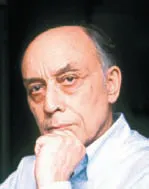 Once in the restaurant of the Leningrad House of Scientists on the Palace Embankment, where I went for lunch with Professor Karger, then the director of the Leningrad branch of the Institute of Archeology, we met Academician Rybakov. We sat down at one table. He could not stand me on the spirit, but lunch went after a kind conversation. Rybakov told how on the train he was traveling in a compartment with a lady and her little daughter. The girl looked out the window and suddenly shouted: "Mom, look, there is a cow there, and something else is next." “I looked out the window,” Rybakov commented, “it was“ something ”was a horse.” The conversation was about the loss of proximity to nature and the death of historical knowledge ...
In December of this year, it will be 10 years since the death of academician Boris Alexandrovich Rybakov. More than 30 years - all Khrushchev and Brezhnev time - he autocraticly led Soviet archaeological science. His brief biographies (there are many of them) are written in a living style - of them his personality, his successes, weaknesses and tragedy cannot be understood. We need a more sober analysis. It so happened that I wrote the most detailed biography of this scientist - his undoubted opponent (“The governor of the Soviet archeology” in the Tom “Power Technology” and the head in my history of the history of Russian archeology). I tried to be objective. It was not so difficult for me, because, despite the critical attitude to his concepts and positions, I experienced sincere admiration for his talent.
On the Internet you can find information that I consider Rybakov responsible for my arrest in the early 80s. This is wrong. Academician never fell before such methods of struggle. His speeches on the party, about the need to struggle with impaired ideology in Leningrad, created an unpleasant atmosphere around me, but the order to include me in the “Leningrad wave” of arrests, as far as I imagine, was, of course, not from the archaeological authorities (and not from the Leningrad power structures - for them this was a surprise), but from the department of science of the Central Committee.
Rybakov was born in 1908 in a wealthy Old Believer family. The father was the owner of the store of the finished dress and taught at the Old Believer Institute of Ryabushinsky. The family had a cult of ancient Russian history, everything was old, ancient. They put his father in the revolution, the boy was given to the “Labor Family” orphanage, where the bourgeois offspring was hardly easy to adapt. His Russian Old Believers self -consciousness also suffered. There was Russia, and individual state have formed in the okrain, in the capital of the capital, many Jews, Poles, Georgians, Latvians and other navits were covered in the capital. It became opa to be proud of their Russian ancestors - it was possible to get an accusation of generous chauvinism. Two, apparently, then had an underlying sense of protest.
This adjusted murmur of wounded national pride is felt at the heart of the entire worldview of Rybakov. He could not stand Jews all his life - his Russian employees (Kuzmina, Fedorov, etc.) write about this.
In 1924, he graduated from the school and got a job as the seller of the newspaper "Work Path"-earned a work experience and entered the university, at the historical and ethnological faculty. He chose archeology and specialized in the Slavic-Russian antiquities at prof. V.A. Gorodtsova, and from historians, Acad was especially listening. M.K. Lubavsky, prof. Yu. V. Gauthier and S.V. Bakhrushin. A great influence on him was exerted by the graduate student A.V. Artsikhovsky.
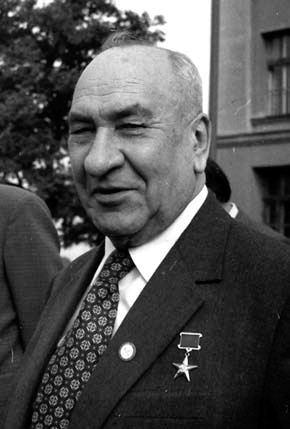
Having served in the army (1930-31), in the proletarian division, he got a job at the Archive of the October Revolution, and the first course of lectures began to read at the Academy of Communist Education. N.K. Krupskaya. As if on purpose, fate threw him into the most proletarian sites. However, he soon saw in the Bolsheviks a force that restored statehood sweet to his heart, and was imbued with devotion to the new state and its ideology. He joined the party in 1951 and never evaded the party line. This party line was more and more inclined to his internal beliefs.
From the second half of the 30s, a turn in domestic politics had been on-from declarative internationalism to Russian patriotism and nationalism. Did Rybakov catch a change in the course before? No, he did not adapt. He always adhered to nationalist beliefs, but before he had to restrain himself, but now they came to the court.
Since 1931, he has been working in the Historical Museum, since 1937 - at the Institute for the History of Material Culture (subsequently archeology) and since 1939 - at the Department of Archeology of Moscow State University, where he became the dean. At the institute and GIM, he fulfilled for the pre -war five -year work that work on the study of the Old Russian craft, which made him a name. Rybakov established the presence of craft workshops and showed the value of crafts in Rus', finding the instructions of written sources in accordance in archaeological material. He showed that before the Tatar invasion, Rus' was at a high level of economic development. In 1942, he defended the dissertation on this manuscript, and received the published work of the Stalin Prize. In 1953 he was elected a member of the corner, in 1958-an academician.
In the last years of the Stalin era, for fishing for the year, take off. Hunting the cosmopolitans and critics, the case of varas-pests and other raspers rush past, completely not healing him. In these years, its concept of the origin of the Slavs is formed. The state of statehood, according to this concept, ripened long before Kievan Rus, in the Zarubinets and brilliant Chernyakhov cultures. It leaves even deeper, much deeper - in the depths of the third millennium BC, in the Tripoli culture.
The rich treasures of nomads and bright, painted by the Roman influence of the culture of the fields of the burials of Ukraine (attributed by many archaeologists to Germanic), he declared early Slavic. The Ranneslavl culture of the VIII-IX centuries, known only as “Romensko-Bradshevskaya”, Pybakov clearly did not decrease: a rude stucco coremica (this is after Chernyakhov, made in a circle!), Almost no weapons and skills. He simply ignored this culture.
The Khazara Kaganat did not decrease him either: the Turks, the entertainment of the Jewish religion, according to the annals, charged Dan from the Slavs, and even the first Russian princes came to the “kaganami” - unbearably for pride. Rybakov publishes several a warfare in which he seeks to prove that, contrary to prof. Artamonov, the territory of Kaganata was completely ambitious, so that he could not play a special role in the history of the Slavs. The productive activities of the Hazars, according to Rybakov, almost did not conduct state, de, it was a Parasitic one.
He first rejected the role of the Normans in Rus', then, under the pressure of facts (he is a professional), he was forced to admit, but he understood in every way - well, you think, they called up the mercenaries, made the princes.
By the middle of the 50s, the fishermen clearly advanced the role of the leader of Otvy-Russian archeology. When, after the XX Congress of the party, the change of bosses in many industries began, so the 48-year-old prominent archaeologist, recognized authority, liked the leadership. And Rybakov really swept himself as a leader, smart and inlet. He started large projects, in particular, the publication of the multi -volume corps (vault) of archaeological sources of the Stranda. For 15 years, it was zapalnated to release 150 volumes. But, like everything with us, the implementation has much departed from plans. By 1990 (doubled period), only 83 issues were published (pre -Avda, among them it was a number of valuable valuables). But they came out less and less. Already to the 80s, the forces were dried up, and it became clear that to represent the entire set of sources and 150 volumes very much, but even this line in the foreseeable time is unattainable.
Since the vault was stabbed by the 80s, Rybakov conceived another impressive series-“Archeomology of the USSR” in 20 volumes. A decade has managed to exit 12 volumes, very stripped and more obsolete out by the time, as it usually happens with TAM collective academic publications. In a word, they wanted the best, but it turned out.
Since the leadership of the Institute, the purely archaeological orientation of its own research has been stopped. During the 60s, he will still go in the field, lead excavations, and later his articles about archaeological finds will appear, but not one of his many monographs will now be archaeological itself. Since that time, he acts in his books only as a historian, religious scholar, art critic, cartographer, folklorist using archaeological maths. In most of these sciences, he was, however, an amateur. The amprous, authoritative, talented, bright amateur. And his fierce passion for the assertion of one specific historical picture, elevating the Russian people, prevented him from realizing and overcoming his amateurism. ARCIKHOVSKY is attributed to the laconic characteristic of Rybakov: "Brilliant arrears."
So he turned to folklorism and revived the “historical school” of Vsevolod Miller. In Russian epics, he saw a presentation of history by the people themselves. In his books and articles, he began to reconstruct the history of epics. The largest folklorist prof. V.Ya. Propp, which showed that the heroic epic is a specific artistic genre that greatly distorts history, creating one from different heroes, transferring it at other times and making heroes from the improvised material.
Similar works by B.A. Rybakova in different sciences were scandalously unproven and abounded in elementary, mistakes. The case was aggravated by ignorance of foreign languages.
Of his books of the 80s, the most significant, from the point of view of the archaeologist, are two monumental monographs about the Slavic paganism-“Paganism of the ancient Slavs” (1981) and “Paganism of ancient Rus'” (1987). Written extremely talented and inventive, they are read with enthusiasm. I myself read them with pleasure. But what I read, I do not believe.
Rybakov borrowed from the early researchers an idea of the family as the main and almost the only god of the Eastern Slavs. The rest of the gods - Perun, Veles, etc. - only his hypostasis. Meanwhile, such a God is not directly mentioned in any source, and the name itself arose from the incorrect reading of the late Greek manuscripts about the gaping of the stars - “genealogy” (in the Slavic translation of “genealogy”). The Belarusian festival of “Komeditz” Rybakov connects with the Greek, and then the Latin “comedy” (Comoedia) and interprets as a pagan bear of the bear: from the Greek “Cosmos” - “Bear”, he explains. Where did he get such a translation? In Greek, the “bear” is “Arctos”, and “Cosmos”-“marching of guels, mummers”. All, absolutely all his linguistic excursions, which are many in this volume, are made at the same level.
In a number of works, fishing contained an amazingly beautiful hypothesis about the beginning of urban life in Kiev ZA three centuries before the first cultural layer. The annals provide a legend about the founder of the city, and some episodes of this legend are remotely ongoing events with a certain Annite leader of the 5th century, reported by Greek sources. So, Rybakov decided, Hilbudiy is Key, and the city of the foundations in the 5th century. The critics were not satisfied, they were supplied about the ambiguity of the legend, about the absence of a cultural layer. Rybakov presented the most weighty argument: with his submission in the 80s of the Central Committee of the Partia and the adoption of the USSR, they adopted a joint resolution on the celebration of a half-year-old anniversary of Kiev in 1982. The opponents had to keep silent. Foreign delegations were invited, luxurious anniversary volumes were issued, and naucer conferences were called. For three years, the noise continued. Everything is based on the fish hypothesis.
When this state began to crumble with "perestroika", Rybakov was confused. The establishment in which he felt in his midst of his place was descended. In 1988, in almost eighty, Rybakov left the post of director. He wrote a lot more, and at the end of the century, relatives tore him away from his library and personal archive and sent him to the house of veterans of the AN, where he died alone in December 2001, at the age of 93.
In fact, in science, he died earlier - with the fall of Soviet power and the collapse of the USSR. But outside science, he is alive now. His books are reprinted and are in lively demand, the concepts inspire young people, passions light hearts. But his ideas are increasingly unfolding outside science - neopagowers, mysticisms, ultra -ders of all colors of the political spectrum create a cult and perform with the name of Rybakov.
I listened to the loud and invariably vivid performances of this thunderer at crowded conferences. But I recall that interlocutor more who, in our Machine Age at the dining table, was grieved over the disappearance of the image of a horse from the children's bestiaria.